


Pickleball is played on a court that resembles a smaller version of a tennis court. The court dimensions are 20 feet by 44 feet and it is divided into halves by a net.
The Ideal Surface For Pickleball
Pickleball is typically played on a court with a smooth and non-slip surface, such as asphalt, concrete, or synthetic materials like rubber or composite. This ensures optimal gameplay and safety for players.
Popular Court Surfaces For Pickleball
Pickleball is a fast-growing sport that combines elements of tennis, badminton, and ping pong. To fully enjoy the game, having the right court surface is crucial. Different court surfaces can significantly impact the speed, bounce, and overall playability of the game.
In this section, we will explore the popular court surfaces for pickleball and their advantages and disadvantages.
Concrete Courts
Concrete courts are one of the most common surfaces used for pickleball. Here are some key points about concrete courts:
- Durable and Low Maintenance: Concrete surfaces are known for their durability, making them a long-lasting option for pickleball courts. They require minimal maintenance, reducing the overall cost of upkeep.
- Consistent Ball Bounce: Concrete courts provide a consistent ball bounce, allowing players to anticipate shots effectively.
- Slippery When Wet: One disadvantage of concrete courts is that they can become slippery when wet, increasing the risk of falls and injuries.
Asphalt Courts
Another popular surface for pickleball courts is asphalt. Let’s take a closer look at the advantages and disadvantages of asphalt courts:
- Cost-effective Option: Asphalt courts are generally more affordable compared to other surfaces, making them a popular choice.
- Moderate Ball Bounce: The ball bounce on asphalt courts tends to be slightly higher than on concrete courts, adding an extra challenge to the game.
- Prone to Cracking: One drawback of asphalt courts is their tendency to develop cracks over time, requiring regular maintenance to ensure a smooth playing surface.
Indoor Courts
Indoor pickleball courts offer several advantages with a controlled environment. Here are the key points to consider:
- All-Weather Play: Indoor courts allow for year-round play, regardless of the weather conditions outside. This provides consistent playing conditions for players.
- Better Ball Control: Indoor courts usually have a smoother surface, which enhances ball control and precision.
- Limited Availability: The availability of indoor courts may vary, especially in areas where pickleball is still gaining popularity. Access to indoor facilities might be limited, increasing the competition for court time.
Synthetic Courts
Synthetic courts have gained popularity in recent years due to their unique characteristics. Here’s what you need to know about synthetic courts:
- Versatility: Synthetic courts offer versatility in terms of surface texture and cushioning. They can be customized to meet specific playing preferences and reduce the impact on players’ joints.
- High Cost: Synthetic courts tend to be more expensive to install and maintain compared to other surfaces, which can be a deterrent for some.
- Consistent Playing Conditions: Synthetic courts provide consistent playing conditions, allowing players to adapt their strategies accordingly.
The ideal surface for pickleball depends on various factors, including personal preference, budget, and local availability. Concrete and asphalt courts are popular choices due to their durability and affordability. Indoor courts provide a controlled environment for year-round play, while synthetic courts offer versatility and consistent playing conditions.
Ultimately, choosing the right court surface can enhance your pickleball experience and take your game to the next level.
Dimensions And Layout
Pickleball is played on a court with dimensions and layout similar to a badminton court, measuring 20 feet wide by 44 feet long, with a net set at 36 inches in the center. The court is divided into two sides by a non-volley zone, also known as the kitchen.
Pickleball is a dynamic and fast-growing sport that combines elements of tennis, badminton, and ping pong. Played on a specific court, this game requires precision, strategy, and quick reflexes. In this section, we will explore the dimensions and layout of a standard pickleball court.
Understanding these crucial aspects is essential for players to master the game and improve their overall performance.
Standard Pickleball Court Dimensions:
- Pickleball courts are rectangular in shape, measuring 44 feet long and 20 feet wide.
- The dimensions are similar to those of a doubles badminton court, allowing ample space for players to move and engage in exciting rallies.
- The overall layout provides enough room for players to execute different shots and maneuvers effectively.
- The court is divided into two halves by a net, which is suspended at a height of 36 inches at the center and 34 inches at the sidelines.
- Each half of the court is further divided into specific zones and sections, serving different purposes during gameplay.
The Importance Of Accurate Court Measurements:
- Accurate court measurements are crucial to ensure a fair and balanced gameplay experience for all players.
- The standardized dimensions of a pickleball court ensure consistency across different venues and tournaments, allowing players to adapt their skills universally.
- Proper court measurements also promote safety, as players can anticipate the trajectory and bounce of the ball more accurately.
- Adhering to the established dimensions of the court enhances the competitive nature of the game and facilitates strategic gameplay.
Markings And Lines On The Court:
- The court is marked with various lines that dictate specific areas and zones of gameplay.
- The baseline, which runs parallel to the net, marks the back boundary of the court.
- Sidelines run perpendicular to the net, defining the width of the court.
- The centerline divides the court into two equal halves.
- Non-volley zone (NVZ) lines are marked 7 feet from the net on both sides of the court and extend horizontally. These lines play a crucial role in gameplay dynamics.
The Role Of Non-Volley Zone (Nvz) Lines:
- The non-volley zone (NVZ), also known as the kitchen, is a fundamental aspect of pickleball gameplay.
- It is marked by two parallel lines that extend 7 feet from the net on both sides of the court.
- Players are not allowed to volley (hit the ball without it bouncing) within this zone.
- The NVZ promotes strategic shot selection and prevents players from dominating the net, fostering fair play and engaging rallies.
- Recognizing and respecting the NVZ lines is crucial for players to enhance their gameplay skills and adapt to different playing styles.
The Service Courts And Baseline:
- Each half of the pickleball court is further divided into service courts.
- The service courts are adjacent to the net and are marked by two center service lines that extend from the baseline.
- During the serving player’s turn, they must hit the ball into the diagonal service court on the opponent’s side to initiate gameplay.
- The baseline serves as the back boundary of the court and helps players gauge their shot placement accurately.
- Understanding the placement of the service courts and the baseline is essential for players to strategically serve, return shots, and maintain control of the game.
Acquainting oneself with the standard dimensions, markings, and lines on a pickleball court is crucial for players aiming to excel in this exciting sport. By adhering to the established layout, respecting the non-volley zone, and utilizing the service courts effectively, players can elevate their pickleball skills and fully engage in the fast-paced nature of the game.
So, now that we’ve explored the dimensions and layout, let’s dive deeper into the rules and strategies of pickleball in the next section.
Essential Equipment For Pickleball
Pickleball is played on a court that is similar in size to a badminton court, measuring 20 feet wide and 44 feet long. The court is divided into two halves by a net, with specific boundary lines marking the different zones of play.
Pickleball Nets And Posts:
- Pickleball nets and posts are essential equipment for playing the game. They create a dividing barrier between the players and ensure a fair gameplay experience.
- The nets used in pickleball are specifically designed to meet the requirements of the sport. They are usually made of durable and weather-resistant materials like nylon or polyester.
- The height of the net plays a crucial role in maintaining the integrity of the game. Official pickleball regulations dictate that the net should measure 36 inches at the sidelines, and 34 inches in the center. This slight variation ensures that the ball will bounce properly during gameplay.
- Pickleball nets are attached to sturdy posts on either side of the court. These posts keep the net taut and prevent it from sagging during intense rallies.
The Importance Of Net Height And Tension:
- The correct net height and tension are vital for a fair and enjoyable pickleball game. Here’s why:
- Net height: As mentioned earlier, the standard net height in pickleball varies from 36 inches at the sidelines to 34 inches in the center. This slight variation ensures that the ball will bounce consistently across the court.
- Net tension: Proper net tension is crucial for maintaining a level playing field. If the net is too loose, it can disrupt the ball’s trajectory and make accurate shots difficult. Conversely, if the net is too tight, it may hinder the ball’s movement and spoil the game flow.
- Players should ensure that the net height and tension meet the official regulations to ensure fair gameplay and a challenging experience.
Paddle Selection And Materials:
- Choosing the right paddle is essential for pickleball players. Here are some factors to consider:
- Weight: Paddle weight can significantly impact a player’s performance. Lighter paddles provide greater maneuverability, while heavier ones offer more power and stability.
- Grip size: The paddle’s grip size should suit the player’s hand size and comfort level. A too small or too large grip can affect control and accuracy.
- Materials: Paddles are commonly made from materials such as wood, graphite, composite, or aluminum. Each material possesses unique characteristics that impact factors like power, control, and durability. Players should consider their playing style and preferences when selecting the paddle’s material.
Pickleballs: Understanding The Different Types:
- Pickleballs are specific to the game and come in several types. Here’s an overview of the different pickleball options available:
- Indoor balls: These balls have small holes and feature a softer and quieter design suitable for indoor courts. They promote better control and reduced bounce for precise shots.
- Outdoor balls: Outdoor pickleballs have larger holes and are more durable to withstand the rough surfaces of outdoor courts. They provide better visibility and a slightly faster pace of play.
- Color variations: Pickleballs are available in a range of colors, including yellow, green, and white. While color preference is subjective, some players find that high-contrast colors improve visibility during gameplay.
- The choice of pickleballs can influence gameplay, so it’s essential for players to select the right type based on their playing environment and personal preferences.
Court Accessories For Optimal Gameplay:
- In addition to the primary equipment, certain accessories can enhance pickleball gameplay. Here are a few worth considering:
- Portable pickleball nets: These allow players to set up temporary courts in various locations. Portable nets are lightweight, easy to assemble, and perfect for practicing or organizing casual games.
- Court boundary lines: Clearly defined court boundary lines are essential for accurate gameplay. Adhesive tapes or chalk can be used to mark the lines, ensuring players stay within the designated area.
- Ball holders: Having a ball holder attached to the net post allows players to keep their pickleballs easily accessible during games. It eliminates the need to chase loose balls and ensures a smooth gameplay flow.
- Scorekeepers: Scorekeeper accessories, such as flip cards or electronic devices, are helpful for keeping track of points during competitive matches. They make score management convenient for both players and spectators.
- By considering these court accessories, players can optimize their pickleball experience and enjoy the game even more.
Remember to try and provide engaging content using a variety of phrases, while maintaining a conversational and informative tone throughout.
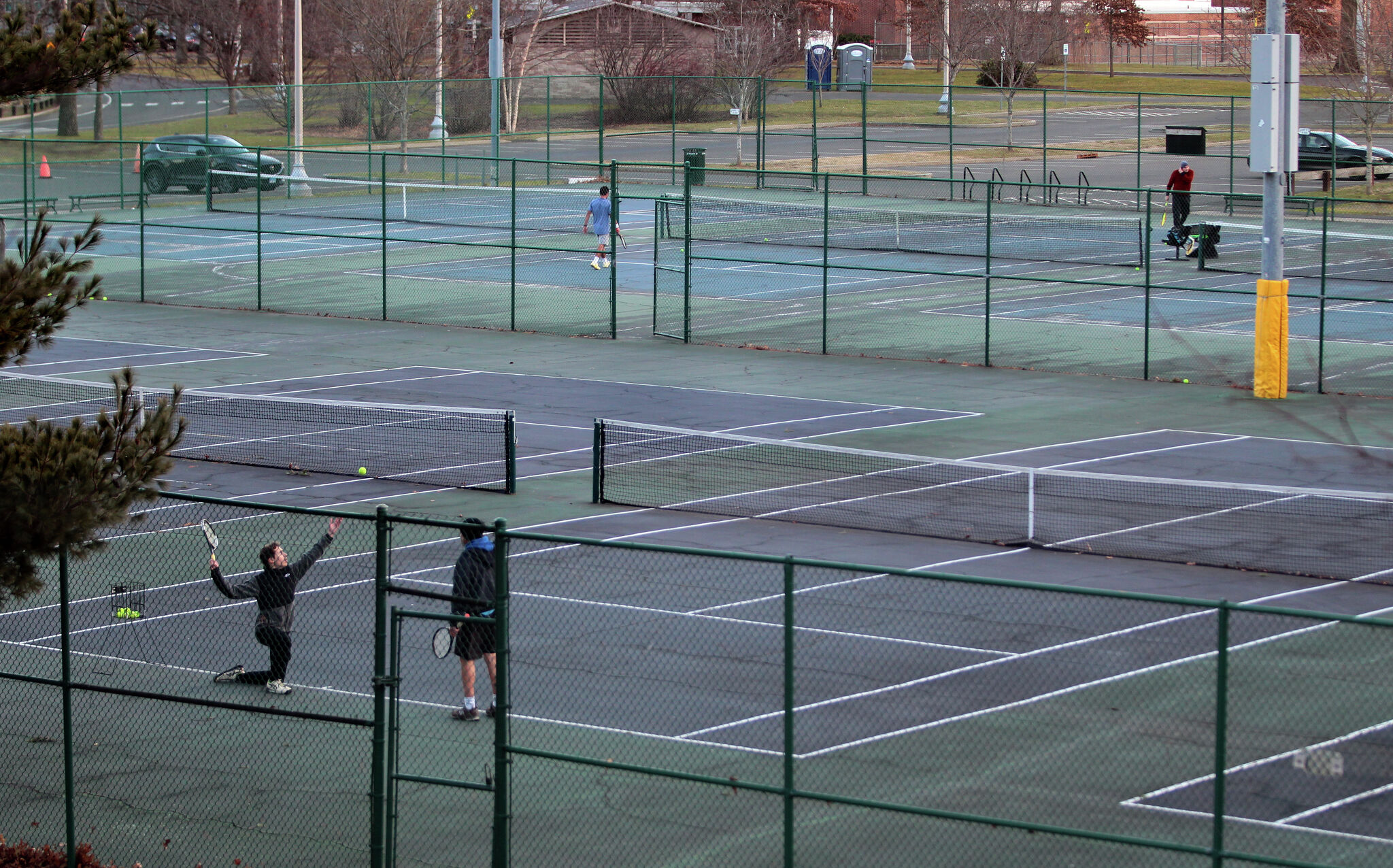
Credit: www.stamfordadvocate.com
Ensuring Safety On The Court
Pickleball is typically played on a rectangular court, similar to a tennis court, but with smaller dimensions. The court is divided by a net and has specific boundaries marked for the game, ensuring players can safely enjoy the sport.
Recommended Safety Measures For Pickleball Courts
Pickleball is a fun and engaging sport that combines elements of tennis, badminton, and table tennis. However, like any other physical activity, it’s important to prioritize safety on the court. Whether you’re a seasoned player or just starting out, implementing the following safety measures can help prevent injuries and ensure a safe playing environment:
- Proper court maintenance: Regularly inspect the court surface for cracks, uneven terrain, or loose debris that could pose a risk. Repair any damages promptly to maintain a safe playing area.
- Adequate spacing: To prevent collisions and accidents, ensure that the courts are spaced far enough apart. This allows players to move freely without encroaching on neighboring courts.
- Non-slip surface: Use materials such as rubberized sports flooring or acrylic surfaces that provide good traction and minimize the risk of slipping during gameplay.
- Safety fencing or netting: Install sturdy netting or fencing around the perimeter of the court to prevent stray balls from hitting other players or spectators, reducing the risk of injury.
- Proper drainage: Design the court surface with a drainage system that prevents water accumulation. This helps eliminate slippery surfaces, reducing the chances of slips and falls.
- Protective barriers: Place protective barriers, such as padding or cushions, around poles, walls, and hard surfaces adjacent to the court. This prevents players from getting injured in case of accidental collisions.
- Visible court boundaries: Clearly mark the boundaries of the court using contrasting colors or lines. This ensures that players can easily distinguish between the playing area and surrounding spaces, reducing the risk of collisions.
- Accessible first aid: Make sure there is a designated area for first aid supplies, including bandages, ice packs, and other essentials. In case of any injuries, players can receive immediate assistance.
- Regular inspections: Conduct routine inspections of the court and its surroundings, addressing any safety concerns promptly. This includes checking the nets, fencing, lighting, and other equipment used in the game.
By implementing these recommended safety measures, players can focus on enjoying the game while minimizing the risk of accidents or injuries. Remember, safety should always be a top priority, allowing pickleball enthusiasts to continue playing the sport they love in a secure and enjoyable environment.
Maintaining A Pickleball Court
Pickleball is played on a specialized court that resembles a smaller version of a tennis court. The court has distinct boundary lines and a net in the center, creating a unique playing area for this popular sport. Maintaining the pickleball court is crucial to ensure optimal playing conditions and safety for players.
A well-maintained pickleball court is essential for providing players with a safe and enjoyable playing experience. Whether you have an indoor or outdoor court, regular cleaning and maintenance, along with necessary repairs and resurfacing, are crucial to keep the court in top condition.
Additionally, seasonal considerations, particularly for outdoor courts, as well as winter maintenance tips and strategies to deal with harsh weather conditions, are essential to prolong the life of the pickleball court. Let’s explore each aspect in more detail:
Regular Cleaning And Maintenance:
- Sweeping the court surface: Regularly sweeping the pickleball court surface helps remove debris, leaves, and dirt that can accumulate over time and affect gameplay. Use a broom or a court maintenance machine for optimal results.
- Clearing the lines: Clean and maintain the lines on the court to ensure accurate play and minimize confusion during matches.
- Washing the court: Periodically washing the court using a pressure washer or a hose with a mild cleaning solution helps remove stubborn stains and dirt buildup. This process can rejuvenate the court’s appearance and enhance its overall condition.
Repairs And Resurfacing:
- Filling cracks: Cracks in the court surface should be promptly filled to prevent them from expanding and causing further damage. Apply a suitable crack filler and follow the manufacturer’s instructions for the best results.
- Patching damaged areas: If there are areas of the court surface that have deteriorated or become damaged, patching them with specialized court repair material can restore their integrity.
- Resurfacing the court: Over time, pickleball courts may require resurfacing to maintain optimal performance. Hire professionals experienced in court resurfacing to ensure a quality result that meets industry standards.
Seasonal Considerations For Outdoor Courts:
- Spring cleaning: As winter ends, thoroughly clean the court surface and surrounding areas, removing any debris or leaves that may have accumulated during the colder months.
- Sun protection: Protect your outdoor pickleball court from excessive exposure to sunlight by applying a court sealant that offers UV resistance. This helps prevent fading and prolongs the court’s lifespan.
- Fall preparations: Before winter arrives, perform any necessary repairs, resurfacing, or general maintenance to ensure the court is in good condition.
Winter Maintenance Tips:
- Clearing snow and ice: Remove snow and ice promptly using a rubber-tipped shovel or a snow blower. Avoid metal-edged tools that can damage the court surface.
- Reducing moisture buildup: Moisture can be detrimental to the court’s integrity during winter. Use a squeegee to remove excess water and minimize the risks of cracking or freezing.
- Regular inspections: Regularly inspect the court surface for any signs of damage caused by frost or freezing temperatures. Address any issues promptly to prevent further deterioration.
Dealing With Harsh Weather Conditions:
- Extreme heat precautions: Extremely hot weather can affect the court’s surface. Apply a court conditioner designed to combat heat-induced damage, preventing the surface from becoming slippery.
- Rain and storm protection: During heavy rain or storms, cover the court surface with a protective tarp to prevent waterlogging and mitigate potential damage.
- Wind prevention: If strong winds are common in your area, consider installing windbreakers or wind barriers to protect the court and reduce the risk of debris accumulation.
Remember, regularly maintaining and caring for your pickleball court is the key to its longevity and optimal performance. Keep these tips in mind to ensure many hours of enjoyable and competitive play for years to come!
Legal And Zoning Requirements
Pickleball is played on a court that meets legal and zoning requirements. This ensures that the game can be enjoyed safely and in compliance with local regulations.
Pickleball is gaining popularity all across the country, and many cities and communities are embracing this fun and fast-paced sport. However, there are a few legal and zoning considerations to keep in mind when planning and constructing a pickleball court.
Let’s take a closer look at the permit and regulatory considerations, zoning regulations, and potential noise and disturbance issues associated with pickleball court placement.
Permitting And Regulatory Considerations:
- Local authorities may require permits for the construction of pickleball courts. Ensure you’re familiar with the specific requirements in your area before starting the project. Here are a few key considerations:
- Building permits: Check if you need a building permit to construct the pickleball court. Contact your local building department for detailed information.
- Environmental permits: In some areas, you may need to obtain environmental permits as well, especially if you plan on altering the landscape or cutting trees.
- Safety regulations: Ensure the court meets safety regulations regarding fencing, lighting, and any other relevant features. Complying with these regulations will help ensure the safety of players and spectators.
Zoning Regulations For Court Placement:
- Zoning regulations dictate where you can legally place your pickleball court. The following points outline crucial zoning considerations:
- Residential zones: In residential areas, there may be restrictions on the placement of permanent sports facilities. Check the zoning regulations to determine whether the construction of a pickleball court is permitted on your property.
- Noise restrictions: Zoning regulations often include limits on noise levels. Ensure the court’s location adheres to these guidelines to avoid potential conflicts with neighbors.
- Setback requirements: Some areas have setback requirements, which determine how close you can build the court to property lines or existing structures. Familiarize yourself with these setbacks before planning the court’s location.
Potential Noise And Disturbance Issues:
- Noise and disturbance issues can arise when constructing a pickleball court. Here are a few factors to consider:
- Noise mitigation measures: Implement noise reduction strategies to minimize the impact on neighboring properties. These may include using acoustic fencing, scheduling play during quieter hours, or investing in sound-dampening sports flooring.
- Collaboration with neighbors: Engage in open communication with neighbors, discussing the project and addressing any concerns they may have. This proactive approach can help maintain good relations and resolve potential issues before they escalate.
Remember, following the proper legal and zoning requirements when constructing a pickleball court is crucial. By obtaining the necessary permits and adhering to zoning regulations, you can ensure a smooth and hassle-free process while minimizing any potential disturbance to the surrounding community.
Budgeting For A Pickleball Court
Pickleball is played on a specific court that resembles a smaller version of a tennis court. Planning and budgeting for a pickleball court involves considering the dimensions, materials, and accessories needed to create a suitable playing surface.
Estimating The Cost Of Court Construction
Constructing a pickleball court can vary in cost depending on several factors. Here are some considerations to help you estimate the expenses involved:
- Surface Material: The choice of surface material will impact the overall cost of court construction. Different options include asphalt, concrete, or a specialized pickleball court surface.
- Size and Layout: The dimensions and layout of the court will also affect the cost. Standard pickleball courts are 20 feet wide and 44 feet long, but larger or custom configurations may increase expenses.
- Site Preparation: The condition of the site where the court will be built plays a role in the cost. Factors such as grading, leveling, or clearing any obstructions can incur additional expenses.
- Fencing and Netting: Installing appropriate fencing and netting is essential for safety and boundaries. Costs will depend on the materials chosen and the size of the court.
- Lighting: If you plan to play pickleball at night or in low-light conditions, installing lighting fixtures will be necessary. This can add to the overall construction costs.
- Drainage and Irrigation: Ensuring proper water drainage and irrigation systems are in place is crucial to maintaining the court’s longevity. Depending on the site’s natural conditions, additional costs may be involved.
Additional Expenses To Consider
While estimating the construction cost is crucial, it’s essential not to overlook additional expenses associated with building a pickleball court. Here are some other factors to consider:
- Permits and Regulations: Depending on your location, obtaining permits and complying with local regulations may incur additional costs. Researching the necessary permits and potential fees is important for budgeting purposes.
- Line Markings: Painting the court’s lines and boundaries is necessary for gameplay. Consider the cost of line markings and maintaining them over time.
- Equipment and Accessories: To fully enjoy the game, you’ll need essential equipment such as nets, paddles, balls, and storage solutions. Including these costs in your budget ensures you’re prepared to play.
- Benches and Seating: If you plan to provide seating for players and spectators, budget for benches or seating options accordingly.
- Maintenance: Regular maintenance is required to keep the court in good condition. Consider the cost of cleaning, resurfacing, and repairing any damages that may occur over time.
Cost-Saving Options And Alternatives
If you’re working with a limited budget, there are several cost-saving options and alternatives to consider:
- DIY Construction: If you have the necessary skills and resources, building the court yourself can help save on labor costs. However, ensure you have the required expertise to ensure a quality construction.
- Recycled or Reclaimed Materials: Consider using recycled or reclaimed materials for certain aspects of court construction, such as fencing or seating, to reduce costs.
- Shared Facilities: If building an individual court is not feasible, consider sharing a court with a local community or sports facility to split costs.
- Seeking Sponsorship: Explore the possibility of partnering with local businesses or organizations that may be interested in sponsoring the court construction. This can help offset expenses.
- Considering Pre-Fabricated Courts: Pre-fabricated or modular pickleball court systems can offer a more cost-effective alternative to traditional construction methods.
Remember, each of these cost-saving options needs careful consideration to ensure that they align with your specific needs and local regulations.
By taking into account the various factors influencing the cost, considering additional expenses, and exploring cost-saving options, you can budget effectively for your pickleball court construction project. With proper planning, you’ll be able to enjoy the game without breaking the bank.
Planning And Preparation
Pickleball is played on a court specifically designed for the sport, featuring a modified tennis court layout. The dimensions of a pickleball court are 20 feet wide by 44 feet long, with a net set at 36 inches high in the center.
Before diving into the exciting world of pickleball, it’s crucial to plan and prepare your ideal court. This includes selecting the perfect location, determining the court orientation, and consulting with pickleball court experts. Let’s explore each of these steps in detail:
Selecting The Ideal Location For A Court
When choosing the location for your pickleball court, keep the following factors in mind:
- Space: Ensure you have enough room to accommodate a standard-size pickleball court, which measures 20 feet wide and 44 feet long. Additionally, include the necessary buffer space around the court to prevent any interference during gameplay.
- Surface: Opt for a flat and level surface, free from any obstacles or uneven patches. Popular options include concrete, asphalt, or even a dedicated pickleball court surface.
- Accessibility: Consider the convenience of access to the court, both for players and spectators. Look for a location that allows for easy entry and parking.
Determining The Ideal Court Orientation
The orientation of your pickleball court plays a significant role in the overall playing experience. Here’s what you should consider:
- Sun position: To minimize sun glare and ensure fair gameplay, orient your court in a direction that avoids direct sunlight during peak playing hours.
- Wind direction: If possible, align your court orientation perpendicular to the prevailing wind direction to minimize any impact on the game.
- Surroundings: Take into account nearby structures, such as buildings or trees, that may create shadows or gusts of wind that could affect gameplay. Plan accordingly to minimize such interferences.
Consulting With Pickleball Court Experts
Seeking advice from pickleball court experts can provide valuable insights and help you make informed decisions. Consider the following aspects when consulting with experts:
- Design and layout: Experts can assist in creating a comprehensive plan for your court’s design and layout, ensuring it meets all official regulations and dimensions.
- Equipment selection: They can guide you in selecting the appropriate equipment, such as nets, posts, boundary lines, and even lighting systems, to enhance the playing experience and meet safety standards.
- Maintenance and upkeep: Professionals can provide recommendations on court maintenance, including regular cleaning, repairs, and resurfacing, to ensure longevity and optimal playing conditions.
By carefully considering the location, orientation, and expert advice, you can create a well-designed pickleball court that not only meets official standards but also enhances the enjoyment for all players. So, let the planning and preparation begin for your exciting pickleball journey!
Frequently Asked Questions On What Court Is Pickleball Played On
What Is The Court Size For Pickleball?
The court size for Pickleball is 20 feet wide and 44 feet long, which is the same as a doubles badminton court.
What Type Of Surface Is Used For Pickleball Courts?
Pickleball courts are typically made of a hard surface such as asphalt or concrete, although they can also be made of other materials like wood or composite.
Is Pickleball Played On A Tennis Court?
Yes, Pickleball can be played on a tennis court. Many tennis courts have lines added to mark the boundaries for pickleball.
Can Pickleball Be Played Indoors?
Yes, Pickleball can be played indoors. Indoor courts are typically smaller and use a different type of flooring to reduce noise and provide better traction.
Conclusion
Pickleball is a rapidly growing sport that offers a unique blend of athleticism and fun. Whether you’re a beginner or experienced player, knowing the court dimensions and layout is essential to the game. As we have discovered, pickleball is played on a court that is a smaller version of a tennis court, measuring 20 feet by 44 feet.
The court is divided into different zones, including the non-volley zone and the serving area, which determine where players can make certain shots. Understanding the court and its specifications is crucial for players to strategize their moves and improve their game.
Playing pickleball on the correct court not only ensures fair play but also enhances the overall experience. By following the guidelines, players can fully immerse themselves in the game, focusing on agility, precision, and teamwork. Whether you’re playing for leisure or in a competitive environment, familiarity with the pickleball court will certainly boost your performance.
So, step onto the court, paddle in hand, and enjoy this exciting and fast-paced sport that is taking the world by storm!


