


Pickleball is a distinct sport from badminton despite some similarities in gameplay. Pickleball and badminton may seem similar due to some shared gameplay elements, but they are, in fact, two separate sports with their own unique rules and characteristics.
While both games are played with a net and involve hitting a small ball, pickleball utilizes a solid paddle and a plastic ball with small holes, whereas badminton uses a lightweight racket and a shuttlecock. Additionally, the court dimensions and scoring systems differ between the two sports.
Understanding the differences between pickleball and badminton is essential for players and enthusiasts to fully appreciate and participate in each game.
What Is Pickleball?
Pickleball is a unique racquet sport that combines elements of badminton, tennis, and ping pong. While there are similarities, such as the use of a net and a paddle, Pickleball differs from badminton in terms of court size, equipment, and the rules of play.
Pickleball is a fun and fast-paced sport that is gaining popularity worldwide. Combining elements of tennis, badminton, and ping pong, pickleball is played with a paddle and a plastic ball on a small court. So, what exactly is pickleball? Let’s dive in and explore its history, rules, gameplay, and growing popularity.
History And Origin Of Pickleball:
- Invented in the mid-1960s: Pickleball was invented in 1965 by Joel Pritchard, Barney McCallum, and Bill Bell in Washington state, USA.
- A blend of multiple games: The founders created this unique sport by combining aspects of tennis, badminton, and ping pong.
- The name ‘pickleball’: The game was named after the Pritchard family’s dog, Pickles, who loved chasing after the balls during their early matches.
Rules And Gameplay Of Pickleball:
- Played on a small court: Pickleball is played on a court about a quarter of the size of a tennis court, with dimensions of 20 feet by 44 feet for doubles matches and 20 feet by 20 feet for singles matches.
- The kitchen: There is a non-volley zone called the “kitchen” that extends 7 feet from the net on both sides. Players cannot step into this area unless the ball bounces within it.
- Serving rules: The serving player must stand behind the baseline and diagonally serve the ball. The serve must clear the seven-foot non-volley zone and land in the opponent’s court.
- Rallying: Once the ball is served, players must hit it back over the net without letting it bounce twice on their side. The ball must also clear the net and land within the boundaries of the opponent’s court.
- Double bounce rule: After the serve, each team must let the ball bounce once before they can hit it volley-style. This rule encourages longer rallies and increases engagement.
- Scoring: Points are scored only by the serving team. Games are usually played to 11, but can be played to 15 or 21 depending on players’ preference.
The Growing Popularity Of Pickleball:
- An inclusive sport: Pickleball appeals to a wide range of players, including those who may have physical limitations or prefer a less strenuous activity. Its smaller court size and slower pace make it accessible to people of all ages and fitness levels.
- Rapid expansion: The popularity of pickleball has been growing rapidly in recent years, with more and more people joining the sport globally. It has become particularly popular among older adults, retirees, and recreational players.
- Easy to learn: Pickleball has simple rules and a shorter learning curve compared to other racket sports. This aspect has contributed to its widespread appeal, attracting both seasoned athletes and beginners alike.
- Community and social aspects: Pickleball fosters a strong sense of community and camaraderie among players. It is often played in parks, community centers, and dedicated outdoor or indoor courts, providing opportunities for socializing and making new friends.
Pickleball is a unique and exciting sport that blends elements from various games. Its history, rules, and growing popularity make it a compelling choice for anyone looking to try a fun and inclusive racket sport. Whether you’re a seasoned athlete or a beginner, pickleball offers an enjoyable experience that keeps players coming back for more.
So grab a paddle, find a court, and give pickleball a shot – you’ll be hooked in no time!
What Is Badminton?
Pickleball and badminton are two different sports. While both are played with rackets and a small ball, pickleball has different rules, a smaller court, and a slower pace compared to badminton. They may have some similarities, but they are distinct sports with their own unique characteristics.
History And Origin Of Badminton
Badminton is a popular racket sport that originated in ancient times and has evolved over the years. Here is a brief overview of the history and origin of badminton:
- The exact origins of badminton are uncertain, but it is believed to have originated in ancient Greece and Egypt.
- The game gained popularity in British India during the mid-18th century when British officers introduced it to the locals.
- The British officers brought the game back to England, where it further developed and gained popularity across the country.
- In 1899, the Badminton Association of England was established, and standardized rules were introduced.
- The game was initially called “Poona” in India, named after a city where the British officers played it. It was later known as badminton, after the Badminton House in Gloucestershire, England, where it was played extensively by the Duke of Beaufort.
- Badminton was included as an exhibition sport in the 1992 Summer Olympics and made its debut as a full medal sport in the 1996 Summer Olympics.
Rules And Gameplay Of Badminton
Badminton is played on a rectangular court and involves players using rackets to hit a shuttlecock across a net. Here are the rules and gameplay of badminton:
- The game can be played in either singles (one player per side) or doubles (two players per side).
- Each player or team aims to score points by hitting the shuttlecock over the net in such a way that it lands within the opposing side’s court.
- The shuttlecock must not touch the ground or go out of bounds.
- A rally starts with a serve, and the serving side must hit the shuttlecock diagonally to the opposing side’s court.
- The opposing side must return the shuttlecock before it hits the ground, and the rally continues until a fault is committed.
- A fault can occur if the shuttlecock lands out of bounds, fails to clear the net, is hit twice, or if the player commits other rule violations.
- The game is played in a best-of-three-games format, with each game reaching 21 points.
- Points can be scored by the serving or receiving side.
- If the score reaches 20-20, the game continues until a two-point lead is established. In such cases, the winning score is 30.
The Global Popularity Of Badminton
Badminton has gained immense popularity worldwide, particularly in countries across Asia and Europe. Here are some reasons behind the global popularity of badminton:
- The game is relatively easy to pick up, making it accessible to people of all ages and skill levels.
- Badminton can be played both competitively and recreationally, catering to a wide range of player interests.
- The sport offers numerous health benefits, including improved cardiovascular fitness, agility, and hand-eye coordination.
- Badminton is an Olympic sport, further boosting its global recognition and appeal.
- Countries like China, Indonesia, India, and Malaysia have produced highly skilled and successful players, elevating the sport’s popularity in those regions.
- The Badminton World Federation (BWF) governs the sport internationally and organizes various prestigious events, such as the BWF World Championships and the Thomas Cup (for men) and Uber Cup (for women) tournaments.
Badminton’s rich history, engaging gameplay, and global appeal have contributed to its status as a beloved sport enjoyed by millions of people worldwide.
Similarities Between Pickleball And Badminton
Pickleball and badminton share various similarities in terms of gameplay and equipment, making some wonder if pickleball is just another form of badminton. Both sports involve a net and a racquet, with players aiming to hit a lightweight ball or shuttlecock over the net to score points.
However, there are subtle differences in rules and court dimensions that set pickleball apart from badminton.
Racket Sports With A Net
Pickleball and badminton are both exciting racket sports played on a court with a net. While they have their unique characteristics, they share similarities that make them enjoyable for sports enthusiasts. Let’s explore some similarities between pickleball and badminton:
- Physical setup: Both pickleball and badminton require a net that divides the playing area into two halves. The net height for both sports is also identical, positioned at 3 feet in the middle and 5 feet at the sides. This layout allows players to engage in intense rallies and strategic shots.
- Singles and doubles: Both games can be played in singles or doubles format, offering opportunities for players to showcase their individual skills or collaborate with a partner to achieve victory.
- Scoring system: The scoring systems in pickleball and badminton share similarities. In both sports, points are awarded only to the serving side, and the first team or individual to reach a specific point threshold wins the game/set. These scoring mechanics add suspense and excitement to the matches.
Played With Similar Equipment
Pickleball and badminton share commonality in terms of the equipment used. Here are the key points:
- Rackets: In both pickleball and badminton, players utilize lightweight rackets that allow for quick movements and precise shots. However, the design of the rackets differs slightly to match the specific requirements of each sport.
- Shuttlecocks and balls: Badminton employs shuttlecocks, which are feathered projectiles that require delicate manipulation to maintain control during gameplay. On the other hand, pickleball utilizes a plastic ball with holes, similar to a wiffle ball. Both shuttlecocks and pickleballs have unique characteristics that impact gameplay dynamics.
- Footwear and attire: Proper footwear and attire are crucial for optimal performance and safety in both pickleball and badminton. Players often wear lightweight and breathable clothing to facilitate agility and ease of movement on the court, while suitable court shoes provide the necessary grip and support.
Focus On Technique, Strategy, And Agility
Both pickleball and badminton demand a combination of technique, strategy, and agility from players. Here’s what makes them similar:
- Technique: Players in both sports need to master various strokes, such as smashes, drops, clears, and drives, to gain an advantage over their opponents. Fine-tuning technique is key to executing accurate and powerful shots.
- Strategy: Successful players in pickleball and badminton understand the importance of strategy and adaptability. They strategically position themselves on the court, analyze their opponents’ movements, and employ tactics to outmaneuver their rivals.
- Agility: Quick footwork and agility are fundamental in both sports. Players must cover the court efficiently, respond swiftly to their opponents’ shots, and maintain a balanced stance to execute shots effectively. Agility plays a significant role in both defensive and offensive maneuvers.
While pickleball and badminton have their unique characteristics and rules, they share several similarities that contribute to their appeal. Both sports provide enjoyment, excitement, and opportunities for players to exhibit their skills, teamwork, and strategic thinking. Whether you prefer the quick-paced nature of pickleball or the finesse and rapid movements of badminton, these sports offer a thrilling experience for players of all ages and skill levels.
So, grab your racket and step onto the court to experience the joy of these fantastic sports!
Court Dimensions And Setup
Pickleball and badminton have different court dimensions and setups. The two sports may share similar aspects, but they each have distinct features that set them apart.
Size And Layout Of Pickleball Court:
- The pickleball court has a rectangular shape.
- The dimensions of a standard pickleball court measure 20 feet wide by 44 feet long.
- The court is divided into different areas, including the baselines, sidelines, non-volley zone, and service courts.
- The non-volley zone, also known as the kitchen, is a 7-foot area on both sides of the net where players are not allowed to hit a volley.
- The service courts are positioned at the back of the court on each side.
- The court layout consists of a centerline dividing the court into two equal halves and sidelines marking the outer boundaries.
Size And Layout Of Badminton Court:
- The badminton court is also rectangular, but with different dimensions compared to pickleball.
- A standard badminton court measures 17 feet wide by 44 feet long for singles play, and 20 feet wide by 44 feet long for doubles play.
- The lines on a badminton court include the outer boundary lines, the baseline, sideline, centerline, and the short service line.
- Badminton courts have a non-volley zone, also known as the front service court, which is a 6.5-foot area near the net where players cannot hit a volley.
Impact Of Court Dimensions On Gameplay:
- The dimensions of the pickleball and badminton courts have a significant impact on gameplay.
- The smaller size of the pickleball court compared to the badminton court leads to faster gameplay and shorter rallies.
- The reduced court size in pickleball necessitates quick reflexes, agility, and accurate shot placement, enhancing the overall intensity of the game.
- On the other hand, the larger size of the badminton court allows for longer rallies and more strategic positioning of shots.
- Players in badminton have more space to cover, requiring them to rely on endurance and defensive skills.
- The court dimensions influence the playing style and strategies employed by players in both pickleball and badminton.
By understanding the size and layout of both pickleball and badminton courts, players can adapt their game accordingly and maximize their performance. The court dimensions play a crucial role in determining the speed, intensity, and strategies employed in these two popular racquet sports.
Equipment And Tools Used
Pickleball, a popular sport resembling badminton, requires specific equipment and tools. This includes paddles, a net, and a plastic ball, designed to enhance gameplay and ensure a quality experience for players.
Rackets Used In Pickleball:
- Pickleball rackets, also known as paddles, are an essential piece of equipment in this fast-paced game.
- These rackets are generally made of composite materials such as graphite or carbon fiber, making them lightweight and durable.
- The handle of the paddle is cushioned to provide a comfortable grip during gameplay.
- Pickleball rackets have a flat surface with small, evenly spaced holes to reduce wind resistance.
- The size and weight of the pickleball racket can vary, but they typically measure around 15.5 to 17 inches in length and weigh between 6 and 14 ounces.
Rackets Used In Badminton:
- Badminton rackets are specialized equipment designed for the unique demands of the sport.
- The frames of badminton rackets are usually made of lightweight materials like graphite or carbon fiber to enable quick maneuverability.
- The strings of the racket are tightly strung to provide better control and precision.
- The shape of the racket head can be either isometric or oval, with an isometric shape offering a larger sweet spot for enhanced power and accuracy.
- Badminton rackets are typically longer and lighter compared to pickleball paddles, with lengths ranging from 26 to 30 inches and weights between 80 and 100 grams.
Differences In Shuttlecock And Pickleball:
- Shuttlecocks are exclusively used in badminton and differ significantly from pickleballs.
- Shuttlecocks are feathered projectiles that weigh around 4 to 5 grams and are composed of 16 feathers fixed into a rounded cork base.
- The feathers on the shuttlecock allow for a high level of control, speed, and trajectory during gameplay.
- On the other hand, pickleballs are plastic balls with small holes, similar to Wiffle balls.
- The weight of a pickleball is approximately 0.9 to 1.05 ounces, and it is composed of a durable plastic material suitable for outdoor and indoor play.
- The design and material of the shuttlecock and pickleball contribute to the unique dynamics and characteristics of each sport. While shuttlecocks offer more control and require delicate shots, pickleballs are known for their durability and resilience across various playing surfaces.
By understanding the distinctive rackets and equipment used in pickleball and badminton, as well as the differences between shuttlecocks and pickleballs, players can fully grasp the nuances and requirements of each sport.
Gameplay And Scoring
Pickleball and badminton are similar in terms of gameplay and scoring, with both sports requiring players to hit a lightweight ball or shuttlecock over a net. However, there are some key differences between the two, such as the size of the court and the type of equipment used.
Pickleball and badminton are two popular racquet sports that share some similarities in gameplay and scoring systems. In this section, we will explore the serving techniques in pickleball and badminton, as well as the scoring systems and rules in both sports.
Whether you are a beginner or a seasoned player, understanding these aspects of the game will enhance your overall experience.
Serving Techniques In Pickleball:
- Underhand serve: The most common serve in pickleball, players use an underhand motion to strike the ball below the waist.
- Placement and angle: The serve should clear the non-volley zone and land diagonally in the opponent’s service court.
- Serve rotation: In pickleball doubles, the serving team rotates after scoring points until the opposing team gains the right to serve.
Serving Techniques In Badminton:
- Overhead serve: Badminton players typically perform an overhead serve, also known as a high serve, by striking the shuttlecock with an upward motion.
- Placement and strategy: Players aim to land the serve deep in the opponent’s court, forcing them to move backwards and increasing the chances of gaining an advantage.
- Serve rotation: In badminton, the serving team does not rotate after scoring points. Instead, the same player or pair continues to serve until they lose a rally.
Scoring Systems And Rules In Both Sports:
- Points and rally scoring: Both pickleball and badminton use rally scoring, where points can be scored by either serving or receiving teams.
- Pickleball scoring: In pickleball, only the serving team can score points. Games are typically played to 11 or 15 points, with a two-point advantage required to win.
- Badminton scoring: In badminton, both serving and receiving teams have the opportunity to score points. Games are played to 21 points, with a two-point advantage needed to secure victory.
- Faults and let serves: In both sports, certain faults, such as serving out of bounds or into the net, result in a loss of serve. In badminton, let serves occur when the shuttlecock touches the net but still falls into the proper service court. Let serves allow the server to redo the serve without any penalty.
Understanding the serving techniques and scoring systems in pickleball and badminton is essential for players of all skill levels. By mastering these aspects of the game, you can improve your strategy, maximize your scoring opportunities, and enjoy the thrill of these exciting racquet sports.
So grab your racquet, step onto the court, and let the games begin!
Comparing Skill And Fitness Requirements
Pickleball and badminton have different skill and fitness requirements. While both sports involve agility and hand-eye coordination, badminton typically demands faster movement and higher levels of fitness compared to pickleball.
Is Pickleball Badminton?
Pickleball and badminton are both popular racket sports that share some similarities, but they also have distinct differences in terms of skill and fitness requirements. In this section, we will compare the physical demands of pickleball and badminton, as well as highlight the differences in the required skills and fitness levels for each sport.
Physical Demands Of Pickleball
Pickleball is often praised for being a sport that can be enjoyed by players of all ages and fitness levels. While it does require some level of physical exertion, it is generally considered to be less demanding than badminton. Here are the key physical demands of pickleball:
- Agility: Quick movements and changes in direction are essential in pickleball, as players strive to cover the court efficiently.
- Hand-eye coordination: Good hand-eye coordination is crucial in pickleball, as players need to react quickly to incoming shots.
- Endurance: Although pickleball may not be as physically intense as badminton, it still requires a moderate level of endurance to sustain rallies and maintain performance throughout a match.
Physical Demands Of Badminton
Badminton, on the other hand, is known for its fast-paced and demanding nature. It requires a higher level of fitness and athleticism compared to pickleball. Here are the key physical demands of badminton:
- Speed and agility: Badminton requires players to be fast and agile, as they constantly move around the court to reach shots and defend against their opponents.
- Stamina: The fast-paced nature of badminton demands a high level of stamina, as long rallies and intense movements can quickly tire players out.
- Explosive power: Badminton involves various explosive movements such as lunging, jumping, and smashing, which require bursts of power and strength.
Differences In Required Skills And Fitness Levels
While both sports require some level of athleticism, there are notable differences in the specific skills and fitness levels required for pickleball and badminton:
- Grip and technique: Pickleball utilizes a different grip and technique on the racket compared to badminton, requiring players to develop specific skills for each sport.
- Shot selection: Badminton offers a wider range of shots, including smashes, drops, clears, and nets, which require more advanced shot selection and technique compared to pickleball.
- Speed and agility: Badminton demands greater speed and agility due to the faster pace of the game, while pickleball emphasizes precision and strategic shot placement.
- Fitness levels: Badminton generally requires a higher level of cardiovascular fitness and overall athleticism compared to pickleball.
While pickleball and badminton may seem similar on the surface, there are distinct disparities in the physical demands, required skills, and fitness levels for each sport. Whether you prefer the more accessible nature of pickleball or the fast-paced intensity of badminton, both sports offer unique challenges and enjoyable experiences for players of all skill levels.
Accessibility And Community
Pickleball, often compared to badminton, is a popular sport that embraces accessibility and community. With its simpler rules and smaller court, pickleball offers a welcoming environment for players of all ages and skill levels. The sport’s emphasis on inclusivity fosters a tight-knit community of enthusiasts who come together to enjoy friendly competition and camaraderie.
Pickleball and badminton are two popular racquet sports known for their accessibility and strong sense of community. These sports offer opportunities for people of all ages and skill levels to participate and connect with others who share their passion. Let’s explore how both sports provide a welcoming environment and foster a sense of camaraderie.
Availability Of Pickleball Facilities:
- Pickleball courts are rapidly increasing in number across the country, making it easier than ever to find a place to play.
- Many recreational centers, parks, and community sports clubs offer dedicated pickleball facilities.
- Pickleball can be played both indoors and outdoors, allowing for year-round enjoyment.
- The adaptable nature of pickleball courts allows for conversion from existing tennis or basketball courts, maximizing resource utilization.
Availability Of Badminton Facilities:
- Badminton facilities are also widely available in various recreational centers and sports clubs.
- Badminton courts can be found both indoors and outdoors, depending on the preference of the players.
- Some facilities offer competitive play while others focus on recreational and social gatherings.
Community And Social Aspects Of Each Sport:
Pickleball:
- Pickleball has gained popularity among retirees and older adults, promoting an active and inclusive community.
- The sport encourages a friendly and supportive atmosphere, allowing players to bond and make new friends.
- Pickleball tournaments and social events provide opportunities for players to compete and connect with other enthusiasts.
Badminton:
- Badminton attracts a diverse range of players, from casual players to competitive athletes.
- The sport promotes both individual skill development and team play, fostering a sense of camaraderie.
- Badminton clubs often organize social activities, creating a welcoming environment for beginners and experienced players alike.
Both pickleball and badminton offer accessible playing facilities and a strong community spirit. Whether you prefer the fast pace and agility required in badminton or the strategic and social nature of pickleball, these sports provide a platform for individuals to connect, have fun, and improve their overall well-being.
So, grab your racquet and join the vibrant pickleball or badminton community near you!
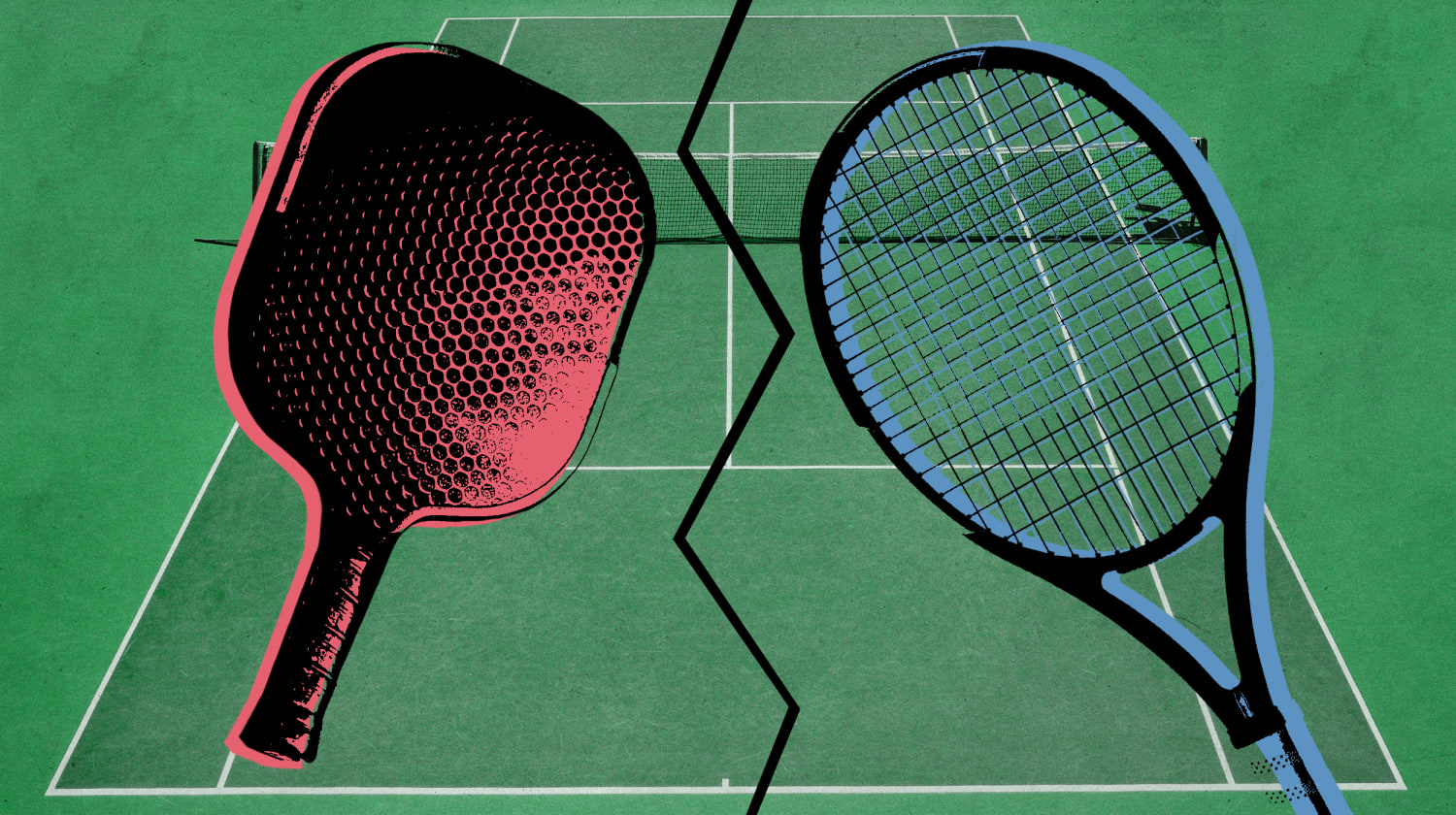
Credit: www.nbcnews.com
Frequently Asked Questions For Is Pickleball Badminton
Is Pickleball The Same As Badminton?
No, pickleball and badminton are not the same. While both are racquet sports, pickleball is played with a solid paddle and a perforated plastic ball on a smaller court. Badminton is played with a feathered shuttlecock and uses a different set of equipment and rules.
Can You Use A Badminton Racquet For Pickleball?
It is not recommended to use a badminton racquet for pickleball. Pickleball requires a paddle specifically designed for the game, which is smaller and denser than a badminton racquet. Using a badminton racquet may affect your performance and the overall gameplay experience.
What Is The Difference Between Pickleball And Tennis?
Pickleball and tennis are both racquet sports, but there are key differences between the two. Pickleball is played on a smaller court with a lower net and uses a paddle and a plastic ball. Tennis is played on a larger court with a higher net and uses a racquet and a felt-covered ball.
Additionally, the rules and scoring systems vary between the two sports.
How Do You Play Pickleball?
To play pickleball, two or four players stand on opposite sides of a court divided by a net. The game begins with a serve, and players must hit the ball over the net, aiming to keep it in play within the boundaries of the court.
The ball must bounce once on each side before players can volley. The objective is to outscore opponents by hitting the ball strategically.
Conclusion
While there are similarities between pickleball and badminton, they are two distinct sports with their own unique rules and characteristics. Pickleball has gained popularity in recent years due to its accessibility and ease of play, making it a great option for people of all ages and skill levels.
Its combination of elements from tennis, ping pong, and badminton creates a fast-paced and exciting game that keeps players engaged. Conversely, badminton offers a more traditional racket sport experience with its focus on agility, strategy, and precise shots. Both sports have their own merits and can provide enjoyable and fulfilling experiences for those who participate in them.
Whether you prefer the fast-paced action of pickleball or the strategic thinking required in badminton, there’s no denying the fun and fitness benefits that can be gained from either sport. So, give them a try and see which one resonates with you the most.


