


To become a pro pickleball player, focus on consistent training, practice, and participation in competitive tournaments. With dedication, you can hone your skills and improve your game.
By mastering the strategies, techniques, and rules of pickleball, you can work towards reaching a professional level in this sport. Pickleball, a fast-growing racquet sport, has gained popularity worldwide for its mix of tennis, badminton, and ping pong elements. As the sport continues to flourish, many enthusiasts dream of becoming professional pickleball players.
While the journey to achieving pro status may seem daunting, it is possible with the right approach and commitment. This article explores the steps and strategies you can undertake to transition from an amateur player to a pro in the exciting world of pickleball. By following a disciplined training regimen, participating in competitive tournaments, and developing a solid understanding of the game’s nuances, you can work towards turning your passion for pickleball into a successful professional career.
Understanding The Rules And Equipment*
To become a professional pickleball player, it is essential to have a thorough understanding of the rules and equipment. Familiarize yourself with the game’s regulations and ensure you have the right gear to enhance your performance on the court.
Understanding The Rules And Equipment
So, you’re interested in becoming a pro Pickleball player? Well, you’ve come to the right place! In this section, we will dive into the essential aspects of Pickleball that every aspiring player should know – the rules and equipment. Understanding these two elements will lay a solid foundation for your journey towards becoming a pro in this exciting sport.
Pickleball Court Dimensions:
To play Pickleball, you need to have a basic understanding of the court dimensions. Here’s a breakdown of the court requirements:
- The court is 20 feet wide and 44 feet long:
- The dimensions are divided into different sections, including a baseline, a non-volley zone, and a centerline. Familiarizing yourself with these sections will help you strategize your moves effectively.
- The non-volley zone:
- Located near the net, this zone restricts players from hitting the ball directly in front of the net, known as a “volley.” This area plays a crucial role in maintaining fair play and enhances the game’s strategy.
Basic Equipment Needed For Pickleball:
Now that you know the dimensions, let’s talk about the essential equipment required for Pickleball:
- Paddle:
- The paddle is one of the most important pieces of equipment in Pickleball. It resembles a large table tennis paddle and is made of different materials like wood, composite, or graphite. Choose a paddle that suits your playing style and level of expertise.
- Pickleball:
- The game is played with a special perforated ball, known as the Pickleball. The ball is slightly larger than a regular tennis ball but smaller than a baseball. It is available in various colors, with the most common ones being white and yellow.
Familiarizing Yourself With The Scoring System:
To become a pro Pickleball player, you must understand the scoring system. Here’s a brief overview:
- Games are played to 11 points:
- In Pickleball, games are played to 11 points, and you must win by a margin of two points. The traditional scoring system is used, where points can only be won by the serving team.
- Serving rotation:
- When a game begins, the serving team will start serving from the right-hand side. Each player on the serving team gets a chance to serve before switching sides with their opponents. This rotation ensures fairness and equal opportunities for both teams.
Now that you have a good grasp of the rules and equipment of Pickleball, it’s time to hit the court and start practicing! Remember, mastering these fundamentals will lay a strong foundation for your journey towards becoming a pro Pickleball player.
So grab your paddle, gather your friends, and enjoy the thrilling sport of Pickleball to the fullest!
Perfecting Your Serve*
Becoming a professional pickleball player requires mastering your serve. Learn techniques and tips to perfect your serve and elevate your game to pro-level status.
Pickleball is a fast-growing sport that combines elements of tennis, badminton, and ping pong. If you’re looking to become a pro pickleball player, one skill you must master is your serve. The serve sets the tone for the entire point, and a well-executed serve can give you a significant advantage over your opponent.
In this section, we’ll explore different types of serves, techniques for increasing speed and accuracy, and strategies for deceptive serves.
Understanding Different Types Of Serves
To become a pro pickleball player, it’s essential to understand the different types of serves you can utilize. Here are some popular options:
- Standard Serve: This is the most common serve, where you contact the ball below your waist and aim to get it over the net and into the diagonal service box. It’s a reliable option when you’re starting out.
- Soft Serve: The soft serve involves hitting the ball with less power, intending to create a low bounce and make it harder for your opponent to attack. It’s great for landing the ball closer to the baseline.
- Topspin Serve: By brushing the ball upward with a slight spin, you can create topspin on your serve. This increases the ball’s trajectory and makes it drop steeply, making it difficult for your opponent to return.
- Slice Serve: The slice serve involves hitting the ball with sidespin, causing it to curve in one direction when it bounces. This can catch your opponent off guard and force them to make awkward returns.
Mastering Techniques For Increased Speed And Accuracy
Now that you understand the different types of serves, let’s explore techniques for enhancing their speed and accuracy:
- Consistent Ball Toss: Start by improving your ball toss technique. A consistent and precise toss is crucial for achieving accuracy on your serves. Practice tossing the ball in the same spot consistently.
- Weight Shift: Shift your weight from the back foot to the front foot as you make contact with the ball. This transfers power and generates more speed in your serve.
- Utilize Your Legs: Bend your knees and use your leg muscles to generate power for your serve. Combining lower body strength with proper technique will significantly increase your serve speed.
- Relaxed Grip and Wrist Snap: Maintain a relaxed grip on the paddle and focus on snapping your wrist at the point of contact. This snap will add extra speed and spin to your serve.
Strategies For Deceptive Serves
Deceptive serves can keep your opponents guessing and give you a competitive edge. Here are some strategies to incorporate into your serves:
- Change-Up Speed: Vary your serve speeds, mixing powerful serves with slower ones. This can disrupt your opponent’s timing and make it harder for them to anticipate your shot.
- Vary the Placement: Experiment with different target areas on the court when serving. By consistently changing your serve’s placement, you can keep your opponent off balance and force them to adjust their positioning.
- Use Fake Moves: Incorporate deceptive movements into your serve, such as pretending to perform a slice serve and then executing a different type of serve. These fake moves can create confusion and surprise your opponent.
- Disguise Your Spin: Practice disguising the spin on your serves. For example, make your topspin serve look like a slice serve with your body positioning. This will make it harder for your opponent to read and react to the spin.
By understanding the different types of serves, mastering techniques for speed and accuracy, and implementing strategies for deceptive serves, you’ll be well on your way to becoming a pro pickleball player. Practice these skills regularly, and watch as your serve game becomes an invaluable weapon in your repertoire.
Mastering Your Dinks And Volleys*
To become a pro pickleball player, mastering your dinks and volleys is crucial. These skills allow for precise control at the net, giving you the advantage in quick reactions and strategic plays. Elevate your game with focused practice and honing these techniques.
Mastering Your Dinks And Volleys
Understanding The Importance Of Dinking
- Dinking is a crucial skill in pickleball that involves gently hitting the ball to your opponent’s side of the court, just over the net. It requires finesse and control rather than power.
- Dinking helps maintain control of the game, allowing players to set up strategic shots.
- Here are the reasons why understanding the importance of dinking is essential for becoming a pro pickleball player:
- Better control: Dinking allows you to keep the ball low and close to the net, making it difficult for your opponent to attack.
- Placement advantage: By dinking accurately, you can strategically position the ball in areas where your opponent is less comfortable, creating opportunities for future shots.
- Longevity: Mastering dinking helps reduce the strain on your body by relying less on power shots, making it a sustainable technique throughout a game or tournament.
Techniques For Effective Volleys
- Volleys are shots in pickleball where you hit the ball out of the air, before it bounces. It requires quick reflexes and precise timing. Here are some techniques to improve your volley game:
- Proper stance: Stand with your knees slightly bent, weight evenly distributed, and racket positioned in front of you for quick reaction times.
- Eye on the ball: Focus on the ball’s movement and trajectory to anticipate its path and react accordingly.
- Soft hand grip: Avoid gripping the racket too tightly as flexibility and finesse are crucial for volleys.
- Catch and release: Catch the incoming ball and immediately redirect it with a controlled release, maintaining accuracy and preventing the ball from bouncing.
Mastering Drop Shots And Soft Volleys
- Drop shots and soft volleys are essential techniques to have in your arsenal as a pro pickleball player. These shots keep the ball low, close to the net, and are challenging for opponents to return. Here’s how to master them:
- Feathering the ball: Gently graze the ball’s surface with the racket, creating backspin and reducing its bounce.
- Controlled finesse: Develop touch and control by practicing precise placement and varying the pace of your drop shots and soft volleys.
- Change of pace: Alternate between powerful shots, dinks, and drop shots to keep your opponents guessing and maintain control of the game.
- Recovery positioning: Anticipate your opponent’s response and be ready to move quickly to maintain an advantageous position on the court.
By understanding the importance of dinking, improving your volley techniques, and mastering drop shots and soft volleys, you’ll enhance your pickleball game and take a step closer to becoming a pro player. Remember, practice and consistency are key to succeeding in this dynamic and exciting sport.
Improving Your Groundstrokes And Footwork*
To become a professional pickleball player, focus on improving your groundstrokes and footwork. These fundamental skills are crucial for success on the court and will help elevate your game to pro level. Work on refining your technique, practicing drills, and staying dedicated to your training regimen.
With determination and hard work, you can achieve your dream of becoming a pro pickleball player.
Techniques For Powerful Forehand And Backhand Groundstrokes
When it comes to improving your groundstrokes in pickleball, mastering the techniques for powerful forehand and backhand shots is crucial. By practicing these techniques, you can enhance your overall game and become a pro pickleball player. Here are some key tips for developing powerful groundstrokes:
- Grip: Start by adopting the proper grip for both your forehand and backhand strokes. The Continental grip is commonly used in pickleball, where the base knuckle of your index finger is on the slanted edge of the paddle. This grip allows for greater control and power.
- Body Positioning: Position yourself with your feet shoulder-width apart, knees slightly bent, and body facing the net. Keeping a balanced stance will ensure stability and enable you to generate more power in your shots.
- Rotation: Engage your core muscles and rotate your hips and shoulders as you swing your paddle. This rotational movement transfers energy from your body to the paddle, resulting in more powerful groundstrokes.
- Follow-through: Practice a smooth and full follow-through after hitting the ball. Extend your arm and follow the path of your swing to maximize power and control.
Footwork Strategies For Efficient Movement
Efficient footwork is essential for quick and agile movement on the pickleball court. By improving your footwork, you can reach shots faster, maintain good court coverage, and be in the best position to execute your strokes. Here are some footwork strategies to enhance your movement:
- Quick First Step: Develop a quick initial movement by pushing off with your non-dominant foot. This explosive step will help you reach shots faster and maintain balance during rallies.
- Split-step: Perform a split-step before your opponent’s shot to anticipate their move and react quickly. This involves jumping slightly and landing with your feet shoulder-width apart, ready to move in any direction.
- Lateral Movements: Develop your lateral movement skills by incorporating side shuffles into your footwork. Stay light on your feet and move with short, quick steps to cover the court efficiently.
- Recovery Steps: After hitting your shot, take immediate recovery steps back to the optimal position on the court. This ensures you are ready to anticipate and react to your opponent’s next shot.
Incorporating Spin Into Your Shots
Mastering spin in your pickleball shots can give you an edge over your opponents. By incorporating spin into your groundstrokes, you can control the ball’s trajectory, add deception to your shots, and make it challenging for your opponents to handle.
Here are some ways to incorporate spin into your shots:
- Topspin: To apply topspin, brush the ball upwards with a slightly closed paddle face. This imparts forward rotation on the ball, causing it to dip and drop faster once it clears the net.
- Backspin: Generate backspin by brushing the ball downwards with an open paddle face. This imparts a backward rotation, causing the ball to bounce low and stay closer to the net.
- Sidespin: By adding sidespin, you can create lateral movement and make it difficult for your opponents to read your shots. To apply sidespin, angle the paddle face slightly to the left or right while striking the ball.
- Practice: Incorporating spin into your shots requires practice and experimentation. Spend time on the court working on different spins, and gradually incorporate them into your game to add variety and unpredictability to your shots.
Remember, improving your groundstrokes and footwork takes time and consistent practice. By mastering these techniques and strategies, you can elevate your pickleball game and pave the way to becoming a pro player. So grab your paddle, hit the court, and work on refining your skills!
Developing A Strong Defense*
To become a pro pickleball player, developing a strong defense is crucial. This involves improving your reflexes, anticipation skills, and strategic positioning on the court. Emphasize practice sessions that focus on defensive shots and effective footwork to excel in this sport.
Anticipating Your Opponent’S Shots
- Understanding your opponent’s style of play can help you anticipate their shots and develop a strong defense. Here are some strategies to consider:
- Pay close attention to your opponent’s body positioning and racket position before they hit the ball. This can give you valuable clues about the direction and type of shot they are likely to play.
- Watch for patterns in your opponent’s shots. Are they consistently hitting cross-court or down the line? By recognizing these patterns, you can position yourself better on the court and be ready to defend their next shot.
- Study your opponent’s strengths and weaknesses. Are they more comfortable hitting forehands or backhands? Do they struggle with low balls or high balls? By identifying these areas, you can focus on exploiting their weaknesses and forcing them to make errors.
- Stay alert and focused during the game. Anticipating your opponent’s shots requires concentration and quick reflexes. Avoid distractions and keep your eyes on the ball at all times to react promptly to their shots.
Techniques For Effective Shot Placement
- Developing a strong defense also involves being able to strategically place your shots to keep your opponent on the backfoot. Here are some techniques for effective shot placement:
- Aim for the corners of the court. Hitting deep shots to the corners can force your opponent to cover more ground and make it harder for them to return the ball with power or accuracy.
- Mix up your shot placement. Don’t become predictable by always hitting the ball to the same spot. Vary your shots by hitting down the line, cross-court, or using drop shots to keep your opponent guessing and off balance.
- Use angles to your advantage. Instead of always hitting the ball directly at your opponent, try to create angles by hitting the ball diagonally or towards the sidelines. This can force your opponent to stretch and make it harder for them to return the ball effectively.
- Take advantage of your opponent’s positioning. If your opponent is out of position or moving towards one side of the court, aim your shot to the opposite side to exploit their vulnerability.
Utilizing Defensive Lob Shots
- Defensive lob shots can be an effective weapon when you’re under pressure and need to regain control of the point. Here’s how to utilize defensive lob shots in your game:
- Use the lob shot when your opponent is closing in on the net. By hitting a high, loopy shot over their head, you can force them to retreat and buy yourself time to recover and reposition on the court.
- Aim for depth and height with your lob shot. The ball should clear the net comfortably and land deep in your opponent’s court, making it difficult for them to attack with an aggressive shot.
- Mix up your defensive lobs with offensive shots. If your opponent is expecting a lob, surprise them with a hard, low shot instead. This can catch them off guard and give you the upper hand in the rally.
- Practice your lob shots to improve their accuracy and consistency. Experiment with different angles and spin to find what works best for you. With time and practice, you’ll be able to use defensive lob shots effectively to neutralize your opponent’s offensive game.
Remember, developing a strong defense in pickleball takes practice, strategy, and anticipation. By mastering these techniques and incorporating them into your game, you’ll become a pro pickleball player with an impenetrable defense.
Mastering The 3Rd Shot Drop*
Become a pro pickleball player by mastering the 3rd shot drop, a crucial technique for gaining control over the game. Learn the secrets to executing this shot flawlessly and outplaying your opponents on the court.
Pickleball has gained massive popularity in recent years, attracting players of all skill levels. If you aspire to become a pro pickleball player, it’s crucial to master the art of the 3rd shot drop. This strategic move can greatly enhance your gameplay, allowing you to have more control over the game and outsmart your opponents.
In this section, we will delve into the importance of the 3rd shot drop strategy, techniques for executing a perfect 3rd shot drop, and strategies for countering your opponent’s 3rd shot drop.
Importance Of The 3Rd Shot Drop Strategy:
- The 3rd shot drop is a crucial tactic in pickleball that helps players gain control over the game from the very beginning.
- This shot aims to create a soft, low arc over the net, making it difficult for the opponent to attack aggressively.
- By executing a well-placed 3rd shot drop, you can force your opponents to play defensively, putting you in a favorable position for the rest of the rally.
- Mastering this strategy allows you to maintain better court positioning and initiate offensive plays.
Techniques For Executing The Perfect 3Rd Shot Drop:
- Hold your paddle with a relaxed grip to achieve optimal touch and control.
- Stand close to the kitchen line (non-volley zone) to minimize the distance your shot needs to cover.
- Use a continental grip, which allows you to generate backspin on the ball.
- Aim to keep the ball low and land it just over the net, leaving minimal room for your opponent to attack.
- Focus on hitting the ball softly and with enough height to clear the net without giving your opponent an easy opportunity to put pressure on you.
Countering Opponent’S 3Rd Shot Drop:
- Stay prepared and anticipate your opponent’s 3rd shot drop by positioning yourself a step behind the kitchen line.
- Make a split second decision to either let the ball bounce or opt for a volley based on its trajectory and height.
- If you choose to volley the ball, keep your shot low and soft, aiming to land it near the net.
- Avoid hitting the ball too high or with excessive power, as it may give your opponent an opportunity to counterattack.
- Maintain a defensive stance and be ready to react quickly to your opponent’s shot, whether it’s a drop shot or a drive.
Mastering the 3rd shot drop strategy in pickleball can significantly elevate your game and give you an edge over your opponents. By understanding its importance, honing your execution techniques, and developing effective counters, you’ll be well on your way to becoming a pro pickleball player.
So get out on the court, practice hard, and embrace the art of the 3rd shot drop to elevate your pickleball skills to new heights.
Improving Your Net Play And Aggressive Shots*
To become a pro pickleball player, focus on improving your net play and aggressive shots. Enhance your skills through consistent practice and learning from seasoned players. Gain experience by participating in tournaments and embracing a competitive mindset.
Approaching The Net With Confidence
- Position yourself closer to the net: To improve your net play and aggressive shots, it’s important to get into the right position. Move closer to the net to give yourself better control and angles for your shots.
- Watch your opponent’s body language: Pay attention to your opponent’s positioning and body language. This can give you valuable clues about where they might be hitting the ball, allowing you to anticipate and position yourself accordingly.
- Keep your eyes on the ball: Maintain a laser-like focus on the ball. By watching the ball closely, you can react quicker and be prepared for any unexpected shots or changes in direction.
- Be ready to move quickly: Develop quick reflexes by staying light on your feet. This will enable you to react swiftly to shots that are hit at you or away from you.
- Stay balanced and maintain a low center of gravity: Keep your body balanced and your center of gravity low. This will help you stay stable and ready to move in any direction, making it easier to reach shots that are low or wide.
Strategies For Effective Volleys And Smashes
- Use the continental grip: The continental grip is ideal for volleys and smashes as it allows for better control and power. Practice using this grip to improve your shot-making ability.
- Stay compact and relaxed: For volleys, keep your racquet and swing compact. This will help you maintain control and generate more consistent shots. Stay relaxed to avoid tension that could impact your shot accuracy.
- Adjust your positioning: Move your feet and adjust your position to intercept the ball at the ideal height for volleys and smashes. Being in the right position will allow you to execute these shots with maximum efficiency.
- Use a short backswing: When volleying or smashing, utilize a short backswing to generate power and maintain control. This will allow you to react quickly and effectively to fast-paced shots.
- Focus on placement: Instead of solely relying on power, concentrate on placing your shots strategically. Aim for open areas on the court or hit towards your opponent’s weaknesses to gain an advantage.
Techniques For Overhead Slams And Putaways
- Position yourself correctly: When attempting overhead slams and putaways, positioning is key. Stand close to the net with your non-dominant foot slightly ahead and your knees bent. This will provide stability and help you explode upwards to execute the shot.
- Time your jump: Timing is crucial for overhead slams and putaways. Jump at the right moment to meet the ball at its highest point. This will allow you to generate maximum power and accuracy.
- Keep your eye on the ball: Throughout the entire shot, maintain strong focus on the ball. By watching it closely, you can make precise contact and direct your shot where you want it to go.
- Engage your core and use your entire body: Utilize your core muscles and engage your entire body in the shot. This will give you more power and control, allowing you to execute overhead slams and putaways with force.
- Follow through with your swing: After making contact with the ball, follow through with your swing by extending your arm and racquet towards your intended target. This will help ensure accuracy and control.
With these strategies, techniques, and tips in mind, you can elevate your net play and aggressive shots in pickleball. Incorporate them into your training and practices to become a pro player in no time. Keep improving and never stop challenging yourself on the court!
Building Your Mental Game*
Developing a strong mental game is crucial for aspiring pro pickleball players. Discover how to enhance your focus, resilience, and strategic thinking to reach peak performance on the court.
Are you dreaming of becoming a professional pickleball player? Building your mental game is crucial to achieving success in this fast-paced and competitive sport. In this section, we will explore strategies to help you maintain focus and concentration, deal with pressure and stress, and develop mental toughness through various exercises.
So, let’s dive in and unlock the secrets to becoming a pro pickleball player.
Maintaining Focus And Concentration
To excel in pickleball, you need to consistently maintain focus and concentration during matches. Here are some tips to help you stay in the zone:
- Set clear goals: Outline specific objectives for each practice session and match to keep your mind focused on what you want to achieve.
- Visualization techniques: Visualize yourself performing well and succeeding in various scenarios. This helps to improve concentration and confidence.
- Develop routines: Establish pre-game and pre-shot routines to create a sense of familiarity and mental preparation.
- Eliminate distractions: Block out external distractions by developing mental triggers, such as focusing on your breathing or repeating a specific phrase.
- Stay present: Practice mindfulness techniques to keep your mind anchored in the present moment, preventing it from wandering.
Strategies For Dealing With Pressure And Stress
Pressure and stress can negatively impact your performance on the pickleball court. Here’s how you can effectively manage these challenges:
- Positive self-talk: Use positive affirmations to counteract negative thoughts and doubts, reminding yourself of your abilities and successes.
- Breathing exercises: Practice deep breathing techniques to reduce stress and calm your mind in high-pressure situations.
- Reframing: Reframe stressful situations as exciting challenges rather than overwhelming obstacles, shifting your perspective and mindset.
- Focus on the process: Instead of fixating on outcomes, direct your attention to the present moment and the actions you need to take.
- Seek support: Talk to your coach or a sports psychologist who can provide guidance and strategies for handling pressure.
Mental Exercises For Mental Toughness
Developing mental toughness is essential for withstanding the demands of competitive pickleball. Here are some exercises to strengthen your mental resilience:
- Visualization of adversity: Envision challenging scenarios and visualize yourself remaining composed and staying focused amidst adversity.
- Controlled breathing: Practice maintaining a steady breath in stressful situations, helping to regulate your heart rate and calm your mind.
- Imagery rehearsal: Use mental imagery to rehearse successful outcomes and build confidence in your abilities.
- Positive journaling: Write down your successes, achievements, and positive experiences regularly to reinforce a positive mindset.
- Concentration drills: Engage in activities that require intense focus, such as meditation, puzzle-solving, or memory exercises, to sharpen your concentration skills.
By incorporating these strategies and exercises into your training routine, you’ll be well on your way to developing a strong mental game and propelling yourself towards becoming a pro pickleball player. Stay focused, manage pressure effectively, and cultivate mental toughness to unlock your full potential on the court.
Conditioning And Stamina Training*
Conditioning and stamina training are crucial for becoming a professional pickleball player. By focusing on these aspects, players can enhance their endurance and overall performance on the court.
Importance Of Physical Fitness In Pickleball
Pickleball is a fast-paced and highly competitive sport that requires players to be in their best physical shape. In order to become a pro pickleball player, focusing on conditioning and stamina training is essential. Building endurance, stamina, strength, and agility will not only improve your overall performance on the court but also prevent injuries.
Here’s why physical fitness is crucial for success in pickleball:
- Increased Endurance: Developing endurance is vital for lasting through long and intense matches. It allows players to maintain a high level of performance, even during extended rallies. Endurance training helps build up your cardiovascular system, enabling you to keep up with the fast pace of the game.
- Enhanced Stamina: Stamina refers to your ability to sustain repetitive movements over an extended period of time. By improving your stamina, you can maintain consistent performance throughout the game, even when fatigue sets in. This will help you keep your focus sharp and make effective shots, giving you an edge over your opponents.
- Improved Speed and Agility: Pickleball requires quick movements and rapid changes of direction. By incorporating speed and agility training into your fitness routine, you can improve your footwork, reaction time, and overall mobility on the court. This will allow you to quickly adjust to different shots, reach for difficult balls, and maintain a defensive position when needed.
- Injury Prevention: A proper conditioning and stamina training program can significantly reduce the risk of injuries in pickleball. By strengthening your muscles, tendons, and ligaments, you improve their ability to withstand the demands of the game. This helps prevent strains, sprains, and other common injuries, keeping you on the court and avoiding any setbacks in your progress.
- Overall Performance: When you are physically fit, you can perform at your best. Conditioning and stamina training not only increase your physical capabilities but also boost your mental strength and confidence. You will feel more energetic, focused, and capable of handling the challenges that arise during matches. This improved performance will ultimately help you advance your skills and reach pro-level status in pickleball.
By prioritizing physical fitness and incorporating conditioning and stamina training into your practice routine, you can elevate your pickleball game to new heights. Remember that consistency is key, so make sure to establish a balanced and comprehensive fitness plan that suits your needs and goals.
Stay committed, work hard, and enjoy the rewards of being a pro pickleball player.
Injury Prevention And Recovery*
Learn about injury prevention and recovery techniques to enhance your performance as a pro pickleball player. Implementing these strategies can help you stay in top shape and reduce the risk of injuries while playing.
Importance Of Warming Up And Stretching
Warming up and stretching are crucial components of injury prevention in any sport, including pickleball. Here are some key points to remember:
- Proper warm-up exercises prepare your body for physical activity by increasing blood flow, raising your body temperature, and loosening your muscles.
- Stretching helps improve flexibility and range of motion, reducing the risk of muscle strains and tears.
- Spend at least 5-10 minutes on dynamic warm-up exercises, such as jogging or jumping jacks, to increase your heart rate and warm up major muscle groups.
- Follow up with static stretches, holding each stretch for 20-30 seconds without bouncing.
- Concentrate on stretching the major muscle groups involved in pickleball, including the shoulders, arms, back, hips, and legs.
Techniques For Injury Prevention
To prevent injuries during your pickleball training and matches, keep these techniques in mind:
- Use proper technique and form when executing shots to minimize stress on your joints and muscles.
- Wear appropriate protective gear, such as knee pads or elbow pads, to protect vulnerable areas during intense play.
- Take regular breaks to rest and recover, especially during prolonged practice sessions.
- Listen to your body and avoid pushing through pain or discomfort. If you feel a strain or injury, stop playing and seek medical attention.
- Maintain overall fitness to improve your strength, endurance, and stability, which can help prevent injuries.
- Incorporate cross-training into your routine to balance muscle development and reduce the risk of overuse injuries.
Strategies For Effective Recovery And Rehabilitation
Recovery and rehabilitation are vital aspects of maintaining peak performance in pickleball. Here are some strategies to aid in your recovery process:
- Incorporate post-game or post-training cooldown exercises to gradually lower your heart rate and relax your muscles.
- Apply ice packs or cold compresses to areas of soreness or inflammation after intense play to reduce swelling.
- Consider using compression garments, such as arm sleeves or compression socks, to enhance circulation and aid in muscle recovery.
- Engage in active recovery exercises, like gentle stretching or low-impact activities, on rest days to promote blood flow and reduce muscle soreness.
- Get enough restful sleep each night, as it plays a vital role in the body’s recovery and repair processes.
- Seek the guidance of a sports therapist or physiotherapist for professional advice on injury rehabilitation and recovery exercises tailored to your specific needs.
Remember, prioritizing injury prevention, warm-up and stretching routines, and effective recovery strategies can help you stay on top of your game as a pro pickleball player. Stay dedicated to these practices, and you’ll be able to enjoy the sport while minimizing the risk of injuries.
Joining Local Leagues And Tournaments*
To become a pro pickleball player, joining local leagues and tournaments is essential. These events provide valuable practice and exposure to experienced players, helping you hone your skills and climb the ranks in the pickleball community.
Becoming a professional pickleball player requires dedication, skill, and a passion for the sport. One crucial step in the journey to becoming a pro is joining local leagues and tournaments. By participating in these events, players have the opportunity to improve their skills, gain experience, and network with fellow pickleball enthusiasts.
In this section, we will explore the benefits of participating in local pickleball leagues, strategies for finding and joining tournaments, and how to leverage tournament experience for skill development.
Benefits Of Participating In Local Pickleball Leagues:
- Enhance your skill set: Local leagues provide a platform for players to refine their pickleball skills. By regularly competing against other skilled players, you can improve your shot accuracy, agility, and decision-making abilities on the court.
- Expand your network: Participating in local leagues allows you to connect with like-minded individuals who share your passion for pickleball. These connections can lead to valuable friendships, practice partners, and even future tournament opportunities.
- Boost your confidence: Success in local leagues can significantly boost your confidence levels. As you experience victories and receive positive feedback from others, your self-belief will grow, fueling your motivation to continue working towards your goal of becoming a pro pickleball player.
- Learn from experienced players: Local leagues often attract experienced pickleball players who are willing to share their knowledge and tips. By observing their gameplay and seeking their advice, you can gain valuable insights that will accelerate your development as a player.
Strategies For Finding And Joining Tournaments:
- Research online: Utilize the power of the internet to find local pickleball tournaments in your area. Websites, social media groups, and forums dedicated to pickleball are excellent sources for tournament information.
- Contact local pickleball associations: Reach out to your local pickleball association, clubs, or community centers to inquire about upcoming tournaments. These organizations often organize and promote local events, making them a valuable resource for finding tournaments to join.
- Attend local pickleball events: Be proactive in attending local pickleball events, such as clinics or exhibitions. These events provide an opportunity to connect with other players and get firsthand information about upcoming tournaments.
- Network with other players: Engage with fellow pickleball players and ask about any upcoming tournaments they may be aware of. Networking within the pickleball community can give you access to insider information and potential tournament opportunities.
Leveraging Tournament Experience For Skill Development:
- Analyze your performance: After participating in tournaments, take the time to evaluate your performance. Identify areas where you excelled and areas where you can improve. Analyzing your tournament experiences will help you identify weaknesses that need attention and areas where you can build upon your strengths.
- Learn from your opponents: Pay attention to the strategies and techniques used by your opponents during tournaments. Studying their gameplay can provide inspiration for new tactics to incorporate into your own style of play.
- Seek feedback: Don’t be afraid to ask for feedback and advice from more experienced players or coaches who may have observed your performance during tournaments. Constructive criticism can be invaluable in guiding your skill development and addressing any weaknesses.
- Set new goals: Use your tournament experiences as a benchmark to set new goals for yourself. Whether it’s improving your ranking or achieving specific performance milestones, having clear and measurable objectives will keep you focused and motivated on your path to becoming a pro pickleball player.
By actively participating in local pickleball leagues and tournaments, you not only enhance your skills and gain valuable experience but also connect with the larger pickleball community. Utilize the strategies outlined above to find and join tournaments, and leverage these experiences to continuously improve your game.
Remember, the road to becoming a pro pickleball player is paved with dedication, perseverance, and a genuine love for the sport.
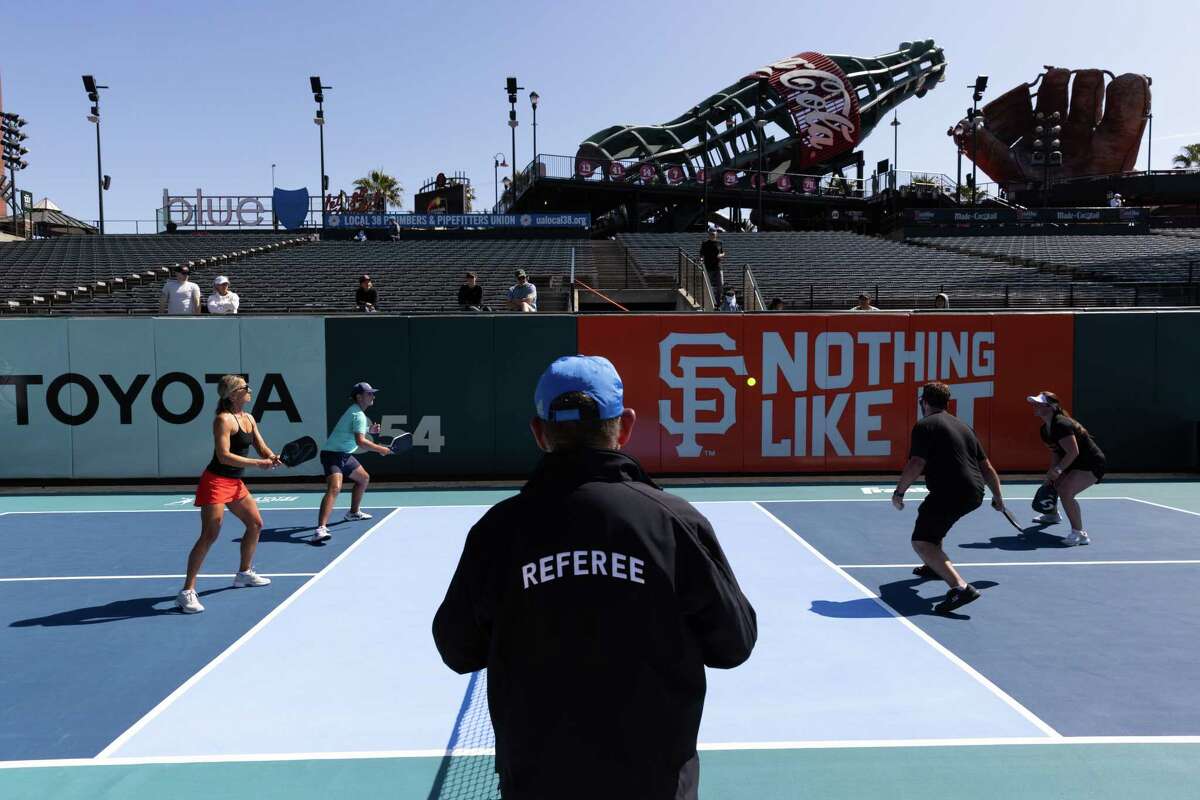
Credit: www.sfchronicle.com
Seeking Professional Coaching And Guidance*
To become a pro pickleball player, seeking professional coaching and guidance is essential for honing skills and strategies. Expert coaching can provide valuable insights and personalized training to help you reach your full potential in this fast-growing sport.
Benefits Of Working With A Pickleball Coach
- Personalized training plan: A professional pickleball coach can create a customized training plan tailored to your specific needs and goals, helping you improve more quickly and efficiently.
- Correcting technique and form: A coach can help identify any flaws in your technique and form, providing valuable feedback and guidance to help you correct and refine your skills.
- Learning advanced strategies: Professional pickleball coaches have in-depth knowledge of the game and can teach you advanced strategies and tactics to gain a competitive edge over your opponents.
- Mental preparation: A coach can help you develop mental toughness, focus, and confidence, enabling you to perform better even under pressure and challenging situations.
- Motivation and accountability: Working with a coach provides you with regular feedback, motivation, and accountability to stay on track with your training and push yourself to reach new levels of performance.
- Injury prevention: A coach can teach you proper warm-up and cool-down techniques, as well as help you avoid common injuries by guiding you on how to minimize strain on your body during intense gameplay.
How To Find The Right Coach For You
- Research and recommendations: Use online resources, such as pickleball forums and social media groups, to seek recommendations and reviews for coaches in your area.
- Attend clinics and workshops: Participate in clinics and workshops hosted by professional players and coaches to get a sense of their teaching style and expertise.
- Personal coaching philosophy and compatibility: Consider the coaching style and philosophy of prospective coaches to ensure they align with your learning preferences and goals.
- Experience and credentials: Look for coaches with extensive experience and relevant certifications or credentials.+
- Trial session: Request a trial session or consultation to assess the coach’s teaching methods and determine if they are a good fit for your learning style.
- Availability and schedule: Consider the coach’s availability and schedule to ensure they can accommodate your training needs and provide consistent coaching.
Utilizing Private Lessons And Training Sessions
- One-on-one attention: Private lessons offer personalized attention and allow the coach to focus specifically on your strengths, weaknesses, and areas of improvement.
- Targeted skill development: During private lessons, you can concentrate on specific skills or aspects of the game that you want to improve, receiving immediate feedback and guidance.
- Intensive training sessions: Training sessions with a coach provide intense practice and drills, pushing you to your limits and helping you develop faster.
- Video analysis: Coaches often use video analysis to assess your technique and provide detailed feedback, allowing you to visualize and understand areas that require improvement.
- Practice routines: A coach can help you develop effective practice routines, ensuring you make the most of your training sessions and improve steadily over time.
- Progress tracking and goal setting: Working with a coach allows you to monitor and track your progress regularly, as well as set realistic goals that align with your long-term aspirations.
Remember, seeking professional coaching and guidance is a vital step towards becoming a pro pickleball player. A coach can provide the expertise, personalized training, and motivation you need to reach your full potential and excel in the sport. Invest in your development and watch your skills soar to new heights!
Identifying And Learning From The Best Players*
Becoming a pro pickleball player requires identifying and learning from the best players in the sport. By studying their techniques and strategies, aspiring players can improve their skills and reach new levels of success.
Studying And Analyzing Professional Pickleball Matches
- Watching professional pickleball matches is a great way to learn from the best players in the game. By observing their strategies and techniques, you can gain valuable insights to improve your own skills. Here are some ways to effectively study and analyze professional matches:
- Pay attention to the positioning of players on the court. Take note of where they stand and how they move to anticipate shots and maintain control of the game.
- Observe the players’ shot selection. Look for patterns in their shot placement and the types of shots they use in different situations.
- Analyze their shot execution. Take note of their form, grip, and swing technique. Pay attention to the power, accuracy, and consistency of their shots.
- Study the players’ decision-making skills and game strategy. Look for how they adapt to their opponents’ strengths and weaknesses, and how they maximize their own strengths.
- Take note of the players’ communication and teamwork during doubles matches. Look for how they coordinate their movements and strategize together.
Strategies For Networking With Top Players
- Networking with top pickleball players can provide you with valuable opportunities to learn from their experiences and gain insights into the game. Here are some effective strategies for establishing connections with top players:
- Attend tournaments and events where professional players are participating. Take the opportunity to introduce yourself and engage in casual conversations.
- Utilize social media platforms to connect with top players. Follow their accounts, engage with their posts, and send them direct messages expressing your admiration for their skills and achievements.
- Join online pickleball communities and forums where top players are active. This provides a platform to ask questions, seek advice, and interact with experienced players.
- Consider joining a local pickleball club or association that attracts skilled players. This allows you to regularly interact with them during practices, drills, and casual matches.
- Attend professional-level pickleball clinics and workshops where top players are often involved as instructors. Participating in these events provides a chance to learn from them directly.
Attending Pickleball Clinics And Workshops
- Pickleball clinics and workshops are an excellent way to enhance your skills, learn from the best, and network with other passionate players. By attending these events, you can gain valuable knowledge, receive personalized coaching, and immerse yourself in a focused learning environment. Here are some benefits of attending pickleball clinics and workshops:
- Access to expert instruction: Clinics and workshops are typically conducted by experienced coaches and top players, who can provide professional guidance and feedback on your technique, strategy, and overall gameplay.
- Skill development: These events often cover various aspects of pickleball, including fundamentals, advanced techniques, shot selection, court positioning, and mental game. By participating, you can work on specific areas of improvement.
- Exposure to different playing styles: Clinics and workshops attract players from diverse backgrounds and skill levels. This exposure allows you to play against and learn from individuals with different playing styles, expanding your knowledge and adaptability on the court.
- Networking opportunities: These events provide a platform to connect with like-minded players, establish new friendships, and build a supportive pickleball community. Networking can lead to practice partnerships, friendly matches, and even potential tournament collaborations.
- Motivation and inspiration: Being surrounded by passionate players and receiving expert instruction can reignite your enthusiasm for the game. The energy and inspiration gained from attending these events can fuel your progress and commitment to becoming a pro pickleball player.
Remember, becoming a pro pickleball player requires dedication, practice, and continuous learning. By studying and analyzing professional matches, networking with top players, and attending clinics and workshops, you can accelerate your growth and set yourself on the path to success in the sport.
Frequently Asked Questions On How Do You Become A Pro Pickleball Player
How Can I Become A Pro Pickleball Player?
Becoming a pro pickleball player requires dedication, practice, and a solid game strategy. Start by honing your skills through regular practice sessions and joining local pickleball leagues. Seeking coaching from experienced players and participating in tournaments can also contribute to your progression.
It’s important to stay committed, stay fit, and continuously work on improving your technique and gameplay.
What Are The Essential Skills For A Pro Pickleball Player?
To be a pro pickleball player, you need a combination of skills including agility, hand-eye coordination, shot placement, strategy, and a strong serve. Mastering these skills will allow you to control the game, execute accurate shots, and outmaneuver your opponents.
Consistent practice and experience playing in competitive environments can help you develop and refine these essential skills.
How Long Does It Take To Become A Pro Pickleball Player?
The time it takes to become a pro pickleball player varies depending on individual commitment and natural talent. On average, it can take several years of consistent practice, training, and playing in competitive environments to reach a professional level. Keep in mind that everyone progresses at their own pace, so focus on your own improvement and enjoy the journey rather than solely pursuing a specific timeframe.
Conclusion
Becoming a pro pickleball player requires a combination of dedication, practice, and a love for the game. It’s important to start with the fundamentals, hone your skills through consistent training, and seek out opportunities to play with more experienced players.
Building mental resilience and staying focused during matches are also crucial aspects of becoming a pro. Additionally, maintaining a healthy lifestyle and prioritizing strength and conditioning exercises will give you an edge on the court. Remember, success in pickleball takes time, so be patient with yourself and enjoy the journey.
Keep pushing your limits, learning from every game, and seeking guidance from mentors who can offer valuable insights. With determination and persistence, you can make your dreams of becoming a pro pickleball player a reality.


