


Tennis racquets do make a difference as they directly impact a player’s performance and game style. The right racquet can enhance power, control, and maneuverability, while the wrong one can hinder performance.
Factors such as racquet weight, head size, string tension, and grip size all affect the racquet’s performance. Players with different skill levels and playing styles require different racquets to optimize their performance on the court. Whether a player prefers power, control, or a balance of both, the choice of racquet is crucial.
We will delve into the various ways in which tennis racquets can make a difference and guide you on selecting the right racquet for your game.
Understanding The Impact Of Technological Advancements
Understanding the impact of technological advancements, it is evident that the choice of tennis racquets can significantly influence a player’s performance. With innovative designs and materials, modern racquets offer improved power, control, and maneuverability, making a noticeable difference on the court.
Players must consider these advancements to stay competitive and enhance their game.
The traditional wooden racquets era:
- Wooden tennis racquets were the foundation of the sport, being widely used from the late 1800s to the mid-1960s.
- These racquets were made of laminated wood, typically ash or maple, which provided limited power and control.
- The smaller head size and heavier weight of wooden racquets made it challenging to generate power, resulting in a more finesse-based playing style.
- The lack of advanced materials restricted the racquet’s performance, making it less forgiving on mishits.
Introduction of composite materials:
- The introduction of composite materials in tennis racquet construction revolutionized the game in the 1970s.
- Composite racquets combine different materials like fiberglass, Kevlar, and carbon fibers to enhance performance.
- The use of composites allowed for larger head sizes, lighter weights, and increased power and control.
- These racquets offered a larger sweet spot, reducing mishits and giving players more confidence in their shot-making abilities.
- Composite racquets also absorbed more shock, reducing the risk of tennis elbow and other repetitive strain injuries.
The emergence of graphite racquets:
- Graphite racquets took the sport to new heights in the 1980s and early 1990s, thanks to their lightness and maneuverability.
- Graphite, a carbon-based material, offered excellent strength and stiffness, providing tremendous power and responsiveness.
- This advancement led to increased racket head speed, giving players the ability to generate more spin and pace on their shots.
- The introduction of graphite racquets encouraged a more aggressive style of play, with players hitting stronger and faster shots.
- These racquets also offered improved vibration dampening, reducing the risk of arm injuries and enhancing player comfort.
The technological advancements in tennis racquets have had a profound impact on the game. From the traditional wooden racquets era to the introduction of composite materials and the emergence of graphite racquets, each innovation has brought significant improvements in power, control, maneuverability, and player comfort.
Today, players can enjoy a more dynamic and exciting game thanks to these advancements in tennis racquet technology.
Analyzing The Benefits Of New Racquet Designs
Discover the impact of new racquet designs on tennis performance. Uncover the benefits of these innovative racquets and their potential to make a difference in the game.
Tennis players are always on the lookout for equipment that can help them enhance their performance on the court. One question that often arises is: do tennis racquets make a difference? In this blog post, we will analyze the benefits of new racquet designs, focusing on increased power and control, enhanced maneuverability and stability, and reduced vibration and player fatigue.
Increased Power And Control:
- Racquets with advanced technologies and design elements can significantly increase the power generated by a player’s swing.
- Innovations such as stiffer frames and larger sweet spots allow for greater ball speed and increased control.
- The use of lightweight materials in racquet construction enables players to generate more power without compromising on control and accuracy.
- Modern racquets often incorporate features like extended length and added grommet holes to improve leverage and amplify the impact of a player’s shot.
Enhanced Maneuverability And Stability:
- New racquet designs focus on improving maneuverability by reducing weight, optimizing balance, and fine-tuning the frame’s aerodynamics.
- Lighter racquets can be maneuvered quickly, enabling players to react faster and retrieve difficult shots.
- Stabilizing technologies, such as vibration-dampening systems and torsional stability enhancements, help maintain better control during off-center hits and reduce unwanted racquet twisting.
- Adjusting the weight distribution of a racquet can also contribute to improved stability, allowing players to feel more confident in their shots and footwork.
Reduced Vibration And Player Fatigue:
- One common complaint among players is the discomfort caused by racquet vibrations upon ball impact. However, advancements in racquet technology aim to address this issue.
- Vibration-dampening materials and specialized construction techniques help reduce the levels of vibrations transmitted to the player’s hand, resulting in a more comfortable playing experience.
- By minimizing vibrations, players can avoid potential injuries such as tennis elbow and experience reduced muscle fatigue throughout extended matches or training sessions.
- Racquets that offer better shock absorption contribute to improved shot consistency by providing a more stable hitting platform.
With new racquet designs offering benefits like increased power and control, enhanced maneuverability and stability, and reduced vibration and player fatigue, it is clear that tennis racquets do make a significant difference on the court. Players can take advantage of these advancements to improve their performance and enjoy a more comfortable and rewarding playing experience.
So, the next time you step onto the court, consider investing in a racquet that suits your playing style and maximizes your potential.
Exploring The Influence Of Racquet Specifications
Exploring the impact of racquet specifications on tennis performance reveals the undeniable influence of these tools. Players can feel the difference in power, control, and maneuverability when using racquets with varying specifications, highlighting the importance of choosing the right one.
When it comes to playing tennis, your choice of racquet can have a significant impact on your performance. The specifications of a racquet, including head size, string pattern and tension, as well as weight and balance, all contribute to the overall feel and playability of the racquet.
In this section, we will delve into each of these factors and how they can affect your game.
Head Size And Its Effect On Power And Control
The head size of a tennis racquet can greatly influence the power and control you have over your shots. Here are a few key points to consider:
- Larger head sizes (typically over 100 square inches) offer a larger sweet spot, providing more power and forgiveness on off-center hits.
- Smaller head sizes (usually below 100 square inches) generally offer more control and precision, but require greater accuracy to generate power.
String Pattern And Tension And Their Impact On Spin And Feel
The string pattern and tension of a tennis racquet play an essential role in generating spin and enhancing the overall feel of your shots. Let’s explore how these factors affect your game:
- A more open string pattern (fewer main strings) allows the ball to sink into the strings, resulting in greater spin potential.
- Conversely, a denser string pattern (more main strings) offers improved control and durability but may sacrifice some spin potential.
- String tension also affects the playability of a racquet. Higher tension provides better control but reduces power, while lower tension offers more power but may compromise control.
Weight And Balance For Customized Playing Styles
The weight and balance of a tennis racquet are crucial for tailoring your playing style to your preferences and needs. Here’s what you should know:
- Heavier racquets are generally more stable and provide increased power, making them suitable for players with longer swings or looking to add power to their shots.
- Lighter racquets can offer greater maneuverability, allowing players to generate racquet head speed easily and add spin to their shots.
- The balance of a racquet can be head-heavy, head-light, or evenly balanced. Each balance point affects the racquet’s maneuverability, stability, and power potential.
Understanding the influence of racquet specifications is essential for every tennis player seeking to optimize their performance. By considering factors such as head size, string pattern and tension, as well as weight and balance, you can select a racquet that perfectly suits your playing style and preferences.
So, next time you pick up a tennis racquet, remember that even the smallest specifications can make a significant difference in your game.
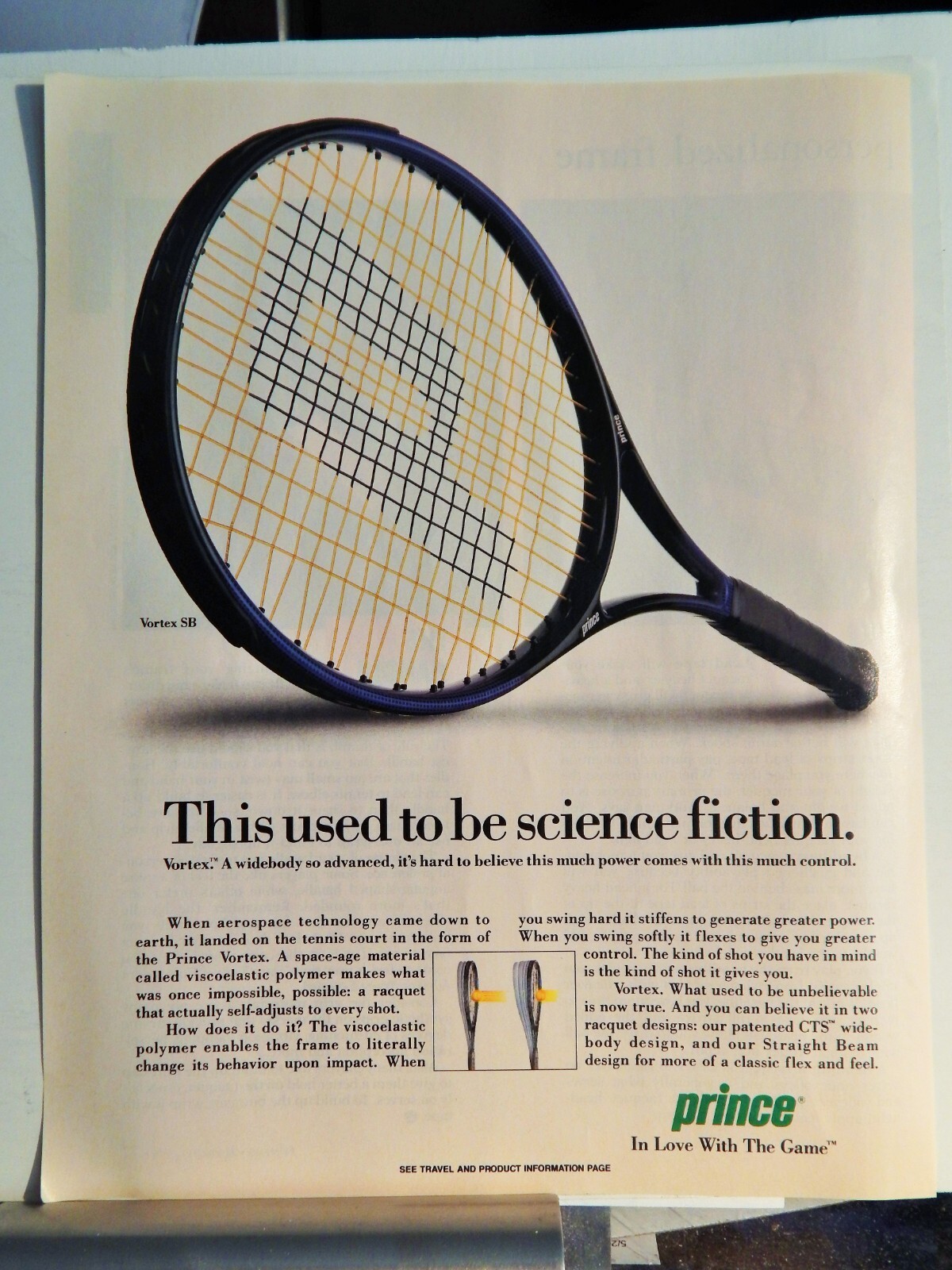
Credit: www.ebay.com
Examining The Role Of Materials In Racquet Construction
Examining the role of materials used in tennis racquet construction unveils the impact they have on performance. From carbon fiber to graphite, each component contributes to power, control, and maneuverability, emphasizing the importance of choosing the right racquet.
When it comes to tennis racquets, the materials used in their construction play a crucial role in their performance on the court. From graphite composites to modern string technology and damping materials, each component contributes significantly to the overall characteristics of the racquet.
In this section, we will delve into these materials and explore the impact they have on the game.
Graphite Composites And Their Strength-To-Weight Ratio:
Graphite composites form the backbone of most modern tennis racquets, mainly due to their exceptional strength-to-weight ratio. Here’s a closer look at the role they play:
- Graphite fibers: These fibers are incredibly lightweight, allowing manufacturers to achieve optimal control and maneuverability without sacrificing power.
- Reinforcement materials: By incorporating additional materials such as carbon fiber, basalt, or Kevlar, manufacturers can enhance the racquet’s stiffness and stability, resulting in more precise shots and reduced frame deformation.
Modern String Technology And Its Effect On Ball Response:
The strings on a tennis racquet may seem insignificant, but they have a profound impact on the player’s experience. Here are some key aspects of modern string technology:
- Material variations: Strings can be made from materials like nylon, polyester, kevlar, or even natural gut. Each material offers varying levels of power, control, spin, and durability.
- Tension and gauge: The tension at which the strings are strung and the thickness of the strings, referred to as the gauge, influence the racquet’s feel and responsiveness. Higher string tension provides more control, while lower tension offers more power.
- Spin-friendly designs: Some strings employ a textured or shaped profile to enhance ball bite, enabling players to generate greater spin on their shots.
Damping Materials For Vibration Reduction:
Vibration caused by ball impact can be uncomfortable and even lead to arm injuries. To address this, tennis racquets incorporate various damping materials, such as:
- Sorbothane: This viscoelastic material effectively absorbs and dissipates vibrations, providing a more comfortable feel and reducing the risk of injury.
- Rubber grommets: Placed around the string holes, rubber grommets act as shock absorbers, minimizing the transmission of vibrations to the player’s arm.
The materials used in tennis racquet construction significantly influence the player’s experience on the court. Graphite composites offer strength without compromising on weight, modern string technology provides control, power, and spin, while damping materials reduce vibration, contributing to a more comfortable and injury-free game.
By considering these factors, players can find a racquet that suits their playing style and maximizes their performance.
Understanding The Importance Of Racquet Geometry
Understanding the importance of racquet geometry is key to recognizing whether tennis racquets make a difference. The shape and design of a racquet can greatly impact the player’s performance, providing enhanced control, power, and maneuverability on the court.
Frame stiffness and energy transfer:
- The frame stiffness of a tennis racquet plays a crucial role in energy transfer during every shot. Here’s why:
- Stiff frames allow for more energy to be transferred to the ball upon impact, resulting in powerful shots.
- When the racquet’s frame is too flexible, it absorbs more energy, leading to a reduction in power.
- The stiffness of the frame also affects the racquet’s control and responsiveness, allowing for precise shot placement.
- Players who prefer a more powerful game often opt for stiffer racquets, while those who prioritize control may choose racquets with a more flexible frame.
Aerodynamics and racket speed:
- The aerodynamics of a tennis racquet can significantly impact racket speed and maneuverability. Consider the following:
- Sleek and streamlined racquet shapes reduce air resistance, making it easier for players to swing the racquet faster.
- A more aerodynamic racquet can also increase shot speed, allowing players to deliver powerful shots.
- The design and construction of the racquet’s head and throat impact its aerodynamic properties. Advanced materials and innovative designs help minimize drag and optimize performance.
- Players seeking to increase their swing speed and generate greater shot velocity should focus on racquets with superior aerodynamics.
String bed dynamics and power generation:
- The string bed dynamics of a tennis racquet are vital for generating power and controlling the ball. Consider the following key points:
- The tension and pattern of the strings within the racquet’s frame affect how the ball rebounds off the strings.
- Higher string tension can result in more power, as the ball compresses the strings more before rebounding.
- Wider string spacing increases the ball’s dwell time on the strings, allowing for enhanced control and spin generation.
- String materials, such as natural gut, synthetic gut, and polyester, also influence the racquet’s feel and power potential.
- Players looking to maximize power should select a racquet with a string bed that offers a balance between tension, spacing, and desired power levels.
Understanding the importance of racquet geometry is crucial for tennis players seeking to optimize their game. Frame stiffness affects energy transfer, aerodynamics impact racket speed, and string bed dynamics play a role in power generation and control. By considering these elements, players can select a racquet that complements their playing style and enhances their performance on the court.
Considering The Significance Of Player-Specific Customization
Player-specific customization plays a crucial role in determining whether tennis racquets make a difference. Individual players’ needs and preferences must be taken into account for optimal performance and comfort on the court.
:
In the world of tennis, finding the perfect racquet can make a significant difference in a player’s performance on the court. Each player has unique strengths, playing style, and skill level, which makes the customization of a racquet essential. When it comes to choosing the right racquet, identifying the optimal grip size, and customizing the weight and balance, players can fine-tune their equipment to match their specific needs.
Let’s explore the importance of player-specific customization in more detail:
Choosing The Right Racquet For Skill Level And Playing Style:
The skill level and playing style of a tennis player play a crucial role in determining the suitable racquet for them. Here are some key aspects to consider when making this decision:
- Head size: Players with intermediate or advanced skills often benefit from a smaller head size, providing more control and precision. Beginners, on the other hand, may find a larger head size, which offers a larger sweet spot, more forgiving.
- Racquet length: Longer racquets can give players extra reach and leverage, making them a popular choice for taller individuals. However, shorter racquets can offer greater maneuverability for players who prefer a faster swing.
- String pattern: The string pattern, whether open or dense, can impact the spin and control of a shot. A more open string pattern allows for greater spin potential, while a denser one offers more control.
Identifying The Optimal Grip Size For Comfort And Performance:
A proper grip size is crucial for both comfort and performance on the tennis court. Here are some factors to consider when determining the optimal grip size:
- Hand size: The size of your hand plays a significant role in selecting the right grip size. Smaller hands may require a smaller grip, while bigger hands may need a larger one for better control and stability.
- Comfort: A grip that is too small or too big can lead to discomfort and affect your technique. Finding the right grip size ensures a comfortable hold, reducing the risk of injuries and allowing you to focus on your game.
Customizing Weight And Balance For Personalized Feel:
Customizing the weight and balance of a tennis racquet allows players to personalize their feel and optimize their performance. Here are some customization options to consider:
- Weight: Adding or reducing weight to a racquet can impact power and stability. Players who prefer a more powerful shot may opt for a heavier racquet, while others looking for more maneuverability may choose a lighter option.
- Balance: The balance point of a racquet affects its maneuverability and control. Players can choose from a range of options, including head-heavy, head-light, or evenly balanced racquets, based on their playing style and preferences.
Customizing your racquet to match your skill level, playing style, grip size, and personal preferences is key to unlocking your full potential on the court. Whether you’re an aspiring beginner or a seasoned professional, taking the time to find the perfect racquet that complements your game can make a remarkable difference in your performance, giving you the winning edge you need.
So, don’t underestimate the significance of player-specific customization when it comes to selecting your tennis racquet.
Leveraging Power And Control Advantages
Leverage the power and control advantages provided by different tennis racquets to enhance your game performance. Discover how the right racquet can make a significant difference in your overall playing experience.
Tennis racquets play a crucial role in enhancing your performance on the court. With advancements in technology, modern racquets offer a wide range of advantages, including increased power and enhanced control. Leveraging these advantages can make a significant difference in your game.
Let’s explore how you can utilize the power advantage to dominate opponents and leverage the enhanced control for precise shot placement.
Utilizing Increased Power To Dominate Opponents
- Greater shot depth and pace: A racquet with increased power allows you to hit the ball with more force, resulting in shots with greater depth and pace. This forces your opponents to constantly defend and react quickly, giving you the upper hand in dictating the tempo of the game.
- Efficient serves: Power-based racquets enable you to serve with more speed and precision. By delivering powerful serves, you can put your opponents under pressure right from the start, making it challenging for them to return the ball effectively.
- Overpowering shots: With the added power, you can hit winners more frequently, overpowering your opponents and putting them on the defensive. This gives you the advantage of controlling the game and keeping your opponents guessing.
Leveraging Enhanced Control For Precise Shot Placement
- Improved accuracy: Racquets with enhanced control allow you to hit shots with superior accuracy, resulting in precise shot placement. This means you can target specific areas of the court, creating opportunities to place the ball out of your opponents’ reach.
- Enhanced spin capabilities: Control-oriented racquets enable you to generate more spin on your shots. This allows you to add topspin or backspin as needed, giving you the ability to manipulate the ball’s trajectory and create angles that are difficult for your opponents to handle.
- Better touch and feel: A racquet with improved control provides better touch and feel, allowing you to execute delicate shots with finesse. This can be particularly advantageous when attempting drop shots, volleys, or delicate slices, giving you better command over the ball and keeping your opponents off balance.
Balancing Power And Control For Versatile Gameplay
To achieve a well-rounded game, it’s essential to find the right balance between power and control. While power can help you dominate the game, control ensures precision and finesse. Here’s how you can achieve a versatile gameplay by finding the right balance:
- Choosing the right racquet: Select a racquet that offers a balance between power and control, based on your playing style and preferences. Consult with a tennis expert or try out different racquets to find the one that suits your needs.
- Constant practice: Regular practice and getting accustomed to your racquet’s characteristics will help you better control the power it provides, enabling you to strike a balance between power and control during gameplay.
- Adapting to different situations: Mastering the art of adjusting your shot selection based on the game situation will help you effectively utilize the power or control advantages offered by your racquet. This adaptability ensures you are always one step ahead of your opponents.
By leveraging the power and control advantages offered by modern tennis racquets, you can elevate your game to new heights. With improved shot depth, pace, and accuracy, you’ll dominate your opponents, while precise shot placement and enhanced spin capabilities will give you the finesse needed to outmaneuver them.
Striking a balance between power and control will make you a versatile player, capable of adapting to any situation on the court. So, choose your racquet wisely, practice diligently, and take your performance to the next level!
Mastering Spin And Shot Variety
Mastering spin and shot variety in tennis is crucial for success on the court. Discover how different tennis racquets can make a significant difference in your game, allowing you to execute various shots with precision and control.
Do tennis racquets really make a difference when it comes to mastering spin and shot variety? Absolutely! In this section, we will explore the influence of string pattern and tension on spin and how racquet technology can be used to generate topspin, backspin, and slice.
Additionally, we’ll discuss how incorporating a variety of spins into your shot repertoire can significantly enhance your game.
Understanding The Influence Of String Pattern And Tension On Spin:
- String pattern and tension play a crucial role in the amount of spin you can generate on the ball. Here’s how they affect your shots:
- String pattern: A dense string pattern (more strings and smaller gaps between them) provides more control and less spin, while an open string pattern (fewer strings and larger gaps) allows for more spin potential with slightly less control.
- String tension: Higher string tension results in less string movement during ball contact, offering more control but reducing spin potential. On the other hand, lower string tension allows for greater string movement and increased spin capability.
Using Racquet Technology To Generate Topspin, Backspin, And Slice:
- Modern racquet technology has significantly contributed to players’ ability to produce various types of spin. Here are some key advancements:
- Spin-friendly racquet frames: Many racquet manufacturers have engineered frames that promote spin. These racquets typically feature open string patterns, allowing the strings to “bite” the ball and generate more spin.
- Textured strings: Some strings are designed with unique textures that enable them to grip the ball better, enhancing spin potential. These textured strings can greatly enhance the effectiveness of topspin, backspin, and slice shots.
Expanding Shot Repertoire With A Variety Of Spins:
- Incorporating a variety of spins into your shot repertoire can elevate your game to the next level. Here’s why:
- Tactical advantage: Different spins can disrupt your opponent’s rhythm and create opportunities to take control of the point. By mastering topspin, backspin, and slice, you can keep your opponents guessing and constantly adjust to their shots.
- Shot variation: Having a range of spins at your disposal allows you to hit a wider variety of shots. For example, topspin shots typically provide greater depth and heavier bounce, while slice shots can stay low and skid through the court. By diversifying your shot selection, you become a more unpredictable and versatile player.
So, if you’re looking to improve your game and enhance your ability to create spin and shot variety, choosing the right tennis racquet and understanding the influence of string pattern and tension is crucial. Combine these factors with proper technique and practice, and you’ll see a remarkable improvement in your spin game.
Adapting To Opponents And Different Court Surfaces
Tennis racquets play a significant role in adapting to opponents and different court surfaces. The right racquet can make a difference, providing the necessary power and control needed to excel on any court.
Tennis is a game of precision, strategy, and adaptation. While skill and technique play a vital role, having the right equipment can make a significant difference in a player’s performance on the court. Tennis racquets, in particular, can be tailored to suit different playing conditions, opponents, and court surfaces.
By adjusting racquet specifications for different playing conditions, exploiting the advantages of specialized racquets for specific opponents, and maximizing on-court performance through equipment adaptation, tennis players can take their game to the next level.
Adjusting Racquet Specifications For Different Playing Conditions:
- String tension: The tension of the strings can be adjusted to suit different playing conditions. Higher tension provides more control and accuracy, while lower tension offers more power and spin.
- Racquet weight: Lighter racquets are easier to maneuver and generate faster swing speeds, while heavier racquets provide more stability and power.
- Balance: The balance of a racquet can be head-light, head-heavy, or evenly balanced. Head-light racquets offer more maneuverability, while head-heavy racquets provide additional power.
- Flexibility: The flexibility of a racquet affects the amount of power and control it provides. Stiffer racquets offer more power, while more flexible racquets enhance control.
Exploiting The Advantages Of Specialized Racquets For Specific Opponents:
- Power-oriented racquets: Against opponents who generate their own power, using a power-oriented racquet can help level the playing field. These racquets have larger heads and are stiffer, generating more power with minimal effort.
- Control-oriented racquets: When facing opponents with aggressive play styles, control-oriented racquets can provide better accuracy and precision. These racquets have smaller heads and offer more control over shots.
- Spin-friendly racquets: For opponents who struggle with high levels of spin, using a racquet that promotes spin can be advantageous. These racquets typically have open string patterns and allow for easier topspin and slice shots.
Maximizing On-Court Performance Through Equipment Adaptation:
- Grip size: Finding the right grip size can enhance comfort and prevent injury. A proper grip size allows for better feel and control during shots.
- Overgrips: Overgrips can increase the thickness and tackiness of the grip, allowing for better grip and control of the racquet.
- Dampeners: Racquet dampeners can reduce vibrations, providing a more comfortable feel and reducing the risk of arm injuries.
- Customization: Professional players often customize their racquets by adding lead tape to adjust the weight and balance according to their preferences.
Tennis racquets do make a difference. By adapting racquet specifications for different playing conditions, exploiting specialized racquets for specific opponents, and maximizing on-court performance through equipment adaptation, players can optimize their game and gain a competitive edge. So, next time you step on the tennis court, remember to choose your racquet wisely and unlock your full potential.
Frequently Asked Questions On Do Tennis Racquets Make A Difference
Do Tennis Racquets Make A Difference In Performance?
Yes, tennis racquets do make a difference in performance. The racquet’s weight, balance, string tension, and head size can impact factors such as power, control, and maneuverability on the court.
How Does The Weight Of A Tennis Racquet Affect Gameplay?
The weight of a tennis racquet can affect the player’s swing speed and power. Lighter racquets are easier to maneuver but may lack power, while heavier racquets can provide more stability and power but may be less maneuverable.
What Role Does The String Tension Play In Tennis Racquets?
String tension affects the power and control of a tennis racquet. Higher string tension provides more control but can reduce power, while lower tension increases power but may sacrifice some control.
Can The Head Size Of A Tennis Racquet Impact Gameplay?
Yes, the head size of a tennis racquet can influence gameplay. A larger head size offers a larger sweet spot, providing more forgiveness on off-center shots, while a smaller head size offers more control and precision.
Conclusion
Choosing the right tennis racquet is vital in enhancing your game performance. With so many options available, it is important to consider factors like skill level, playing style, and personal preference. By selecting a racquet that suits your individual needs, you can optimize your swing, control, and power on the court.
Whether you prefer a lightweight racquet for maneuverability or a heavier one for added stability, it can make a significant difference in your overall game. Additionally, the technology and materials used in modern racquets are constantly evolving, providing players with advanced features that can help improve their skills.
So, next time you step onto the court, remember that your choice of tennis racquet can have a direct impact on your performance and enjoyment of the game. Take your time, do your research, and find the racquet that best complements your game to truly elevate your tennis experience.
Related posts:
 What is the Most Important Skill in Pickleball? Master the Art of Patience
 How Many People are Playing Pickleball: Demographics and Popularity Stats
 How Old are Pro Pickleball Players: Unveiling the Youthful Faces of the Sport
 What Do Pickleball Players Make? Discover the Lucrative Earnings of Pro Players
