


To learn how to play pickleball, start by finding a local community center or sports club that offers lessons or open play sessions. Joining a beginner’s group is a great way to get started and learn the basics of the game.
Additionally, there are numerous online resources such as videos, tutorials, and forums that provide helpful tips and strategies. Practice regularly and gradually improve your skills by playing with more experienced players. With time and dedication, you’ll become proficient in the game of pickleball.
Remember, practice and consistency are key to mastering any new sport.
The Basics Of Pickleball
Pickleball is easy to learn with a few key steps. Start by understanding the rules and equipment, then practice your skills with friends or at local courts to improve your game. Enjoy the thrill of this popular sport!
If you’re new to Pickleball, you may have a few questions about this growing sport. Fear not! In this section, we will cover all the basics you need to know in order to dive into Pickleball with confidence. From understanding the game to knowing the equipment and rules, let’s get started!
What Is Pickleball?
Pickleball is a paddle sport that combines elements of tennis, badminton, and ping pong. It is played on a court with similar dimensions to a doubles badminton court. The game is fast-paced, fun, and can be enjoyed by players of all ages and skill levels.
Whether you’re a beginner or an experienced athlete, Pickleball offers a unique and exciting experience.
Equipment Needed For Pickleball:
To get started with Pickleball, you’ll need a few essential pieces of equipment. Here’s what you’ll need:
- Pickleball Paddles: Pickleball paddles are solid paddles, typically made of wood, graphite, or composite materials. They are larger than ping pong paddles but smaller than tennis rackets. Choose a paddle that suits your playing style and skill level.
- Pickleballs: Pickleballs are unique and have a distinct design. They have larger holes than traditional wiffle balls, allowing for slower flight and increased control. They are made of durable plastic and are available in a variety of colors.
- Court: A Pickleball court is the playing surface for the game. It is similar in size to a badminton court, measuring 20 feet wide and 44 feet long. The court is divided into two halves by a net.
Understanding The Court And Rules:
Now that you have your equipment, let’s familiarize ourselves with the layout of the court and the basic rules of Pickleball. Here’s what you need to know:
- Court Layout: A Pickleball court is divided into two halves by a net. There is a non-volley zone (also known as the kitchen) on each side of the net, measuring 7 feet from the net. The court is further divided into right and left service courts and contains boundary lines for singles and doubles play.
- Scoring: Pickleball follows a rally scoring system, meaning that a point is awarded on every serve. Points can only be won by the serving team. Games are typically played to 11 or 15 points, and you must win by at least two points.
- Serving: The serving team must start the serve from behind the baseline. The serve must be made diagonally cross-court and land in the opponent’s service court. Only one serve attempt is allowed, and faults result in a loss of serve.
- Playing the Game: After a successful serve, the ball is played back and forth between the teams. The ball must clear the net and land within the boundaries of the court. Non-volley zone rules apply, which means players cannot volley (hit the ball without it bouncing) while in the kitchen.
By familiarizing yourself with the court layout and understanding the basic rules of Pickleball, you’ll be ready to jump in and start playing in no time!
Remember, Pickleball is an inclusive sport that encourages friendly competition and socialization. So grab your paddle, find a partner, and enjoy the thrill of Pickleball on the court!
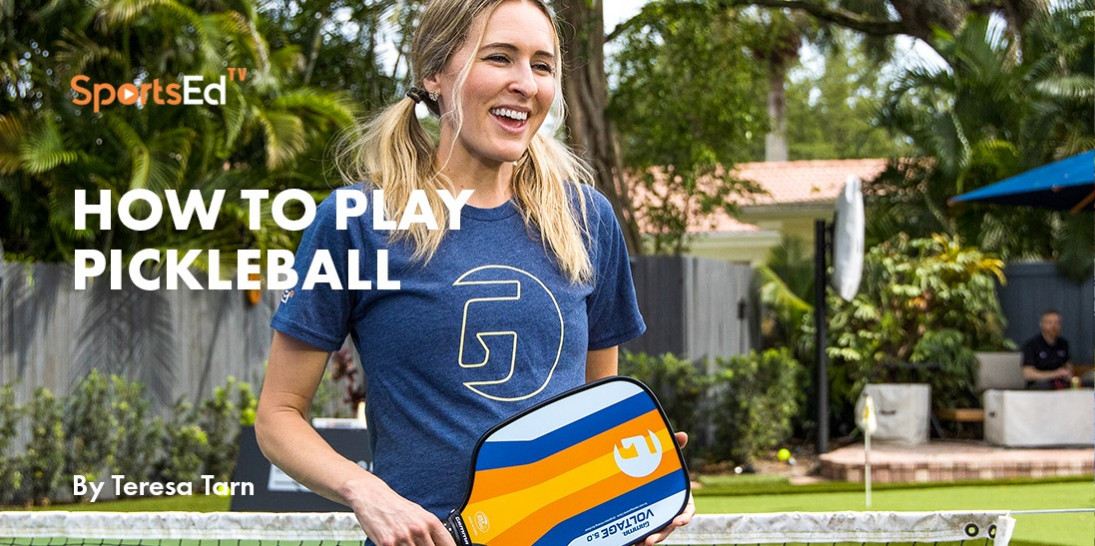
Credit: sportsedtv.com
Master The Basic Techniques
Learn to play pickleball by mastering the basic techniques, such as grip, dinks, and volleys. These fundamental skills will set you on the path to becoming a pickleball pro in no time.
Playing Pickleball is a great way to stay active, have fun, and connect with others who share your interest in the sport. Whether you’re a complete beginner or looking to improve your skills, mastering the basic techniques is essential. In this section, we’ll dive into the key aspects of Pickleball, focusing on grip and holding the paddle, perfecting the serve, as well as forehand and backhand shots.
Grip And Holding The Paddle
Having the right grip and holding the paddle correctly is crucial for control and precision in Pickleball. Here’s what you need to know:
- Continental grip: Start by holding the paddle with your non-dominant hand and place the handle along your palm diagonally from the base of your index finger to the heel of your hand. This grip allows for versatility and ease in switching between forehand and backhand shots.
- Loose grip: Avoid gripping the paddle too tightly as it can restrict your wrist movement. Maintain a relaxed grip to allow for flexibility and better maneuverability during gameplay.
- Finger placement: Position your fingers comfortably around the handle, not too close to the paddle’s face. This positioning provides stability and control over your shots.
Perfecting The Serve
The serve sets the tone for each point in Pickleball. Focus on these aspects to improve your serve:
- Stance and placement: Stand with your feet parallel and shoulder-width apart, slightly angled towards the non-volley zone. Position the ball on your non-dominant hand and hold the paddle with your dominant hand.
- Underhand serve: Swing the paddle in an arc motion, making contact with the ball below waist level. Aim to hit the ball just after it reaches its highest point in your toss.
- Controlled power: While generating power is important, accuracy is equally crucial. Focus on controlled movements and timing to ensure your serve lands in the desired location on the opposite side of the court.
Forehand And Backhand Shots
Mastering both forehand and backhand shots is key to becoming a well-rounded Pickleball player. Consider the following:
- Forehand shot: Start with your body in a sideways stance, facing the net. As the ball approaches, shift your weight onto your front foot and pivot your body towards the net. Extend your arm and swing the paddle forward, making contact with the ball at waist level.
- Backhand shot: Similar to the forehand, begin with a sideways stance. As the ball comes towards you, rotate your hips and shoulders towards the net. Keep your non-dominant hand on the paddle’s face for stability. Swing the paddle backward and follow through, making contact with the ball at waist level.
Remember, practice makes perfect when it comes to mastering the basic techniques in Pickleball. Spend time honing your skills and gradually incorporate these techniques into your gameplay. With dedication and perseverance, you’ll soon become a formidable player on the Pickleball court.
Strategies To Elevate Your Game
Looking to learn how to play pickleball? Discover effective strategies to elevate your game and become a skilled player in no time. Master the techniques and rules with expert tips and guidance.
Pickleball is an exciting sport that combines elements of tennis, badminton, and table tennis. If you’re looking to elevate your game and improve your skills, there are some effective strategies you can employ on the court. In this section, we’ll explore two key aspects that can boost your performance: positioning and movement on the court, and effective communication with your partner.
We’ll also discuss different strategies for singles and doubles play. Let’s dive in!
Positioning And Movement On The Court:
- Start by understanding the different positions on the court and where you should be during each phase of the game:
- The server: Positioned on the right side of the court, behind the baseline.
- The receiver: Positioned diagonally opposite the server, also behind the baseline.
- The third shot: Positioned at the non-volley zone (or kitchen), ready to engage in a short game.
- The rally: Maintain proper spacing with your partner, covering the court effectively.
- Master the art of footwork and quick movements to cover the court efficiently:
- Stay on your toes and be ready to move in any direction.
- Practice proper weight transfer and balance to respond swiftly to the ball.
- Utilize split-step technique, a quick hop just before your opponent makes contact with the ball.
Effective Communication With Your Partner:
- Communication is key in doubles play. Here are some strategies for effective coordination:
- Establish clear signals or hand gestures to indicate who will take certain shots.
- Communicate about court positioning and ensure adequate coverage.
- Use verbal cues to indicate when to switch sides or take a particular shot.
- Maintain a positive and supportive attitude to foster good communication and teamwork:
- Offer encouragement and motivation to your partner.
- Avoid blaming or criticizing during the game.
- Celebrate both individual and team successes.
Strategies For Singles And Doubles Play:
- Singles Play:
- Focus on your individual skills, movement, and shot placement.
- Control the pace of the game and strategically maneuver your opponent.
- Utilize both offensive and defensive strategies to gain an advantage.
- Doubles Play:
- Coordinate with your partner to maintain court coverage.
- Use cross-court shots to keep the opponents off-balance.
- Employ different strategies like the stack formation or the poach to surprise your opponents.
By implementing these strategies, you’ll be able to take your Pickleball game to the next level. Remember, practice makes perfect, so get out on the court and keep refining your skills. Enjoy the game and keep pushing yourself to improve!
Learn From The Pros
Looking to learn how to play pickleball? Learn from the pros and get expert tips and techniques to improve your game. Discover the secrets of successful pickleball players and elevate your skills on the court.
If you’re looking to up your pickleball game, learning from the pros is a great way to go. These individuals have honed their skills and mastered the ins and outs of the sport. By following in their footsteps, you can gain valuable knowledge and techniques that will help you become a better player.
Here are three ways you can learn from the pros:
Finding A Pickleball Coach:
- A pickleball coach can provide personalized guidance and training tailored to your specific needs.
- They have experience and expertise in the sport, allowing them to identify areas for improvement and offer valuable feedback.
- A coach can teach you proper techniques, strategies, and help you develop your skills in a structured and systematic manner.
- They can also provide motivation and support, helping you stay focused and committed to your pickleball journey.
- Consider reaching out to local sports clubs, fitness centers, or pickleball organizations to find a qualified coach near you.
Online Resources And Tutorials:
- The internet is a treasure trove of resources for learning pickleball, with numerous websites and platforms offering tutorials, instructional videos, and tips from professional players.
- Online resources allow you to learn at your own pace and convenience, fitting into your schedule seamlessly.
- You can find video tutorials that break down specific skills, strategies, and drills to help you improve your game.
- Some platforms offer comprehensive courses taught by renowned pickleball players, providing you with in-depth knowledge and step-by-step instruction.
- Make use of search engines, YouTube, and pickleball community websites to find reputable online resources.
Attending Pickleball Camps And Workshops:
- Pickleball camps and workshops are organized events where players of all levels can come together to learn and improve their pickleball skills.
- These events are often led by top players and coaches in the pickleball community, providing you with direct access to their expertise.
- At pickleball camps, you’ll usually participate in drills, group sessions, and even have the opportunity to play against and learn from professionals.
- Workshops are focused on specific aspects of the game, such as strategy, technique, or mental preparation, allowing you to dive deeper into those areas.
- Look for local, regional, or national pickleball organizations or clubs that organize camps and workshops and register for upcoming events.
Learning from the pros is an excellent way to take your pickleball game to the next level. Whether it’s finding a coach, utilizing online resources, or attending camps and workshops, these opportunities will help you refine your skills, gain new insights, and enhance your overall performance on the court.
So, what are you waiting for? Start learning from the pros and watch your pickleball skills soar!
Advanced Techniques And Drills
Gain mastery in pickleball with advanced techniques and drills. Elevate your skills and improve your gameplay through effective training methods. Become an expert player with a comprehensive learning approach.
Mastering The Third-Shot Drop
When you’ve reached an intermediate level of pickleball, mastering the third-shot drop technique is essential to elevate your game. The third-shot drop is a strategy used to regain control of the game by hitting a soft, high-arching shot that lands in the non-volley zone (NVZ).
Here are some tips to master this advanced technique:
- Use an open-faced paddle angle to generate topspin and create the desired trajectory of the ball.
- Aim for a shallow bounce on your opponent’s side, just beyond the NVZ, which will make it difficult for them to make an aggressive shot.
- Focus on accuracy and placement rather than power, as the objective is to create an opportunity for you and your partner to move forward and take control of the point.
- Practice consistency by hitting several repetitions of the third-shot drop with different targets in the NVZ, improving your precision over time.
Smashing And Volleying Techniques
To take your pickleball game to the next level, it’s crucial to develop your smashing and volleying skills. Here are some techniques to help you become more proficient in these areas:
- Smashing:
- Position yourself close to the non-volley line to maximize your power and accuracy.
- Keep your eye on the ball and anticipate its trajectory as it approaches your side of the court.
- Generate power by using a wrist snap and a slight upward swing motion.
- Aim for a downward angle to ensure the ball clears the net and lands deep in your opponent’s court, making it challenging for them to return.
- Volleying:
- Position yourself with your knees slightly bent and your weight on the balls of your feet to maintain agility and quick lateral movement.
- Keep your paddle in front of your body to minimize the distance to the ball and maximize your reaction time.
- Use a compact and controlled swing, focusing on placement rather than power.
- Keep your volleys low to the net, making it difficult for your opponents to attack and giving you the advantage in the rally.
Drill Exercises For Improving Agility And Reflexes
Enhancing your agility and reflexes is crucial in pickleball, as it contributes to your ability to react quickly and efficiently on the court. Here are some effective drill exercises to help you improve these skills:
- Ladder Agility Drill:
- Set up a ladder on the ground and perform various footwork drills, such as lateral steps, quick taps, and cross-overs, by moving in and out of the ladder rungs.
- Focus on maintaining balance, speed, and accuracy while performing the footwork patterns.
- Repeat the ladder drill multiple times, gradually increasing your speed and intensity.
- Reaction Ball Drill:
- Bounce a reaction ball against a wall and react quickly to catch it with your paddle.
- Vary the angle and speed at which you bounce the ball to challenge your reflexes and hand-eye coordination.
- Practice this drill by yourself or with a partner, focusing on quick reaction times and proper paddle positioning.
- Split-Step Drill:
- Practicing the split-step technique is crucial for improved court coverage and quick reactions.
- Stand in the ready position and perform small hops, landing simultaneously with the opponent’s contact with the ball.
- Train your body to react explosively by practicing split-steps during drills and actual game scenarios.
Remember, improving your agility and reflexes takes time and consistent practice. By incorporating these drills into your training routine, you’ll be well on your way to becoming a more agile and reactive pickleball player.
Analyzing Game Footage
Learn to play pickleball by analyzing game footage. Watch and study how experienced players handle different situations, improve your skills, and gain a competitive edge in this popular sport.
Learning From Professional Matches
- Watching professional pickleball matches is a great way to improve your game. Here’s how you can analyze the game footage to enhance your skills:
- Focus on the technique: Pay attention to how professional players execute different shots, including serves, volleys, and smashes. Take note of their footwork, body positioning, and swinging motion to learn the proper technique.
- Study strategies and tactics: Observe how professional players strategically move across the court, anticipate their opponent’s shots, and use various shot selections. This will help you understand different strategies and improve your decision-making during games.
- Analyze shot placement: Pay close attention to where professional players aim their shots. Analyzing shot placement can help you understand the importance of consistency, accuracy, and targeting specific areas to gain an advantage.
- Take note of court positioning: Watch how professional players position themselves on the court during different situations. Understanding optimal court positioning can enhance your movement and agility, enabling you to cover the court efficiently.
- Observe shot sequences: Analyze how professional players string together different shots to construct points. Watching shot sequences can provide insights into creating effective combinations and setting up winning opportunities.
Identifying Strengths And Weaknesses In Your Own Game
- Evaluating your own strengths and weaknesses is crucial to improving your pickleball skills. Here are some ways to identify areas of focus:
- Assess your shot consistency: Reflect on how consistently you execute shots across various situations. Pay attention to any patterns of inconsistency and work on improving those specific shots.
- Evaluate your footwork and agility: Determine how well you move around the court and react to opponents’ shots. Identify any areas where you struggle with footwork and focus on enhancing your agility and quickness.
- Reflect on shot selection: Analyze the effectiveness of your shot choices during matches. Identify any patterns of poor shot selection and work on improving your decision-making skills.
- Consider your court positioning: Evaluate how effectively you position yourself on the court during different situations. Identify any instances where your court positioning led to disadvantages and work on optimizing your placement.
- Analyze your shot power and accuracy: Reflect on the power and accuracy of your shots. Identify any areas where your shots lack power or accuracy and focus on improving those aspects.
Strategies For Self-Improvement And Setting Goals
- Developing a strategy for self-improvement and setting goals will help you progress in your pickleball journey. Here’s how you can approach it:
- Set specific and achievable goals: Define clear and realistic goals that you can work towards. It could be improving a specific shot, increasing consistency, or winning a certain number of games. Setting objectives will provide motivation and focus.
- Break goals into smaller milestones: Divide larger goals into smaller achievable milestones. This approach will make your progress more tangible and encourage a sense of accomplishment along the way.
- Develop a practice routine: Design a structured practice routine that incorporates targeted drills and exercises. Focus on areas that need improvement, such as footwork, shot consistency, or strategy execution.
- Seek feedback and guidance: Regularly play with more experienced players and seek feedback on your game. Embrace constructive criticism and learn from others who can help identify areas for improvement.
- Track your progress: Keep a record of your performance, noting improvements and areas still needing work. Tracking progress allows you to see how far you’ve come and adjust your approach if necessary.
Remember, learning from professional matches, identifying your strengths and weaknesses, and setting goals are essential steps to enhancing your skills in pickleball. Stay dedicated, practice consistently, and enjoy the journey of becoming a better player.
Tips For Continuous Improvement
Looking to learn how to play pickleball? Here are some tips for continuous improvement to help you master this fun and exciting sport.
:
Improving your skills and performance in pickleball is a journey that requires dedication and practice. Here are some tips to help you continuously improve:
Joining Local Pickleball Communities:
- Find local pickleball communities or clubs in your area. They provide a great opportunity to meet experienced players and learn from their expertise.
- Participate in group sessions or open play events offered by these communities. This allows you to gain valuable knowledge and insights from players of different skill levels.
- Engage with fellow players to exchange tips, strategies, and techniques. This camaraderie fosters a supportive and encouraging environment for everyone to grow and excel.
Playing In Tournaments And Leagues:
- Participating in pickleball tournaments and leagues is an excellent way to challenge yourself and gauge your progress. Competing against skilled opponents pushes you out of your comfort zone and helps you discover your strengths and weaknesses.
- Take advantage of the opportunities provided by these events to observe higher-level players. Watching their games can inspire new ideas and enhance your understanding of the sport.
- Embrace the competitive spirit and learn from your performances, whether you win or lose. Reflecting on your matches helps identify areas for improvement and allows you to focus your training efforts more effectively.
Incorporating Cross-Training And Fitness Routines:
- Cross-training is a beneficial practice to improve your pickleball game. Engaging in other physical activities such as running, cycling, or swimming can help enhance your endurance, agility, and overall fitness level.
- Including strength training exercises in your routine can improve your power and stability on the court. Focus on exercises that target your legs, core, and upper body to enhance your agility and shot accuracy.
- Don’t forget about flexibility training to prevent injuries and maintain a fluid range of motion. Incorporate stretches and yoga exercises to improve your flexibility and mobility.
Remember, continuous improvement in pickleball is a result of consistent practice, dedication, and a growth mindset. Embrace the learning process, seek feedback from experienced players, and always strive to improve your skills and knowledge of the game. Happy playing!
Troubleshooting Common Challenges
Looking to learn how to play pickleball? Our troubleshooting guide can help you overcome common challenges, providing you with the skills and knowledge necessary to master the game quickly and efficiently. So, start your pickleball journey today and become a pro in no time!
Dealing With Nerves And Pressure
- It’s natural to feel nervous and pressured when learning to play pickleball. Here are some tips to help you overcome these challenges:
- Take deep breaths: Deep breathing can help calm your nerves and reduce stress before and during a game.
- Visualize success: Imagine yourself playing well and achieving your goals. Visualization can boost your confidence and help you stay focused.
- Practice mindfulness: Stay present and focus on the task at hand. Mindfulness can help you manage anxiety and perform better on the court.
- Set realistic expectations: Don’t put too much pressure on yourself. Acknowledge that learning takes time and it’s okay to make mistakes.
- Seek support: Talk to experienced players or join a pickleball community where you can share your concerns. Connecting with others who understand your struggles can provide valuable insights and encouragement.
Overcoming Plateaus In Skill Development
- Plateaus are common in skill development. Here are some strategies to push through and continue progressing:
- Mix up your practice routine: Try new drills, play with different partners, or focus on specific aspects of the game to keep things fresh and challenging.
- Analyze your performance: Reflect on your playing style, strengths, and weaknesses. Identifying areas for improvement can help you set goals and work towards them.
- Learn from others: Watch experienced players, attend workshops or clinics, and seek advice from coaches to gain new insights and techniques.
- Take breaks: Sometimes, stepping away from the game for a short period can recharge your motivation and give you a fresh perspective when you come back.
- Track your progress: Keep a record of your training sessions, matches, and improvements. Monitoring your progress can boost your confidence and help you stay motivated.
Preventing And Managing Injuries
- Stay injury-free and take care of your body with these preventive measures and injury management tips:
- Warm-up and cool-down: Always start your session with a proper warm-up to loosen your muscles and increase blood flow. Similarly, cool down after playing to gradually bring your heart rate down.
- Strengthen and stretch: Incorporate strength and flexibility exercises into your training routine. Strong muscles and joints are less prone to injury, and stretching can improve your overall range of motion.
- Use proper equipment: Ensure that you have the right pickleball shoes, paddle, and protective gear. Ill-fitting equipment can lead to discomfort and injuries.
- Listen to your body: Pay attention to any pains or discomfort during or after play. If something doesn’t feel right, take a break, and seek medical advice if needed.
- Rest and recover: Give your body enough time to recover between sessions. Overtraining can increase the risk of injuries and hinder your progress.
Remember, learning pickleball takes time and patience. By managing nerves, overcoming plateaus, and taking care of your body, you’ll be well on your way to becoming a skilled player. Keep practicing, stay positive, and enjoy the journey!
The Mental Game Of Pickleball
Learn the mental game of Pickleball to enhance your skills and strategy on the court. Discover effective techniques and tips to master this popular sport with precision and confidence.
Developing A Positive Mindset:
- Believing in yourself is key to succeeding in any sport, and pickleball is no exception. Here are some tips to develop a positive mindset for playing pickleball:
- Embrace a growth mindset: Understand that your skills can be developed through dedication and practice. Embrace challenges and view failures as learning opportunities.
- Build confidence: Focus on your strengths and past successes. Visualize yourself performing well and winning matches.
- Stay motivated: Set realistic goals and break them down into smaller, achievable milestones. Celebrate your progress along the way to stay motivated.
- Surround yourself with positive influences: Seek out fellow players who support and encourage your growth. Avoid negative self-talk and toxic environments.
Visualizing Success And Goal Setting:
- Visualization is a powerful mental tool that can enhance your pickleball performance. Set clear goals and reinforce them through visualization techniques:
- Set specific, measurable goals: Define what you want to achieve in your pickleball journey. Be it improving your serve or winning a tournament, setting specific goals helps you stay focused.
- Create a vision board: Collect images of your favorite pickleball players, relevant quotes, and pictures that represent your goals. Display the board where you can see it daily to remind yourself of your aspirations.
- Visualize success: Before each match, take a few moments to visualize yourself executing perfect shots, moving with agility, and winning points. Imagine the feeling of triumph and the joy of accomplishing your goals.
- Review and revise your goals regularly: As you progress, reassess your goals and adjust them if necessary. Keep challenging yourself to maintain motivation and strive for continuous improvement.
Mental Strategies For Staying Focused During Matches:
- Staying mentally focused during pickleball matches is essential for peak performance. Consider these strategies to stay centered and in the zone:
- Control your breathing: Practice deep breathing techniques to calm your mind and keep your focus on the game. Take slow, deep breaths during breaks or timeouts to reset your focus.
- Use positive self-talk: Replace negative thoughts and doubts with positive affirmations. Use phrases like “I’ve got this” or “I can handle any challenge” to build confidence and maintain focus.
- Stay present: Avoid dwelling on past mistakes or worrying about future outcomes. Focus on the present moment, playing each point with intention and awareness.
- Develop a pre-serve routine: Create a consistent routine before every serve to help you get in the zone and increase your focus. It could include visualization, adjusting your grip, and taking a few deep breaths.
Remember, just like physical skills, mental techniques require practice and repetition to become ingrained habits. Incorporate these strategies into your pickleball training routine, and watch your mental game soar.
Frequently Asked Questions For How Do I Learn To Play Pickleball
What Equipment Do I Need To Play Pickleball?
To play pickleball, you need a pickleball paddle, a pickleball, and a court. The paddle is similar to a tennis racket, but smaller. The pickleball is a plastic ball with holes, similar to a wiffle ball. You can play pickleball on a tennis court, but there are also specialized pickleball courts available.
Can You Learn To Play Pickleball Without Any Prior Experience?
Yes, you can absolutely learn to play pickleball without any prior experience. Pickleball is a beginner-friendly sport that is easy to pick up. The rules are simple, and it’s a great way to have fun and stay active. With a little practice, you’ll be playing pickleball like a pro in no time.
Are There Any Age Restrictions For Playing Pickleball?
No, there are no age restrictions for playing pickleball. Pickleball is a sport that can be enjoyed by people of all ages. Whether you’re a young child or a senior, pickleball offers a fun and inclusive way to stay active and socialize.
It’s never too late to learn and enjoy the game of pickleball.
How Long Does It Take To Learn To Play Pickleball?
The amount of time it takes to learn to play pickleball will vary for each individual. However, most people are able to pick up the basics of the game within a few hours of playing. With regular practice and dedication, you can improve your skills and become a more experienced pickleball player over time.
Conclusion
Learning to play pickleball is an exciting journey that can lead to a lifetime of fun and enjoyment. By following a few simple steps, beginners can quickly get started and develop their skills. First, familiarize yourself with the basic rules and equipment required to play pickleball.
Next, find a local pickleball court or community that offers lessons or open play sessions. Connecting with experienced players can provide valuable guidance and increase your learning curve. Practice regularly and dedicate time to improving your techniques and strategies. Don’t be afraid to make mistakes, as they are opportunities for growth.
Lastly, have patience and enjoy the process. With persistence and determination, mastering the game of pickleball is within reach for anyone. So grab a paddle, find some friends, and have a blast learning this exciting sport!
Related posts:
 Is Slice Serve Legal in Pickleball? Discover the Rules and Techniques
 What is the Strategy in Singles in Pickleball: Mastering Winning Techniques
 How Do You Serve Better in Pickleball: Proven Techniques for Success
 How to Keep the Ball Low in Pickleball: Mastering the ArtorUnlocking the Technique: Keeping the Ball Low in Pickleball
