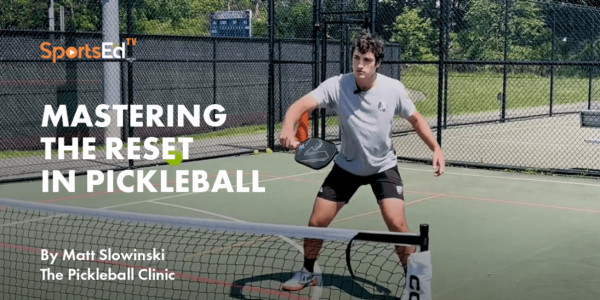
Backing up in pickleball is necessary when playing players, misjudging the depth of the ball, or when playing off the non-volley zone line. It is important to understand when and why backing up is required to effectively reset the point and maintain control of the game.
Credit: sportsedtv.com
The Importance Of Backing Up In Pickleball
Backing up in pickleball is crucial for resetting the point and maintaining control. Knowing when to back up allows players to anticipate shots, retrieve lobs, and defend effectively, enhancing their overall gameplay.
Understanding The Defensive Role In Pickleball:
- In pickleball, the defensive role is crucial for maintaining control of the game and preventing your opponent from scoring points.
- The defensive player is responsible for reacting quickly to the opponent’s shots and making strategic moves to keep the ball in play.
- The goal of the defensive player is to reset the point, giving themselves and their partner an opportunity to regain control and go on the offensive.
Exploring The Benefits Of Backing Up:
- Backing up in pickleball refers to the defensive player moving away from the net towards the baseline.
- This strategic move offers several benefits and advantages, including:
- Enhanced court coverage: By backing up, you can cover a larger area of the court, increasing your chances of returning difficult shots from your opponents.
- Improved reaction time: By maintaining a deeper position on the court, you give yourself more time to react and respond to your opponent’s shots effectively.
- Better defensive positioning: By staying closer to the baseline, you can defend against fast-paced shots and deep lobs more effectively, making it harder for your opponents to score.
- Increased shot variety: By backing up, you create space and give yourself more options for shot selection, allowing you to play defensively or set up offensive shots.
By understanding the defensive role in pickleball and exploring the benefits of backing up, you can enhance your court coverage, improve your reaction time, and ultimately become a more proficient and effective player. So next time you step onto the pickleball court, don’t forget the importance of backing up!
Reacting To Lobs And Deep Shots
Backing up in pickleball is crucial when reacting to lobs and deep shots. It allows players to reset the point and maintain control, preventing opponents from gaining an advantage. Knowing when to back up is essential for strategic gameplay in pickleball.
Recognizing When To Retreat From The Kitchen Line:
- When an opponent hits a lob over your head, forcing you to move back and away from the net.
- When the shot is too deep for you to reach without leaving the kitchen line.
- When your opponent hits a powerful shot that you are unable to handle without giving up your advantageous position at the net.
Strategies For Retrieving Lobs Effectively:
- Move quickly to the back of the court to give yourself enough time to track and respond to the lob.
- Position yourself underneath the ball, using a split step to maintain balance and coordination.
- Use a high, deep shot to reset the point and regain control of the rally.
How To Handle Deep Shots And Reset The Point:
- Stay patient and avoid rushing to hit a difficult ball. Instead, allow it to bounce if it is too deep for you to reach comfortably.
- Position yourself appropriately to hit the deep shot, using proper footwork and body positioning.
- Play a high, defensive shot that returns the ball to your opponent’s side, resetting the point and allowing you to regain your advantageous position at the net.
Remember, recognizing when to retreat from the kitchen line, effectively retrieving lobs, and handling deep shots are important aspects of pickleball defense. By implementing these strategies, you can reset the point and maintain control of the rally.
Playing Off The Non-Volley Zone Line
Knowing when to back up in pickleball is crucial for defensive play. By playing off the non-volley zone line, players can reset the point and strategically position themselves for better shots. It’s important to avoid backing up too soon or misjudging the depth of the ball to maintain control of the game.
Staying in position and covering the court:
- Position yourself near the non-volley zone line to effectively cover the court.
- Stay alert and ready to move in any direction to retrieve shots.
When to move off the line for better court coverage:
- Move off the line when your opponent hits a deep shot that you can’t reach from the non-volley zone.
- Assess the depth and speed of the incoming shot to determine whether moving off the line is necessary.
Techniques to handle shots near the non-volley zone:
- Approach the shot with proper footwork to maintain balance and control.
- Use a soft touch to gently return shots near the non-volley zone.
- Angle your paddle to direct the ball away from your opponent’s reach.
By mastering the art of playing off the non-volley zone line, you can enhance your pickleball skills and effectively cover the court. Stay in position near the line to ensure maximum coverage, but be prepared to move off it when necessary.
Use proper footwork and technique to handle shots near the non-volley zone. Remember, the key is to stay focused, be agile, and make strategic moves to outsmart your opponent. Keep practicing and refining your technique to become a formidable player on the pickleball court.
Misjudging The Depth Of The Ball
When it comes to pickleball, it is important to know when to back up in order to avoid misjudging the depth of the ball. This strategy can help reset the point and improve your defense during the game.
Challenges Of Judging The Depth Of Incoming Shots:
- The speed and trajectory of the ball can make it difficult to accurately judge its depth.
- The angle at which the ball is approaching can also add to the challenge of determining its depth.
- The player’s position on the court and their movement can affect their perception of the ball’s depth.
The Impact Of Misjudgment On Defensive Positioning:
- Misjudging the depth of the ball can lead to incorrect defensive positioning.
- If a player misjudges the depth and thinks the ball will land further back, they may end up too far from the net, leaving a gap in their defense.
- Conversely, if a player misjudges the depth and expects the ball to land closer to the net, they may move forward prematurely, leaving them vulnerable to shots that go over their head.
Tips For Improving Depth Perception In Pickleball:
- Practice tracking the ball’s trajectory from the moment it leaves your opponent’s paddle.
- Work on footwork and positioning to ensure you are in the optimal spot on the court to accurately judge the depth of the ball.
- Focus on the contact point between the ball and your opponent’s paddle to better anticipate the depth of the shot.
- Improve your overall perception skills by incorporating drills that involve quick reactions and decision-making.
- Play with a variety of opponents to expose yourself to different shot depths and angles, improving your ability to adjust and judge the depth accurately.
Remember, the key to accurately judging the depth of incoming shots in pickleball is practice, experience, and honing your perception skills. By focusing on these areas, you can improve your defensive positioning and react effectively to your opponent’s shots.
Playing Off The Line: Pros And Cons
Discover the pros and cons of playing off the line in pickleball. Understand when it’s appropriate to back up and reset the point to improve your strategy.
Understanding The Advantages And Disadvantages Of Playing Off The Line:
- Gain a better perspective of the game: Playing off the line allows you to have a wider view of the court, enabling you to anticipate your opponents’ moves and react accordingly.
- Create space for offensive shots: By stepping back from the non-volley zone line, you give yourself more room to take aggressive shots, especially when your opponents are positioned further towards the net.
- Increased defensive coverage: Playing off the line provides you with more time to react to fast and powerful shots from your opponents, giving you a better chance to return the ball.
Choosing The Right Moments To Play Off The Line:
- Diverse court positioning: Playing off the line can be advantageous in scenarios when your opponents are frequently hitting shots to the sidelines or corners, allowing you to counter their strategy effectively.
- Challenging opponents at the net: When facing skilled opponents who excel at the net game, playing off the line can disrupt their rhythm, making it harder for them to execute their preferred shots.
- Recognizing vulnerable opponents: By observing your opponents’ weaknesses, such as their inability to handle lobs or their tendency to hit weak returns, you can strategically choose to play off the line to exploit these weaknesses.
Strategies For Maximizing Offensive And Defensive Potential:
- Offensive opportunities: When playing off the line, focus on hitting deep shots that push your opponents towards the back of the court. This creates an opportunity for you to move up to the net and take control of the point.
- Defensive positioning: Playing off the line allows you to be in a better position to handle powerful shots from your opponents. By maintaining a defensive stance and being ready to react quickly, you can effectively neutralize their aggressive shots.
- Quick transitions: When you choose to play off the line, be prepared to quickly move back towards the non-volley zone line as soon as the opportunity arises. This enables you to regain control of the point and maintain a strong defensive position.
Remember, playing off the line in pickleball has its advantages and disadvantages. Understanding when to employ this strategy and how to maximize its potential can significantly improve your overall game. So, be mindful of the situation on the court and make well-informed decisions to elevate your pickleball performance.
Capturing The Net: When To Move Forward
When playing pickleball, it is important to know when to back up in order to reset the point. Avoid backing up from the kitchen line and instead focus on capturing the net to gain an advantage in the game.
Recognizing Opportunities To Move Forward And Take Control:
- Position yourself closer to the net when your opponents hit a weak shot or a high ball that is likely to land short.
- Watch for opportunities when your opponents are on the defensive and struggling to return the ball effectively.
- Look for openings in the court where you can hit winners or put pressure on your opponents.
The Role Of Aggressive Net Play In Defensive Strategy:
- Moving forward and capturing the net can disrupt your opponents’ rhythm and force them into defensive positions.
- Aggressive net play allows you to take control of the point and put pressure on your opponents to make difficult shots.
- By taking the offensive, you can limit your opponents’ options and force them into making mistakes.
Tips for transitioning from defensive to offensive positioning:
- Anticipate when your opponents’ shots will be weaker or shorter, giving you an opportunity to move forward.
- Practice quick footwork and reaction time to be able to cover the court effectively when moving forward.
- Be aware of your positioning on the court and adjust accordingly to be in the best position to capture the net.
Remember, moving forward and capturing the net is an important aspect of pickleball strategy. By recognizing opportunities to move forward, understanding the role of aggressive net play, and implementing these tips for transitioning from defensive to offensive positioning, you can take control of the point and increase your chances of winning.
Case Study: Backing Up Example
Discover when to back up in pickleball with this insightful case study. Learn the best strategies for backing up during gameplay, including when to play off the line and how to reset the point effectively. Gain valuable knowledge and enhance your skills on the court.
Ball Technique –
In this section, we will analyze a real-life scenario of backing up in pickleball and understand the decision-making process behind it. We will also discuss lessons learned and key takeaways from the case study.
Analyzing A Real-Life Scenario Of Backing Up In Pickleball:
- Scenario: During a game, the opponent hits a powerful shot that sends the ball deep into your court.
- Decision-making process:
- Assess the speed and trajectory of the ball: Analyze the incoming shot to determine whether it will land near the baseline or closer to the kitchen line.
- Evaluate your court position: Consider your current position on the court and whether you have enough time to reach the incoming shot.
- Anticipate your opponent’s next move: Determine if your opponent is likely to hit another aggressive shot or if they may lob the ball.
- Deciding to back up: If the incoming shot is deep and you anticipate a challenging return, it may be necessary to back up to give yourself more time and space to make a controlled shot.
Understanding The Decision-Making Process Behind Backing Up:
- Assessing the shot’s depth: Backing up is crucial when the ball is hit deep into your court, as it allows you to maintain a better defensive position and be prepared for the next shot.
- Reacting to your opponent’s shot selection: By analyzing your opponent’s shot choice, you can make informed decisions on whether to back up or prepare for a different shot strategy.
- Recognizing the importance of timing: Backing up at the right moment ensures that you have enough time to position yourself properly and execute a well-planned shot.
- Balancing defensive and offensive play: Backing up doesn’t always mean playing defensively. It can also set you up for a powerful counter-attack shot or a strategic placement to gain an advantage.
Lessons Learned And Key Takeaways From The Case Study:
- Proper positioning is essential: Backing up allows players to maintain an optimal court position, ensuring they have enough time and space to react to challenging shots.
- Anticipation is key: By analyzing the speed, trajectory, and shot selection of the opponent, you can anticipate when backing up is necessary, gaining an advantage in the game.
- Balance defense and offense: Backing up doesn’t mean giving up on aggressive play. It provides an opportunity to reset the point and prepare for a strategic shot.
- Develop court awareness: Understanding your position on the court and your opponent’s shot tendencies will help you make better decisions regarding backing up.
- Practice timing and footwork: Backing up effectively requires proper footwork and timing to ensure you are in the best position to make a confident shot.
With a clear understanding of the decision-making process behind backing up in pickleball, you can enhance your gameplay and maximize your chances of success on the court. Remember, backing up is a strategic move that can give you an advantage and allow you to control the game.
Frequently Asked Questions For When To Back Up In Pickleball
How Do You Know When To Switch Servers In Pickleball?
In pickleball, you switch servers when a point is scored. The server switches sides and initiates the next serve from the left-hand court. The server continues switching back and forth until a fault is committed and loses the serve.
When Should You Stack In Pickleball?
In pickleball, stacking is a doubles strategy where both players on a team line up on the same side of the court before a serve or return. After the ball is hit, each player shifts to their desired side for improved mobility and court control.
How Do You Stop Bangers In Pickleball?
To stop bangers in pickleball, back up when playing players, play off the non-volley zone line, and let the ball bounce and hit a speed up.
How Do You Progress In Pickleball?
To progress in pickleball, focus on improving your skills and strategies by practicing regularly. Work on your shots, footwork, and positioning on the court. Learn from experienced players and watch instructional videos. Dedicate time to developing your serve and return techniques.
Stay up to date with the latest tips and tricks for playing pickleball effectively. Consistency and dedication are key to progressing in pickleball.
Conclusion
To maximize your performance and strategy in pickleball, knowing when to back up on the court is crucial. By carefully assessing the situation and understanding the dynamics of the game, you can make informed decisions that will lead to a more successful outcome.
Backing up can help you reset the point, retrieve lobs, and play off the non-volley zone line effectively. It is important to avoid backing up from the kitchen line, as this can put you at a disadvantage. Instead, focus on capturing the net and strategically positioning yourself based on the depth of the ball and the movements of your opponents.
By mastering the art of backing up in pickleball, you can enhance your defensive skills and ultimately elevate your overall game. So, next time you step onto the court, remember to consider when to back up and make the most of your opportunities.
Stay agile, stay focused, and keep striving for excellence in this fast-paced and exciting sport.