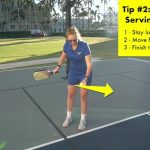
To do a backhand in pickleball, start by preparing your body and paddle as soon as you notice the ball coming towards you. Then, rotate your body and pull the paddle back together, getting ready to strike the ball with a backhand motion.
Understanding The Backhand In Pickleball
To perform a backhand shot in pickleball, start by preparing your body and paddle early. Wind up like a spring and unleash the shot with control and power. Avoid opening the paddle and focus on pushing it forward instead. Have a slight hinge in your wrist and turn your body to the side for better positioning.
A backhand shot in pickleball is a stroke that is executed on the non-dominant side of the body, using the back of the paddle to strike the ball. It requires a combination of skill, technique, and practice to master. The backhand shot is an essential component of a pickleball player’s arsenal, as it allows for greater versatility and the ability to return shots from different angles.
Understanding the backhand in pickleball involves knowing what it is, why it is important to master, and the key differences between the backhand and forehand shots.
What Is A Backhand Shot In Pickleball?
- A backhand shot in pickleball is a stroke that is executed on the non-dominant side of the body.
- It involves using the back of the paddle to strike the ball.
- The backhand shot allows players to return shots from different angles and adds versatility to their gameplay.
Importance Of Mastering The Backhand Technique:
- Mastering the backhand technique is crucial for pickleball players looking to improve their overall game.
- It allows players to handle shots on their non-dominant side with more control and accuracy.
- A strong backhand can help players defend against powerful shots and maintain rallies during gameplay.
- By mastering the backhand technique, players can become more well-rounded and adaptable on the court.
Key Differences Between The Backhand And Forehand Shots:
- Grip: The grip for a backhand shot is different from a forehand shot. Players typically use a continental grip or an eastern backhand grip for backhand shots, whereas a semi-western or western grip is commonly used for forehand shots.
- Stance: The stance for a backhand shot is typically more closed, with the non-dominant side facing forward. In contrast, the stance for a forehand shot is more open, with the dominant side facing forward.
- Reach: The backhand shot sacrifices reach compared to the forehand shot. This means that players may have to adjust their positioning to effectively execute a backhand shot.
- Stroke path: The stroke path of a backhand shot is generally shorter and more compact compared to a forehand shot. This requires players to generate power and control using their wrist and arm movements.
Mastering the backhand technique in pickleball is essential for players looking to improve their overall gameplay. By understanding the backhand shot, its importance, and the key differences between the backhand and forehand shots, players can develop a well-rounded skillset that allows them to handle shots from any angle on the court.
Whether it’s adapting their grip, adjusting their stance, or perfecting their stroke path, the backhand shot is a fundamental aspect that requires practice and dedication to master.

Credit: www.youtube.com
Developing The Proper Backhand Grip
To properly execute a backhand in pickleball, it’s crucial to develop the correct grip. Start by avoiding common overused phrases and focus on preparing your body and paddle for a strong shot. Remember, practice and proper technique are key to mastering the backhand in pickleball.
Pickleball? How do you properly grip the paddle for a backhand shot? In this section, we will explore the importance of a proper grip in executing backhand shots, different types of backhand grips, and tips for finding the right grip for your backhand shot.
Importance Of A Proper Grip In Executing Backhand Shots:
- A proper grip is essential for maximizing control and power in your backhand shots.
- It allows for better wrist flexibility and maneuverability, enabling you to generate spin and accuracy.
- A secure and comfortable grip minimizes the risk of mishits and enables a more consistent and reliable shot.
- The grip helps you transfer energy efficiently from your body to the paddle, resulting in a more powerful and effective backhand stroke.
Different Types Of Backhand Grips:
- Eastern Backhand Grip: This grip is commonly used and involves placing the base knuckle of your index finger on the front bevel of the paddle handle. It offers stability and control for beginners.
- Semi-Western Backhand Grip: This grip is slightly modified from the Eastern grip, with the base knuckle of the index finger moved slightly towards the top bevel. It provides more topspin potential and is commonly used by intermediate players.
- Western Backhand Grip: This grip involves placing the base knuckle of the index finger on the top bevel of the paddle handle. It offers maximum topspin potential but can be challenging for beginners to control.
Tips For Finding The Right Grip For Your Backhand Shot:
- Experiment with different grips during practice sessions to find the one that feels most comfortable and natural to you.
- Consider grip size and thickness, as it can affect your comfort and control. Grips are available in various sizes, so choose one that fits your hand well.
- Seek guidance from experienced players or a pickleball coach to identify any grip issues and make necessary adjustments.
- Practice proper hand placement on the paddle handle to ensure a consistent grip across different shots.
- Regularly check your grip during games and adjust as needed to maintain control and increase shot effectiveness.
Remember, developing the proper backhand grip is crucial for improving your backhand shots. By incorporating the right grip into your technique, you can achieve better control, power, and consistency in your pickleball game.
Mastering The Fundamentals Of The Backhand Technique
Improve your backhand technique in pickleball with these expert tips. Learn how to grip the paddle, position your body, and use the right footwork to maximize power and consistency in your backhand shots.
The backhand shot in pickleball is an essential skill that every player should master. It allows you to hit the ball from the non-dominant side of your body, opening up more possibilities for strategic shot placement. To become proficient in the backhand technique, it is important to focus on proper body position and alignment, understand the significance of footwork, and break down the backhand stroke into its key components.
Proper Body Position And Alignment For Backhand Shots:
- Stand with your feet shoulder-width apart and parallel to the baseline.
- Hold the pickleball paddle with a semi-western grip, where the base knuckle of your index finger rests on the third bevel of the paddle handle.
- Keep your arms extended and slightly bent, with the paddle positioned parallel to the ground.
- Position your body in a slightly closed stance, where your non-dominant side is facing the net.
Importance Of Footwork In Executing The Backhand Shot:
- Maintain an athletic stance, with your weight evenly distributed between both feet.
- Use quick and small shuffle steps to move your feet into position to reach the ball.
- Step forward with your non-dominant foot while simultaneously rotating your hips and shoulders to generate power and control in your shot.
- The positioning of your feet plays a crucial role in maintaining balance throughout the backhand stroke.
Breaking Down The Backhand Stroke: Swing Path, Follow-Through, And Contact Point:
- The swing path for the backhand shot starts from the preparation position near your non-dominant hip and follows an arc-shaped trajectory towards the direction you want the ball to go.
- As you swing, maintain a loose grip on the paddle and use your wrist in a controlled manner to generate additional power and spin.
- Follow through with your swing, ensuring that your paddle travels towards the target area and finishes high over your non-dominant shoulder.
- The contact point for the backhand shot is slightly in front of your body, allowing you to generate power and control by making contact with the ball at the optimal moment.
By mastering the fundamentals of the backhand technique, you will be able to execute powerful and accurate shots from any position on the pickleball court. Practice proper body position and alignment, focus on your footwork, and break down the backhand stroke into its key components for improved performance in your pickleball game.
Video Tutorials And Expert Tips For Mastering The Backhand Technique
Master the backhand technique in pickleball with video tutorials and expert tips. Learn how to improve your grip, body position, footwork, and more to perfect your backhand shot.
Youtube Tutorials On Improving Your Backhand Shot In Pickleball:
- Grip: Learn the proper grip for executing a powerful backhand shot in pickleball.
- Body Position: Understand the correct body position to generate optimal power and control during your backhand shot.
- Closed Stance: Discover how a closed stance can enhance your stability and balance while executing a backhand shot.
- Footwork: Master the footwork techniques that will enable you to move efficiently and effectively on the pickleball court.
- Backhand: Watch demonstrations and step-by-step tutorials on how to execute a fluid and powerful backhand shot in pickleball.
Expert Advice On Common Mistakes To Avoid And Drills To Improve Your Backhand Technique:
- Mistake 1: Avoid improper grip placement, as it can significantly impact the accuracy and power of your backhand shot.
- Mistake 2: Don’t forget to engage your core muscles and rotate your hips for added power and stability.
- Mistake 3: Make sure to keep your wrist firm and steady to maintain control and accuracy in your backhand shots.
- Drill 1: Practice shadow swings to improve your muscle memory and technique without a ball.
- Drill 2: Incorporate target drills to enhance your accuracy and shot placement during backhand shots.
- Drill 3: Work on your footwork by performing ladder drills to improve your agility and quickness on the court.
Tips For Incorporating Topspin And Power Into Your Backhand Shots:
- Tip 1: Focus on brushing the ball with your paddle to generate topspin, which will help the ball clear the net and stay in play.
- Tip 2: Use your legs and body rotation to generate power and transfer it into your backhand shot.
- Tip 3: Practice hitting the ball slightly in front of your body to maximize power and control in your backhand shots.
- Tip 4: Experiment with different grip pressures to find the optimal balance of power and control for your backhand shots.
- Tip 5: Incorporate wrist snap at the moment of contact to add extra power and spin to your backhand shots.
Remember, mastering the backhand technique in pickleball requires consistent practice and patience. Utilize the resources available, seek expert advice, and incorporate these tips into your training sessions to improve your backhand shots on the court.
Advanced Backhand Techniques And Strategies
Learn advanced backhand techniques and strategies in pickleball without the commonly overused phrases. Develop consistency and power by focusing on grip, body position, footwork, and proper wrist hinge for a stronger shot. Get expert tips from trusted sources like Pickleball Kitchen and Total Pickleball YouTube channels.
Incorporating the two-handed backhand into your game:
- Two-handed backhand grip: Start by gripping the paddle with both hands, ensuring a firm hold.
- Stance and body positioning: Position your body sideways and keep a closed stance for better balance and power.
- Footwork: Step forward with your dominant foot to generate momentum and rotate your hips for added power.
- Swing motion: Use a smooth and controlled swing motion, keeping the paddle face slightly closed to control the direction of the shot.
Utilizing the backhand dink as a defensive strategy:
- Soft touch: Develop a soft touch with your backhand dink to create a shot that stays low and close to the net.
- Angle and placement: Vary the angle and placement of your backhand dink to keep your opponent on their toes and make it difficult for them to counter.
- Footwork and body positioning: Stay light on your feet and maintain a balanced stance to react quickly and reach the ball.
Mastering the backhand volley for quick and effective returns:
- Ready position: Be prepared by positioning yourself with your paddle up and in front of your body, ready to volley.
- Eye on the ball: Keep your eye on the ball at all times, anticipating its trajectory to prepare for your volley.
- Short swing and controlled touch: Use a short swing with a controlled touch to accurately direct the ball back over the net.
- Follow-through: Finish your backhand volley with a smooth and controlled follow-through, maintaining balance and readiness for the next shot.
Tips For Developing Consistency And Power In Your Backhand Shots
Developing consistency and power in your backhand shots in pickleball requires proper grip, body position, footwork, and wrist hinge. Focus on pushing the ball forward, have a strong shoulder turn, and maintain control to generate power and accuracy in your backhand shots.
Mastering the backhand shot in pickleball is essential for a well-rounded game. To develop consistency and power in your backhand shots, try practicing the following exercises, building strength and flexibility, and implementing mental strategies to maintain focus and confidence.
Exercises And Drills To Improve Backhand Shot Consistency:
- Shadow strokes: Practice your backhand motion without a ball to focus on mechanics and form.
- Wall drills: Stand a few feet away from a wall and hit the ball against it, working on accuracy and control. Alternate your targets to simulate different shots.
- Crosscourt drills: Hit the ball diagonally from one corner of the court to the other, targeting the opposite side. This exercise helps improve your backhand placement and depth.
- Live ball drills: Play practice games with a partner, focusing on your backhand shots. Utilize different scenarios, such as low balls and angled shots, to improve your versatility.
Building Strength And Flexibility For A Stronger Backhand Stroke:
- Core exercises: Strengthen your core muscles with exercises like planks, Russian twists, and supermans. A strong core provides stability and power to your backhand stroke.
- Arm and wrist exercises: Incorporate exercises that target your forearm muscles, such as wrist curls and reverse curls. Stronger arms and wrists will help generate more power and control in your backhand shots.
- Stretching routine: Perform stretching exercises for your shoulders, back, and wrists to enhance flexibility. Improved flexibility allows for a larger range of motion and better shot execution.
Mental Strategies For Maintaining Focus And Confidence In Your Backhand Shots:
- Visualization: Picture yourself executing successful backhand shots in your mind. Visualizing the desired outcome enhances your focus and reinforces muscle memory.
- Positive self-talk: Use positive affirmations to boost your confidence and stay motivated. Replace negative thoughts with positive statements like “I have a powerful backhand” or “I am consistent with my backhand shots.”
- Breathing exercises: Practice deep breathing to calm your mind and stay present during your backhand shots. Focus on inhaling and exhaling slowly to center yourself and maintain your composure.
Remember, consistency and power in your backhand shots come with practice and dedication. By incorporating these exercises, building strength and flexibility, and implementing mental strategies into your training routine, you’ll enhance your backhand stroke and take your pickleball game to the next level.
Keep pushing yourself and enjoy the process of improvement.
Frequently Asked Questions On How Do You Do A Backhand In Pickleball
What Foot Do You Step With When Hitting A Backhand In Pickleball?
When hitting a backhand in pickleball, step with your non-dominant foot.
How Do You Hit A Forehand And Backhand In Pickleball?
To hit a forehand and backhand in pickleball, follow these tips: 1. Hold the paddle with a firm grip. 2. Stand with a closed stance and position your body correctly. 3. Focus on pushing the ball forward instead of opening your paddle up.
4. Use a slight wrist hinge for more power. 5. Turn your body to the side and hit the ball with a controlled swing. 6. Practice footwork and proper positioning to improve your shots. Remember, practice is key to mastering your forehand and backhand in pickleball.
How Do You Hit A One Handed Backhand Pickleball?
To hit a one-handed backhand in pickleball, follow these steps: 1. Grip the paddle with one hand. 2. Position your body for a closed stance. 3. Use footwork to position yourself correctly. 4. Focus on pushing the ball forward, not opening the paddle up.
5. Have a slight hinge in your wrist for more control. 6. Turn your body to the side for better reach. 7. Practice hitting with power and control by coiling and uncoiling your shoulder. Remember, practice and proper technique are key to mastering the one-handed backhand shot in pickleball.
How Do You Hit A Topspin Backhand In Pickleball?
To hit a topspin backhand in pickleball, make sure to have a good grip and body position. Push the ball forward, hinge your wrist, and turn your body to the side for added power. Practice rotating your body and pulling the paddle back together for a strong shot.
Conclusion
Mastering the backhand shot in pickleball is essential for taking your game to the next level. By following the correct technique and practicing regularly, you can improve your accuracy, power, and consistency with this shot. Remember to maintain a firm grip on the paddle, position your body correctly, and use proper footwork to generate power and control.
Pay attention to your body rotation and make sure to pull the paddle back together for a more effective shot. Additionally, focus on pushing the ball forward instead of opening the paddle up too much. Having a slight hinge in your wrist and turning your body to the side will further enhance your backhand shot.
By implementing these tips and techniques, you can transform your backhand into a reliable weapon on the pickleball court. Practice, dedication, and perseverance will undoubtedly lead to improvement and success in your game. So, grab your paddle, hit the courts, and start perfecting your backhand in pickleball.