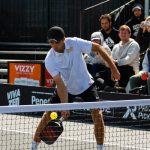
An unforced error in pickleball is a mistake made by a player on an easy or routine ball, resulting from their inability to execute a simple stroke or return. It is different from a forced error, which occurs when a player generates an error through pace or location.
For example, a deep, high-velocity crosscourt forehand. Unforced errors can be minimized by improving execution and technique, ultimately leading to better performance in pickleball.

Credit: pickleballkitchen.com
Understanding Unforced Errors In Pickleball
An unforced error in pickleball refers to a mistake made by a player on an easy or routine ball, resulting from their inability to execute a simple stroke or return. This is different from a forced error, which is generated by a combination of pace and location from the opposing player.
To succeed in pickleball, minimizing unforced errors is crucial.
Definition Of An Unforced Error In Pickleball:
An unforced error in pickleball refers to a mistake made by a player during a rally that is not caused by external factors or the opponent’s shot’s pace or location. It is a self-inflicted error resulting from the player’s failure to execute a relatively easy or routine stroke or return.
Unforced errors occur when a player misses a shot that they should have made, leading to a lost point for their team.
The Difference Between A Forced Error And An Unforced Error:
The distinction between a forced error and an unforced error lies in the cause of the mistake. While both types of errors result in lost points, forced errors are caused by the opponent’s shot, either due to its pace, placement, or a combination of both.
On the other hand, unforced errors are solely the responsibility of the player making them, as they are unable to successfully execute a relatively simple shot or return.
Examples of unforced errors:
- Hitting a ball into the net when it should have cleared it easily.
- Sending a shot wide or long when there was ample time to control the stroke.
- Mishitting an overhead shot that required basic execution.
- Failing to return a soft lob shot when positioned well.
- Misjudging the bounce of the ball and missing a straightforward volley.
Remember, unforced errors reflect lapses in a player’s execution, technique, or decision-making, and they can significantly impact the outcome of a pickleball match. It is crucial for players to minimize these errors through practice, focus, and maintaining a calm and composed mindset on the court.
Causes Of Unforced Errors In Pickleball
An unforced error in pickleball refers to a mistake made by a player on an easy or routine ball. It comes from the player’s inability to execute a simple stroke or return. In contrast, a forced error is caused by the opposing team’s good play or a difficult shot.
To improve your game, it is essential to reduce unforced errors.
R is a common occurrence in any competitive sport, including pickleball. It refers to a mistake that a player makes on an easy or routine shot, which should have been executed successfully. Understanding the causes of unforced errors is crucial for players who want to improve their game and minimize mistakes.
In pickleball, there are several factors that contribute to unforced errors. Let’s explore them in detail:
Lack Of Concentration And Focus:
- Distractions on or off the court can lead to unforced errors.
- Taking your eye off the ball or losing focus can result in mistimed shots or mishits.
- Mental fatigue or lack of mental preparation can also cause lapses in concentration.
Poor Shot Selection:
- Choosing the wrong shot for a particular situation can lead to unforced errors.
- Trying to hit winners from defensive positions or attempting risky shots instead of playing it safe can backfire.
- Poor judgment or overestimating your abilities can result in unforced errors.
Technical Mistakes In Stroke Execution:
- Flaws in technique, such as improper grip, incorrect footwork, or inadequate preparation, can lead to unforced errors.
- Lack of coordination between different body parts during the stroke can result in mistimed shots or misdirected balls.
- Inconsistent ball contact due to improper swing or inefficient follow-through can cause unforced errors.
To reduce unforced errors in pickleball, players can employ a few strategies:
Focus On Improving Concentration And Focus:
- Practice mindfulness techniques to stay present and focused during the game.
- Minimize distractions and avoid engaging in unnecessary conversations or thoughts during play.
- Develop a pre-shot routine to enhance mental preparation and concentration.
Make Smart Shot Selections:
- Analyze the situation and choose shots that suit your strengths and the game’s context.
- Play with patience and avoid taking unnecessary risks that might lead to unforced errors.
- Focus on consistency and accuracy rather than trying to hit winners on every shot.
Work On Refining Stroke Execution:
- Seek guidance from a coach or experienced players to improve your technique and address any technical flaws.
- Practice regularly to build muscle memory and develop a consistent and reliable stroke.
- Break down your stroke into smaller components and work on each element individually to ensure proper execution.
By recognizing the causes of unforced errors and implementing these strategies, pickleball players can significantly reduce the number of mistakes they make during a game. Remember, consistency and focus are key in minimizing unforced errors and improving overall performance on the pickleball court.
How To Reduce Unforced Errors In Pickleball
An unforced error in pickleball refers to a mistake made on an easy or routine shot. It is an error that should have been easily executed but wasn’t due to the player’s inability to perform the stroke properly. Reducing unforced errors is crucial in improving your pickleball game.
:
Unforced errors can be frustrating and can cost you valuable points in a game of pickleball. However, there are several strategies and techniques you can employ to help reduce unforced errors and improve your overall gameplay. Here are some tips to help you decrease unforced errors:
- Improve concentration and focus during gameplay:
- Maintain mental focus throughout the game.
- Avoid getting distracted by external factors or your opponent’s actions.
- Stay present and focus on each shot.
- Develop better shot selection skills:
- Evaluate the situation before deciding on a shot.
- Assess the position of your opponents and identify their weaknesses.
- Choose shots that exploit your opponents’ vulnerabilities.
- Work on refining stroke execution techniques:
- Practice proper body positioning and footwork.
- Focus on maintaining a consistent and controlled swing.
- Hone your ability to generate power and spin when needed.
- Practice specific drills to address common unforced error scenarios:
- Perform drills that simulate game situations where unforced errors commonly occur.
- Work on shots that you struggle with the most.
- Incorporate drills that challenge both your technical skills and decision-making abilities.
By following these strategies and consistently working on your game, you can significantly reduce the number of unforced errors in pickleball. Remember, practice is key, so keep honing your skills to become a more efficient and error-free player on the court.
Building Mental Resilience
An unforced error in pickleball refers to a mistake made on an easy or routine shot that should normally be made. It is different from a forced error, which occurs due to the opponent’s good play. To minimize unforced errors, players need to focus on executing their shots accurately and efficiently.
Playing pickleball requires not only physical agility but also mental resilience. Building mental resilience allows players to maintain focus, manage pressure and stress, and develop a positive mindset to avoid unforced errors. By enhancing mental focus and discipline, learning techniques to manage pressure and stress during gameplay, and cultivating a positive mindset, players can improve their overall performance and decrease unforced errors.
Enhancing Mental Focus And Discipline:
- Implement a pre-game routine: Establishing a pre-game routine helps to set the tone for mental focus and prepare the mind for the game ahead. This routine may include stretching, visualization exercises, or listening to calming music.
- Set goals: Set specific, measurable, and attainable goals for each game or practice session. Having clear objectives helps to maintain mental focus and discipline throughout gameplay.
- Practice mindfulness: Engage in mindfulness exercises, such as deep breathing or meditation, to calm the mind and increase concentration during games.
- Eliminate distractions: Minimize distractions during gameplay by staying present in the moment and focusing on the task at hand.
- Stay positive: Maintain a positive mindset by reframing negative thoughts and focusing on the present rather than dwelling on past mistakes or worrying about future outcomes.
Techniques For Managing Pressure And Stress During Gameplay:
- Control breathing: Practice deep breathing techniques to reduce anxiety and stay calm during high-pressure situations.
- Visualize success: Use visualization exercises to imagine successful shots and positive outcomes, enhancing confidence and reducing stress.
- Use self-talk: Engage in positive self-talk to boost confidence and manage stress. Use affirmations such as “I can do this” or “Stay focused” to maintain mental resilience during gameplay.
- Take breaks: Incorporate short breaks during gameplay to reset and refocus the mind. Use this time to take a few deep breaths or engage in positive self-talk before resuming play.
Developing A Positive Mindset To Avoid Unforced Errors:
- Embrace mistakes as learning opportunities: Rather than dwelling on mistakes or becoming frustrated, view them as opportunities for growth and improvement.
- Focus on the process, not just the outcome: Place emphasis on the efforts and strategies employed during gameplay rather than solely focusing on the final result.
- Practice self-awareness: Be mindful of negative thought patterns or self-doubt and make a conscious effort to replace them with positive affirmations and beliefs.
- Celebrate small victories: Acknowledge and celebrate small achievements during gameplay to boost motivation and maintain a positive mindset.
- Surround yourself with positive influences: Engage with supportive teammates or friends who uplift and encourage a positive mindset on and off the court.
By implementing these strategies, players can enhance their mental resilience, improve focus and discipline, manage pressure and stress more effectively, and cultivate a positive mindset, ultimately reducing unforced errors in pickleball.
Enhancing Shot Selection
An unforced error in pickleball refers to a mistake made on an easy or routine shot that should normally be executed correctly. It is different from a forced error, which occurs due to the opposing team’s good play. To improve shot selection and reduce unforced errors, players can focus on executing simple strokes with precision.
Understanding Court Positioning And Shot Options:
- Proper court positioning is essential in preventing unforced errors in pickleball. Here are some key points to understand:
- Players should position themselves strategically to be able to reach the ball comfortably and execute the shot effectively.
- Positioning yourself closer to the kitchen, or Non-Volley Zone (NVZ), can give you better control over your shots and minimize unforced errors.
- Analyze the situation on the court and consider your shot options. Are you in a defensive position, trying to keep the ball in play? Or are you in an offensive position, looking to put pressure on your opponents?
- Shot options may include a drop shot, a lob, a dink, or a powerful groundstroke. Choosing the right shot can significantly reduce the chances of making unforced errors.
Evaluating Risk Versus Reward In Shot Selection:
- Every shot in pickleball involves a certain level of risk. Evaluating the risk versus reward can help players make better shot selections and avoid unnecessary unforced errors.
- Consider factors such as shot difficulty, court positioning, opponent’s playing style, and the current score.
- A shot with a high probability of success and low risk, such as a well-placed dink, may be a better choice than a more aggressive shot that carries higher risks, such as a hard drive down the middle.
- Assess the potential consequences if the shot goes wrong. Are you likely to give your opponents an easy put-away or create an opportunity for them to attack?
- By weighing the risk versus reward, players can make more calculated shot selections and minimize unforced errors.
Adapting Shot Selection Based On Opponent’S Playing Style:
- Understanding your opponent’s playing style is crucial in adjusting your shot selection and preventing unforced errors.
- Observe your opponent’s strengths and weaknesses. Are they more comfortable at the baseline or at the net? Do they have a powerful forehand or backhand?
- Adapt your shot selection to exploit their weaknesses and avoid playing into their strengths. For example, if your opponent struggles with high backhand shots, consider hitting more shots to their backhand side.
- Be mindful of their defensive or offensive tendencies. If they tend to play aggressively, anticipate their shots and adjust your positioning and shot selection accordingly.
- Stay flexible and be willing to adjust your shot selection throughout the match based on your opponent’s performance.
Remember, reducing unforced errors in pickleball requires a combination of proper court positioning, evaluating risk versus reward in shot selection, and adapting to your opponent’s playing style. By implementing these strategies, you can improve your game and avoid unnecessary mistakes.
Improving Technical Skills
In pickleball, an unforced error refers to a player’s mistake in executing an easy or routine shot. It is a self-inflicted error that results from the player’s inability to perform a simple stroke or return. This is different from a forced error, which is caused by the opponent’s good play or a difficult shot.
To improve your technical skills in pickleball, focus on minimizing unforced errors through practice and better shot execution.
Mastering Fundamental Pickleball Strokes:
- Proper grip and stance: Make sure you have a firm grip on the paddle and maintain a balanced stance to have better control over your shots.
- Paddle positioning: Learn the correct position to hold your paddle for different strokes, such as forehand, backhand, and volleys.
- Swing technique: Practice the correct swing motion, focusing on smooth and consistent strokes to maximize accuracy and power.
- Footwork: Develop good footwork by learning how to move efficiently on the court, allowing you to get into the right position for each shot.
- Court positioning: Understand the strategic positioning on the court to anticipate and respond to your opponent’s shots effectively.
Analyzing And Correcting Common Technical Mistakes:
- Grip adjustments: Identify if your grip is hindering your stroke execution and make necessary adjustments for better control and accuracy.
- Swing mechanics: Analyze your swing technique for any flaws such as improper follow-through or incorrect timing and work on correcting them.
- Footwork analysis: Assess your footwork to ensure you are moving efficiently and positioning yourself well for each shot.
- Shot selection: Improve decision-making skills by evaluating when to play different shots and avoid attempting risky shots unnecessarily.
- Shot execution: Recognize common errors in shot execution, such as hitting the ball too hard, too softly, or off-center, and focus on improving precision.
Seeking Professional Coaching And Instruction For Skill Improvement:
- Private lessons: Invest in one-on-one coaching sessions with an experienced pickleball instructor who can analyze your game and provide personalized feedback and guidance.
- Group clinics: Enroll in group clinics to learn from a professional instructor and practice with other players of similar skill levels, allowing for valuable interactions and shared learning experiences.
- Video analysis: Utilize video recording tools to analyze your gameplay and seek input from a qualified instructor to identify areas for improvement and refine your techniques.
- Workshops and camps: Attend intensive workshops or immersive pickleball camps that offer in-depth training and comprehensive skill development under the guidance of expert coaches and players.
- Continued learning: Stay up to date with the latest techniques and strategies by reading books, watching instructional videos, and following reputable pickleball resources online.
Remember, improving technical skills in pickleball requires consistent effort, practice, and a willingness to learn from your mistakes. By mastering fundamental strokes, analyzing and correcting technical mistakes, and seeking professional coaching, you can enhance your overall performance on the court.
Scenario-Based Practice Drills
In pickleball, an unforced error refers to a mistake made on an easy or routine shot. It occurs when a player fails to execute a simple stroke or return properly. This is different from a forced error, which is caused by the opponent’s play.
To improve performance, players should aim to minimize unforced errors.
Practicing pickleball under simulated game situations can help players develop their skills and reduce unforced errors. By recreating scenarios that often result in mistakes, players can refine their techniques, decision-making abilities, and shot selections. Here are some effective practice drills that can help players minimize unforced errors:
- Simulating game situations that often result in unforced errors:
- Practice returning high-velocity shots: Players can set up a training session where they focus on returning powerful shots, replicating the pressure they might face in a game. This drill improves shot control and helps players respond well to fast-paced shots.
- Working on low, bouncing shots: Players can practice hitting low, bouncing shots that often result in unforced errors if not executed correctly. By practicing these shots, players can improve their footwork, timing, and accuracy.
- Practice responding to unexpected shots: Create drills where players have to react quickly to unexpected shots, such as drop shots or lobs. This helps improve agility, decision-making, and shot selection in a variety of game situations.
- Practicing specific shots under pressure:
- Targeted shot drills: Players can focus on specific shots that often lead to unforced errors, such as volleys or overhead smashes. By practicing these shots repetitively under pressure, players can develop muscle memory and improve their ability to execute these shots accurately during games.
- Pressure point drills: Set up game-like scenarios where players have to execute shots accurately when under pressure, such as when they are close to losing a point or during important moments in a game. This drill helps players perform well under pressure and reduces the likelihood of unforced errors.
- Incorporating decision-making skills into practice sessions:
- Strategy-based drills: Create drills that require players to make strategic decisions, such as when to attack, when to defend, or when to hit specific shots. By incorporating decision-making into practice sessions, players can develop their ability to make effective choices during games, reducing unforced errors.
- Game-like practice matches: Engage in practice matches that replicate real-game scenarios, where players can apply their skills, make strategic decisions, and experience game pressure. This helps players improve their overall performance and reduces unforced errors.
Remember, practicing pickleball under simulated game situations, practicing specific shots under pressure, and incorporating decision-making skills into practice sessions can significantly enhance a player’s game and minimize unforced errors. By dedicating time to these practice drills, players can gain confidence and improve their overall performance on the court.
Analyzing Unforced Errors In Pickleball
An unforced error in pickleball refers to a mistake made on an easy or routine shot that should normally be made. It is different from a forced error, which occurs as a result of good play by the opposing team.
To improve your game, it is important to minimize unforced errors.
Unforced errors can be a frustrating aspect of pickleball gameplay, often leading to missed opportunities and lost points. Understanding and analyzing these errors can help players identify areas for improvement and develop strategies to minimize them. In this section, we will explore methods for tracking and recording unforced errors, identifying common patterns and trends, and implementing strategies to address specific types of unforced errors.
Tracking And Recording Unforced Errors During Gameplay:
- Keep a record: Maintain a tally or use a scorecard to keep track of unforced errors during gameplay.
- Note specific details: Record the type of unforced error (e.g., missed dink, errant shot), the context in which it occurred, and any patterns you observe.
- Utilize technology: Take advantage of apps or software specifically designed for tracking pickleball stats, which can provide additional insights and analysis.
Identifying Common Patterns And Trends In Unforced Errors:
- Review recorded data: Analyze your recorded unforced error data to identify any recurring patterns or trends.
- Focus on weaknesses: Identify areas where you tend to make more unforced errors, such as volleys or overhead smashes, and prioritize working on those skills.
- Seek a second opinion: Ask a coach or more experienced player to review your gameplay and provide feedback on areas where you could be prone to unforced errors.
Strategies For Addressing And Minimizing Specific Types Of Unforced Errors:
- Practice consistency: Focus on developing a consistent and reliable technique for basic shots, such as dinks and volleys, to minimize unforced errors.
- Improve shot selection: Take the time to evaluate the situation and make smart decisions about shot placement, considering factors like court position, opponent’s positioning, and shot difficulty.
- Work on footwork and positioning: Maintaining proper footwork and positioning on the court can help reduce unforced errors caused by poor shot preparation.
- Mental focus and relaxation: Stay mentally focused during gameplay, avoiding unnecessary risks or rushed shots that can lead to unforced errors. Practicing relaxation techniques can also help manage stress and minimize errors.
By tracking and analyzing unforced errors, players can gain valuable insights into their gameplay and develop strategies to address and minimize these errors. With practice, consistency, and a focus on specific areas of improvement, players can significantly reduce unforced errors and increase their chances of success on the pickleball court.
Frequently Asked Questions Of What Is An Unforced Error In Pickleball
What’S The Difference Between A Forced Error And An Unforced Error?
In Pickleball, an unforced error is a mistake made on an easy or routine shot, while a forced error happens due to the opponent’s strong play.
How Many Unforced Errors Are There In Pickleball?
An unforced error in pickleball is a mistake made on an easy or routine shot.
How Do You Stop Unforced Errors In Pickleball?
To stop unforced errors in pickleball: 1. Focus on proper execution for easy shots. 2. Improve consistency and control in your strokes. 3. Practice footwork and positioning to be in the right place for each shot. 4. Stay relaxed and avoid rushing your shots.
5. Build your confidence through practice and mental preparation.
How Do You Determine Unforced Error?
An unforced error in pickleball is a mistake made on an easy or routine shot that should normally be made. It occurs when a player fails to execute a simple stroke or return. It is different from a forced error, which is caused by the pace or location of the opponent’s shot.
To determine if an error is unforced, consider whether the player had ample time and opportunity to make the shot but still failed to execute it properly.
Conclusion
To wrap up, an unforced error in pickleball refers to a mistake made by a player on an easy or routine shot. It is a result of the player’s inability to execute a simple stroke or return. Unlike forced errors, which are caused by the opponent’s skill or effort, unforced errors are self-inflicted and preventable.
Minimizing unforced errors is crucial in pickleball, as they can greatly impact the outcome of a game. By improving execution and maintaining focus, players can reduce the number of unforced errors and increase their chances of winning. Remember, an unforced error is a returnable shot that is flubbed due to poor execution, while a forced error is a returnable shot that is flubbed as a result of good play by the opposing team.
So, stay focused, practice diligently, and strive to eliminate unforced errors from your game to improve your overall performance in pickleball.