


Pickleball is similar to mini tennis, but it has its own unique characteristics and rules. It is a fast-paced paddle sport played on a smaller court with a different scoring system, making it distinct from traditional tennis.
The popularity of pickleball has been rising rapidly in recent years, attracting people of all ages and skill levels. Whether you are a tennis enthusiast looking for a new challenge or a beginner wanting to try a fun and accessible sport, pickleball offers a thrilling and enjoyable experience.
So, while there are similarities between pickleball and mini tennis, pickleball has evolved into its own distinct game with its own community and following.
The Origins Of Pickleball And Tennis
Pickleball and tennis have different origins, but some may see pickleball as a mini version of tennis. While both sports share similarities, pickleball has its own unique rules, equipment, and strategy that set it apart from tennis. Explore the rich history of both sports to understand their individual characteristics.
Pickleball and tennis share interesting similarities and differences that have evolved over time. Understanding their origins provides insights into the development and growth of these two sports. Let’s explore how pickleball and tennis have transformed throughout history.
How Pickleball And Tennis Have Evolved Over Time:
- Tennis:
- Originated in 19th-century England as a game called “lawn tennis” before undergoing various modifications.
- Popularized through tournaments like Wimbledon, known for its prestigious status in the world of tennis.
- Has seen advancements in technology, such as the introduction of graphite rackets and improvements in court surfaces.
- Continues to evolve with rule changes, including the adoption of tie-breakers for deciding sets.
- Pickleball:
- Created in the 1960s on Bainbridge Island, Washington, by Joel Pritchard, William Bell, and Barney McCallum.
- Started as a combination of badminton, tennis, and ping-pong, using a perforated plastic ball and wooden paddles.
- Initially played on a makeshift court in Pritchard’s backyard, often using pickle barrels as makeshift net stands.
- Gained popularity due to its simplicity and accessibility, leading to the establishment of formal rules and dedicated facilities.
- Has evolved to include different types of paddles, distinctive court sizes, and dedicated pickleball organizations and tournaments.
Both pickleball and tennis have undergone significant changes throughout their histories. The development of rules, equipment, and dedicated facilities has allowed these sports to thrive and attract a wide range of enthusiasts. While tennis has a longer and more established history, pickleball’s relatively recent emergence has rapidly gained popularity, offering players a unique and enjoyable experience.
Understanding these historical origins sheds light on the similarities and differences between the two sports.
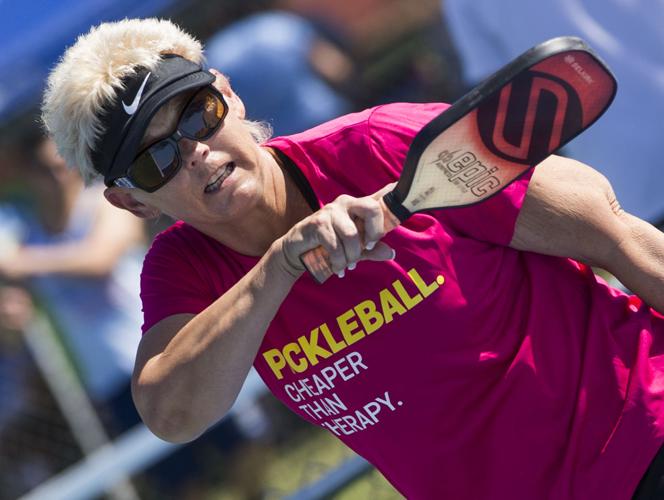
Credit: www.bakersfield.com
A Closer Look At Pickleball
Pickleball, a sport gaining popularity, has often been compared to mini tennis. However, a deeper look reveals unique dynamics and rules that set Pickleball apart. It’s more than just a smaller version of tennis, offering a distinctive playing experience for enthusiasts.
The sport of pickleball has gained immense popularity in recent years, captivating players of all ages. Often referred to as mini tennis, pickleball offers a unique blend of elements that set it apart from its larger counterpart. Let’s delve deeper into the intricacies of this exhilarating sport and explore its distinctive features and rules.
Exploring The Unique Features And Rules Of Pickleball
Pickleball can be summarized by the following key characteristics:
- Court and equipment:
- A pickleball court is smaller than a tennis court, measuring 20 by 44 feet, roughly one-fourth the size.
- The portable net used in this sport is slightly lower than a tennis net.
- Players use paddles made of lightweight materials, such as composite or wood, and a plastic perforated ball.
- Serving rules:
- Similar to tennis, the serve in pickleball must be made diagonally.
- The server must stand behind the baseline and hit the ball below their waist, avoiding hitting the non-volley zone.
- Scoring system:
- Pickleball utilizes a unique scoring system. Only the server can score points, and games are typically played to 11, 15, or 21 points, depending on the players’ preference.
- Non-volley zone:
- Also known as the “kitchen,” the non-volley zone is a critical element of pickleball.
- Players are not allowed to volley the ball (hit it in the air) while standing within this zone, which extends 7 feet from the net on both sides.
- Fast-paced gameplay:
- Pickleball combines the elements of tennis, badminton, and ping pong, resulting in a fast-paced and exhilarating game.
- The lightweight paddle and perforated ball enable quick volleys and precise shots, making each rally thrilling and unpredictable.
- All-age appeal:
- One of the main reasons for pickleball’s burgeoning popularity is its accessibility across all age groups.
- The sport’s smaller court and slower pace make it easier for beginners, seniors, and even kids to get into the game and enjoy competitive play.
Pickleball’s distinctive mix of features and rules has contributed to its rise as a beloved sport worldwide. Whether you’re a tennis enthusiast looking for a new challenge or a beginner exploring your options, pickleball promises an exciting and engaging experience on the court.
So grab a paddle, a ball, and jump into the world of pickleball today!
Unveiling The Epic Battle: Pickleball Vs. Tennis
Discover the fierce showdown between Pickleball and Tennis, as this article delves into whether Pickleball is simply a condensed version of Tennis. Explore the similarities, differences, and addictive qualities of these two sports. Get ready for an epic battle!
Is Pickleball Just Mini Tennis?
Picture this: two paddle sports standing face to face, ready to compete for the title of the ultimate racket game. In one corner, we have Pickleball, a game that has been gaining popularity in recent years, and in the other corner, we have the classic Tennis.
While some may argue that Pickleball is simply a miniature version of Tennis, there are key differences between the two sports that make each unique. Let’s delve into the epic battle: Pickleball vs. Tennis.
Comparing The Court Dimensions And Equipment Used In Both Sports
In order to truly understand the differences between Pickleball and Tennis, we must examine their court dimensions and the equipment used. Here’s a breakdown of each sport:
Pickleball:
- Court: A Pickleball court measures 20 feet wide and 44 feet long, which is significantly smaller than a Tennis court.
- Net: The net in Pickleball is placed in the center of the court and stands at 34 inches high in the middle.
- Paddle: Players use solid paddles made of wood or composite materials, allowing for precise shots and control.
- Ball: A plastic ball with holes, similar to a Wiffle ball, is used in Pickleball. It is lightweight and specifically designed for the sport.
Tennis:
- Court: A Tennis court measures 27 feet wide for singles matches and 36 feet wide for doubles matches. The length is 78 feet for both.
- Net: The net in Tennis is positioned at a height of 3 feet in the middle.
- Racket: Tennis players use strung rackets with a larger hitting surface, allowing for more power and spin.
- Ball: A pressurized felt ball is used in Tennis, providing speed and bounce.
Examining The Different Techniques And Strategies Employed In Pickleball And Tennis
Aside from the court dimensions and equipment, both Pickleball and Tennis employ different techniques and strategies. Let’s dive deeper into these:
Pickleball:
- Dinking: Players often engage in dinking, a technique where the ball is hit softly over the net, intended to keep the ball low and force the opponent to make an error.
- Third-shot drop: A commonly used strategy in Pickleball, players perform a soft and gentle shot, usually from the baseline, aiming to bring the opponent closer to the net and gain control of the point.
- Transition game: Pickleball requires quick movement and effective positioning as players transition from defense to offense and vice versa, capitalizing on opportunities to control the game.
Tennis:
- Serve and volley: A classic strategy in Tennis, where the server follows up the serve by rushing towards the net to hit a volley, putting pressure on the opponent to make a difficult return.
- Groundstrokes: Players rely on powerful groundstrokes, such as forehands and backhands, to dictate the point and create opportunities to outmaneuver the opponent.
- Court coverage: Tennis players must have excellent footwork and speed as they cover all corners of the court, ensuring they reach every shot and maintain control of the rallies.
While Pickleball and Tennis share similarities as racket sports, they each have distinct characteristics that set them apart. From court dimensions to equipment used and techniques employed, the epic battle of Pickleball vs. Tennis offers a diverse range of gameplay experiences.
Whether you’re a fan of the fast-paced Pickleball or prefer the classic elegance of Tennis, both sports provide unique challenges and endless hours of enjoyment. So, pick up a paddle or a racket and choose your side in this thrilling rivalry on the court!
Pickleball Vs. Tennis: Similarities And Differences
Pickleball and tennis may seem similar, but they have distinct differences. Pickleball is not just a mini version of tennis, as it has a smaller court, a different paddle, and its own unique rules.
Pickleball and tennis are both popular racket sports that require skill, strategy, and physical agility. While they share some similarities, they have distinct characteristics that set them apart. In this section, we will explore the role of racket skills and hand-eye coordination and the importance of footwork and agility in both sports.
The Role Of Racket Skills And Hand-Eye Coordination In Both Sports:
- Players in both pickleball and tennis need to have strong racket skills and exceptional hand-eye coordination in order to perform well. Here are some key points:
- Pickleball:
- Racket Skills: Players should master techniques such as grip, swing, and control to deliver accurate shots.
- Hand-eye Coordination: Precise timing and quick reactions are crucial for hitting the ball at the right moment.
- Tennis:
- Racket Skills: A variety of strokes, including forehand, backhand, and volleys, require proper technique and control.
- Hand-eye Coordination: Players must quickly judge the ball’s trajectory and adjust their positioning to strike it effectively.
Understanding The Importance Of Footwork And Agility In Pickleball And Tennis:
- Both pickleball and tennis demand excellent footwork and agility, enabling players to move swiftly and get into advantageous positions during the game. Here’s what you need to know:
- Pickleball:
- Footwork: Players need to be nimble and efficient in their movements to cover the court effectively and react to opponents’ shots.
- Agility: Being able to change direction quickly and maintain balance is crucial for successful gameplay.
- Tennis:
- Footwork: Proper footwork allows players to reach and return shots effectively, as well as cover the court efficiently.
- Agility: Quick lateral movements and explosive bursts of speed are necessary to react to shots and maintain court coverage.
Both pickleball and tennis share similarities when it comes to the role of racket skills, hand-eye coordination, footwork, and agility. However, each sport has its own unique characteristics and techniques that make them exciting in their own right. Whether you prefer the smaller court and faster-paced action in pickleball or the larger court and power game in tennis, both sports offer a great opportunity for players to showcase their skills.
The Health Benefits Of Pickleball And Tennis
Pickleball and tennis offer similar health benefits, but they are distinct sports. While pickleball is often described as mini tennis, it has its own unique rules and dynamics. Both activities improve cardiovascular fitness and muscular strength, but pickleball may be less demanding on the joints due to its smaller court and slower pace.
Ultimately, the choice between the two depends on personal preference and fitness goals.
Playing sports is not only a fun way to stay active but also offers numerous health benefits. If you’ve ever wondered whether pickleball and tennis are similar, then this blog post is for you. In this section, we will explore the health benefits of both pickleball and tennis, focusing on their cardiovascular benefits and how they contribute to overall physical fitness.
The Cardiovascular Benefits Of Playing Both Sports
Engaging in regular physical activity is essential for maintaining a healthy heart and cardiovascular system. Both pickleball and tennis offer excellent cardiovascular benefits, improving your heart health and overall fitness. Here are some ways both sports contribute to a healthy cardiovascular system:
- Increased heart rate: The fast-paced nature of pickleball and tennis requires continuous movement, leading to an elevated heart rate. This helps strengthen the heart and improves blood circulation throughout the body.
- Improved stamina and endurance: Pickleball and tennis involve repetitive movements and sustained physical effort. Regularly participating in these sports can enhance your stamina and endurance levels, allowing you to engage in other physical activities for more extended periods.
- Cardiovascular workout: Both sports involve dynamic movements such as running, jumping, and quick direction changes, which exert the heart and lungs. These activities provide an effective cardiovascular workout, improving cardiovascular fitness and lung capacity.
- Calorie burning: Pickleball and tennis are highly active sports that involve constant movement and energy expenditure. Playing these sports regularly can contribute to weight management by burning calories and reducing the risk of obesity-related health issues.
- Reduced risk of cardiovascular diseases: Engaging in aerobic activities like pickleball and tennis helps in maintaining healthy blood pressure levels, lowering cholesterol, and reducing the risk of cardiovascular diseases such as heart attacks and strokes.
How Pickleball And Tennis Contribute To Overall Physical Fitness
Apart from the cardiovascular benefits, both pickleball and tennis also contribute to overall physical fitness. Here’s how participating in these sports can enhance your fitness levels:
- Full-body workout: Both pickleball and tennis engage various muscle groups, providing a total body workout. From the explosive movements of serving and volleying to the lateral movements required for quick court coverage, these sports promote muscle strength, endurance, and coordination.
- Improved balance and agility: The quick and precise movements involved in these sports help develop better balance and agility. Regularly playing pickleball or tennis can enhance your reflexes and coordination, which can be beneficial in daily activities and reduce the risk of falls and injuries.
- Mental stimulation: Pickleball and tennis require strategic thinking and decision-making on the court. The mental engagement involved in these sports enhances cognitive function, concentration, and problem-solving skills.
- Social interaction and stress relief: Both pickleball and tennis are social sports that can be played with partners or in doubles. Engaging in these sports provides an opportunity for social interaction, making new friends, and relieving stress.
- Low-impact exercise: Pickleball and tennis are relatively low-impact sports compared to high-impact activities like running. This makes them more accessible to individuals of various fitness levels and reduces the risk of joint injuries.
By participating in pickleball or tennis, you can enjoy a wide range of health benefits, including improved cardiovascular health, overall physical fitness, and mental wellbeing. So, grab a racket and give these sports a try to experience the joy and advantages they offer!
Which Sport Is For You: Pickleball Or Tennis?
Discover the key differences between pickleball and tennis to find the perfect sport for you. While some may consider pickleball as mini tennis, this comparison unveils the distinct characteristics of both games, enabling you to make an informed decision.
The sport of pickleball has been gaining popularity over the years as a fun and accessible alternative to tennis. But is pickleball just mini tennis? If you’re trying to decide which sport is right for you, it’s important to consider a few factors.
In this section, we will explore the social aspects and community of each sport, helping you make an informed decision.
Factors To Consider When Choosing Between Pickleball And Tennis:
- Accessibility: Pickleball is known for its smaller court size and slower pace, making it more accessible for players of all ages and skill levels. Tennis, on the other hand, requires a larger court and can be more physically demanding.
- Equipment: Pickleball requires a paddle and a plastic ball with holes, while tennis requires a racket and a tennis ball. Pickleball equipment is generally cheaper and easier to transport.
- Physical Demands: Tennis is a high-impact sport that requires agility, speed, and endurance. Pickleball is often considered less physically demanding, making it a great option for those who may have joint issues or prefer a slower-paced game.
- Social Interaction: Both sports offer opportunities for social interaction and community building. Pickleball is known for its friendly and welcoming atmosphere, with players often engaging in social activities off the court. Tennis, on the other hand, may have a more competitive vibe, with players focusing primarily on the game.
- Learning Curve: Pickleball is relatively easy to learn compared to tennis. The rules are simpler, and the smaller court size allows for quicker skill development. Tennis, on the other hand, may require more time and practice to master the various techniques and strategies.
- Competition Opportunities: Tennis offers a wide range of competitive opportunities, from local tournaments to international events. Pickleball is also growing in terms of competitive play, with more tournaments and leagues being organized each year.
- Benefits of Each Sport: Tennis is a great cardiovascular workout that improves overall fitness, agility, and hand-eye coordination. Pickleball provides similar benefits but with less impact on the joints, making it suitable for individuals with joint issues.
While pickleball shares some similarities with tennis, it has its unique features that make it an attractive sport for many. The choice between pickleball and tennis ultimately depends on your preferences, physical capabilities, and social interactions. Whether you choose the simplicity and accessibility of pickleball or the competitive nature of tennis, both sports offer a great way to stay active and engage with a supportive community.
The Future Of Pickleball And Tennis
Pickleball and tennis both offer unique gameplay experiences, but pickleball is not simply mini tennis. While they share similarities, pickleball has its own rules, strategies, and equipment, attracting a dedicated and growing community of players. The future of both sports looks bright as more people discover the fun and exciting world of pickleball.
Pickleball and tennis have become popular sports in recent years, each with its own unique characteristics and fan base. While some may argue that pickleball is simply a mini version of tennis, both sports have their own trajectory and potential for growth.
In this section, we will delve into the future of pickleball and tennis, exploring various factors that may shape their paths.
Predicting The Trajectory Of Both Sports And Their Potential For Growth:
- Pickleball:
- Steady rise in popularity: With more and more people discovering the joy of pickleball, the sport is experiencing a significant surge in popularity.
- Attracting a diverse audience: Pickleball’s accessibility—thanks to its smaller court size and slower pace—has made it appealing to a wider range of players, including older individuals and those with limited mobility.
- Expanding demographic appeal: As pickleball gains traction, millennials and Gen Z players are also embracing the sport, leading to a broader demographic representation.
- Tennis:
- Established global presence: Tennis has already established itself as a widely recognized and respected sport globally, with a long-standing history and a dedicated following.
- Continued evolution: Tennis has constantly evolved over the years, from changes in equipment and playing styles to the introduction of new tournament formats. This adaptability ensures the sport remains relevant and appealing to newer generations.
- Growing global market: With the expansion of tennis into emerging markets such as Asia and South America, the sport has the potential to reach an even larger audience.
Examining The Impact Of Technology On The Future Of Pickleball And Tennis:
- Pickleball:
- Equipment advancements: Technological advancements in pickleball paddles and balls aim to enhance player experience and performance. Innovations may focus on improved materials, weight distribution, and paddle design.
- Live streaming and digital engagement: With the help of technology, pickleball can be broadcasted online, allowing fans to watch matches and engage with the sport from anywhere in the world. This increased exposure may attract new players and fans alike.
- Tennis:
- Data analytics and player development: Technology-driven analytics and tracking systems can provide players with valuable insights into their performance, helping them improve and refine their skills.
- Virtual reality experiences: Virtual reality offers the potential for immersive tennis experiences, allowing fans to feel like they are on the court alongside their favorite players. This technology has the potential to revolutionize spectator engagement.
The future of pickleball and tennis looks promising, with both sports set to continue their growth and evolve in exciting ways. Through technological advancements, expanding demographics, and global market reach, these sports will undoubtedly captivate an even larger audience in the years to come.
Frequently Asked Questions Of Is Pickleball Just Mini Tennis
Is Pickleball Just Mini Tennis?
No, pickleball is a unique sport that combines elements of tennis, badminton, and ping pong. While it shares similarities with tennis, such as the use of a racket and a net, pickleball has its own distinct rules, equipment, and strategies.
It is played on a smaller court with a different type of ball, making it a fun and exciting sport in its own right.
Conclusion
While there are similarities between pickleball and tennis, it is clear that pickleball is a unique sport in its own right. With its smaller court size, lightweight paddles, and specific rules, pickleball offers a different experience from traditional tennis. The game’s popularity is rapidly growing, attracting players of all ages and skill levels.
Its accessibility and adaptability make it an ideal choice for anyone looking to have fun and stay active. Whether you enjoy the fast-paced action or the friendly competition, pickleball provides a challenging and enjoyable experience on the court. So, if you’re searching for a sport that combines elements of tennis, table tennis, and badminton with its own distinctive flair, pickleball might just be the perfect choice.
Embrace the pickleball craze and give this exciting sport a try!


